Trust After Trauma: Learning to Recognise Safe People Again

Introduction After experiencing emotional abuse, coercive control, or relational trauma, many people find that trust feels confusing, fragile, or even unsafe. It is common to ask: These questions are not signs of weakness — they are signs of a nervous system that has adapted to survive uncertainty. Healing is not about becoming blindly trusting again.… Read More Trust After Trauma: Learning to Recognise Safe People Again

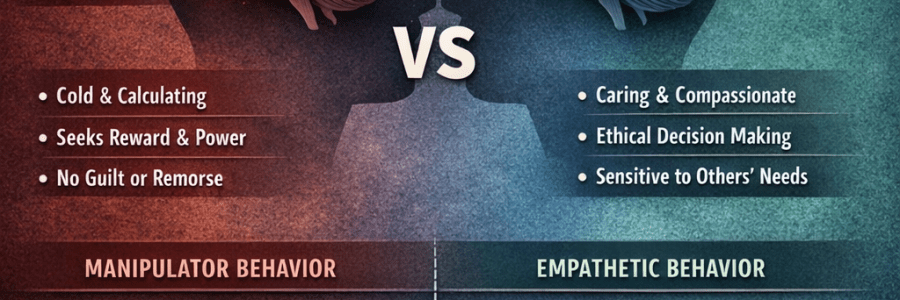
❤️ Healthy Love vs ⚠️ Manipulation (Comparison Chart)

In both Psychology and relational neuroscience, the difference often comes down to safety, consistency, and autonomy vs control and confusion. 🧠 Emotional Experience Healthy Love Manipulation You feel emotionally safe You feel anxious or “on edge” Emotions are steady over time Emotional highs and crashes You can be yourself You feel you must “perform” or please… Read More ❤️ Healthy Love vs ⚠️ Manipulation (Comparison Chart)

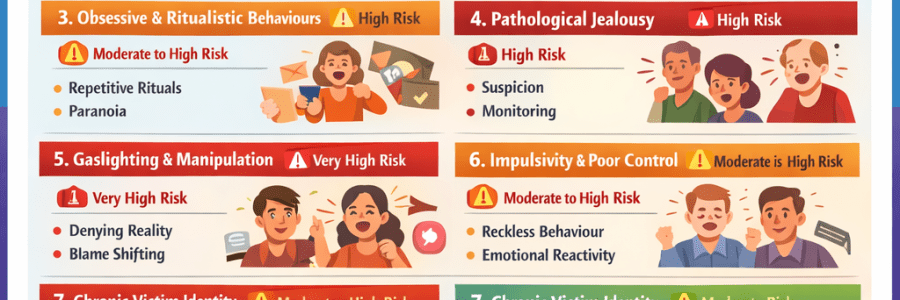
⚠️ Manipulation Awareness Chart (What to Look Out For)

Clear awareness chart of manipulation tactics and what to look out for, which is exactly what protects people in real life. Here’s a practical breakdown in the same structure you used: In Psychology, manipulation is often described as patterns of emotional and cognitive pressure used to influence someone’s decisions without informed consent or clarity. 1. Emotional… Read More ⚠️ Manipulation Awareness Chart (What to Look Out For)

🔄 Why the pattern escalates

What makes coercive control so psychologically damaging is that it often follows a recognisable pattern, not random moments of anger or ordinary relationship conflict. In psychology, the difference is usually this: ⚖️ Healthy conflict In normal conflict: Even when emotions run high, the relationship still allows: freedom, individuality, and emotional safety ⚠️ Coercive control In coercive… Read More 🔄 Why the pattern escalates

The “abusive pattern” in the brain (psychology + neuroscience)

1. Control is used as emotional regulation Many abusive behaviours function as a way to manage internal discomfort. Brain systems involved: Pattern: So control becomes: a regulation strategy, not just behaviour 2. Reward system reinforces dominance When controlling behaviour “works” (the other person complies, stays, or becomes fearful), the brain can reinforce it. Pattern: This… Read More The “abusive pattern” in the brain (psychology + neuroscience)

🧠 What’s happening in the brain during withdrawal

The withdrawal phase after leaving coercive control can feel surprisingly intense because the brain isn’t just “missing a person” — it’s recalibrating a whole threat–reward–attachment system that has been running for a long time. It often feels worse before it feels better because the nervous system is adjusting to the absence of a pattern it had learned to expect.… Read More 🧠 What’s happening in the brain during withdrawal

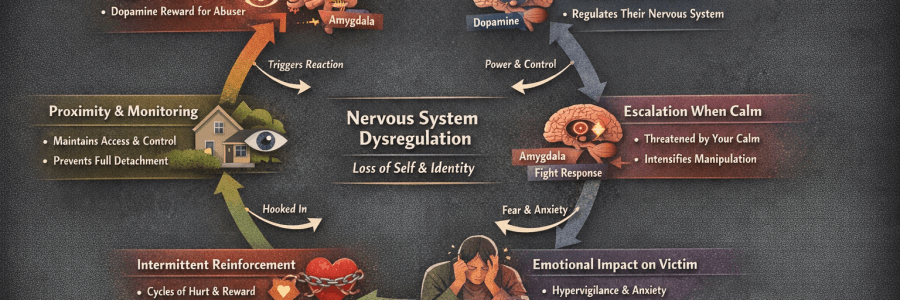
🧠 Why trauma bonding is so sticky (neuroscience + psychology)

Trauma bonding and coercive control are hard to break because they don’t just sit in “thoughts” or “choices” — they get wired into reward systems, threat systems, and attachment systems in the brain at the same time. That combination creates a powerful loop that feels emotionally convincing even when it’s harmful. 1. Intermittent reinforcement = strongest… Read More 🧠 Why trauma bonding is so sticky (neuroscience + psychology)