Taking Back Your Life: From Control to Freedom

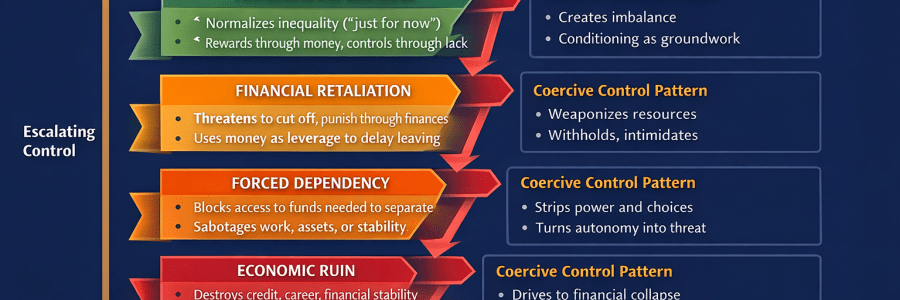
Taking back your life from control involves small, impactful decisions rather than a dramatic transformation. Key steps include recognizing what was taken, reclaiming personal choices, rebuilding support networks, achieving financial independence, and fostering self-confidence. It’s essential to create boundaries, allow for grief, and embrace a future free from past constraints.… Read More Taking Back Your Life: From Control to Freedom

When You Finally Reach a Place of Peace Where No One Can Control You Anymore

Recovery from abuse involves reclaiming control over one’s life, finances, and emotions. It signifies the moment when one realizes they are no longer bound by another’s manipulation or fear. True freedom lies in establishing boundaries, trusting oneself, and recognizing that peace is innate, independent of past trauma. Healing fosters autonomy and personal growth.… Read More When You Finally Reach a Place of Peace Where No One Can Control You Anymore

Types and Indicators of Abuse

Understanding the Different Forms of Abuse — and the Signs to Look For

Abuse is not always obvious.

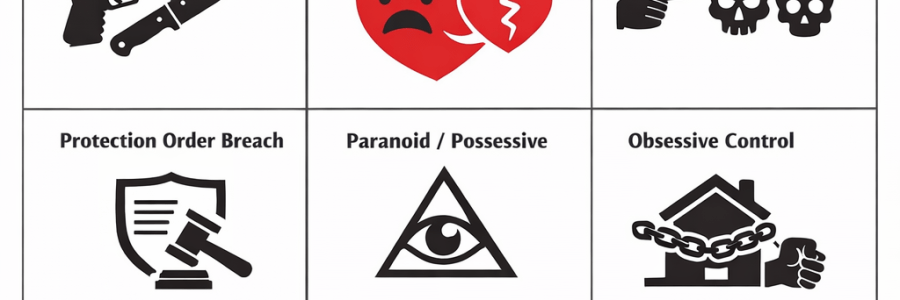
It isn’t always physical, and it doesn’t always leave visible injuries. Abuse can involve patterns of behaviour designed to control, intimidate, manipulate, isolate, humiliate or undermine another person.

A person may also experience more than one type of abuse at the same time.

Recognising the signs can be an important first step towards understanding what is happening.

Important: The presence of one indicator on its own should not be taken as proof that abuse is occurring. However, it may indicate that further assessment is needed. The examples below are not exhaustive, and individual circumstances should always be considered.… Read More Types and Indicators of Abuse

When Abuse Changes the Way You See Yourself: Understanding the Psychology of Control—and Finding Your Way Back

If you have survived an abusive or controlling relationship, you may still be trying to understand what happened. You may ask yourself: Why did I stay?Why did I keep hoping things would change?Why did I start doubting myself?Why do I still feel anxious, even though I’m away from the relationship?Why is it so difficult to… Read More When Abuse Changes the Way You See Yourself: Understanding the Psychology of Control—and Finding Your Way Back

When a Restraining Order Ends: Protection Can Continue

One of the greatest fears many survivors have is what happens when a restraining order expires. Does the protection end? The answer is not necessarily. In Spain, the expiry of a restraining order does not automatically mean that all protection comes to an end. Where the authorities assess that a victim remains at risk, protective measures… Read More When a Restraining Order Ends: Protection Can Continue

What Happens After a Restraining Order Ends in Spain?

For many survivors of domestic abuse, one question can be deeply unsettling: “What happens when my restraining order ends?” Many fear that the end of a court order means the end of their protection. Fortunately, that is not always the case. Protection Does Not Automatically End In Spain, the expiry of a restraining order does not… Read More What Happens After a Restraining Order Ends in Spain?

When the Court Order Ends, Protection Doesn’t: Understanding Ongoing Police Protection in Spain

For many survivors of domestic abuse, receiving a protection order is not the end of the journey—it is the beginning of living safely again. In Spain, protection does not always stop when a restraining order is granted. In many cases, the Guardia Civil or National Police continue to provide ongoing protection through the VioGén (Sistema de Seguimiento Integral en los… Read More When the Court Order Ends, Protection Doesn’t: Understanding Ongoing Police Protection in Spain

When They Think They’ve Got Away With It

For many perpetrators, the divorce decree or financial settlement feels like the final chapter. They believe the marriage is over, the paperwork has been signed, and they have escaped accountability. They assume that because the relationship has legally ended, the abuse has been buried with it. But for some survivors, that is not the end… Read More When They Think They’ve Got Away With It

Can You Still Take Your Abuse Case to Court After the Divorce and Financial Settlement?

One of the biggest misconceptions about domestic abuse is that once the divorce is final and the financial settlement has been agreed, everything is over. It isn’t. A divorce legally ends a marriage. A financial settlement divides assets and resolves financial claims between spouses. Neither necessarily addresses the physical, emotional or psychological harm caused by… Read More Can You Still Take Your Abuse Case to Court After the Divorce and Financial Settlement?