Types and Indicators of Abuse

Understanding the Different Forms of Abuse — and the Signs to Look For

Abuse is not always obvious.

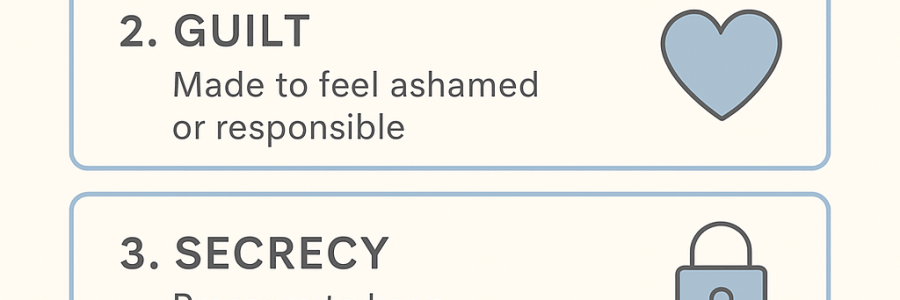
It isn’t always physical, and it doesn’t always leave visible injuries. Abuse can involve patterns of behaviour designed to control, intimidate, manipulate, isolate, humiliate or undermine another person.

A person may also experience more than one type of abuse at the same time.

Recognising the signs can be an important first step towards understanding what is happening.

Important: The presence of one indicator on its own should not be taken as proof that abuse is occurring. However, it may indicate that further assessment is needed. The examples below are not exhaustive, and individual circumstances should always be considered.… Read More Types and Indicators of Abuse

What is ASPD (Antisocial Personality Disorder)?

Antisocial Personality Disorder (ASPD) is a clinical diagnosis used to describe a persistent pattern of disregard for the rights, safety, and boundaries of others. It’s not about being “difficult” or having a bad temper. It’s about how someone relates to people, rules, and responsibility over time. Common features include: Repeated lying, manipulation, or deceit Lack of remorse after harming others… Read More What is ASPD (Antisocial Personality Disorder)?

Different types of abuse

Different types of abuse Hitting, kicking, punching or slapping Pushing, shaking or throwing someone Choking or strangulation Burning or causing injuries Using objects or weapons to hurt or threaten someone Preventing someone from leaving or physically restraining them Constant criticism, humiliation or insults Belittling someone or making them feel worthless Deliberately causing fear or distress… Read More Different types of abuse

Research-based typologies of people who sexually abuse children

The central finding is that child sexual offenders are a heterogeneous population. There is no single psychological or personality profile that identifies a child sexual abuser. A major review of the literature specifically concludes that existing typologies have useful descriptive value but also significant methodological limitations.  1. Groth’s typology — early motivational model Groth’s work was… Read More Research-based typologies of people who sexually abuse children

A Relationship Safety Checklist: Questions Everyone Should Ask Before Committing

Love should never require you to ignore your instincts. Whether you’re dating for the first time in years, rebuilding your life after abuse, or simply wanting to make wiser relationship choices, these questions can help you slow down, observe patterns, and make informed decisions. No single answer proves someone is abusive—or that they are safe.… Read More A Relationship Safety Checklist: Questions Everyone Should Ask Before Committing

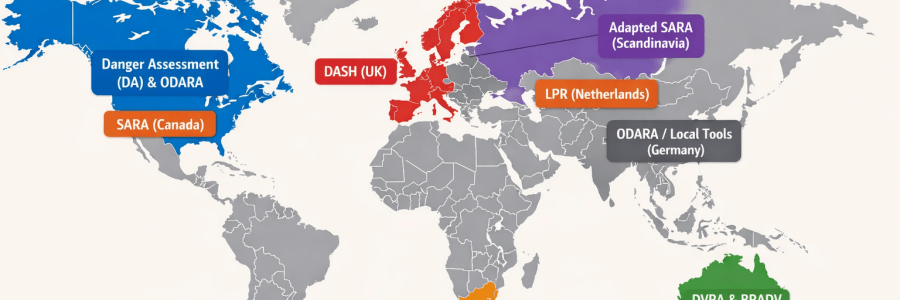
Within Europe, the position is:

Country Disclosure Scheme Public Statistics Available England & Wales ✅ Clare’s Law (2014) Yes – annual national statistics published.  Scotland ✅ Disclosure Scheme for Domestic Abuse Scotland (2015) Yes – Police Scotland publishes application and disclosure figures.  Northern Ireland ✅ Domestic Violence and Abuse Disclosure Scheme (2018) Limited public statistics.  Republic of Ireland ❌ No… Read More Within Europe, the position is:

National “register” of domestic abuse perpetrators

The police already maintain a number of databases which will hold details of domestic abuse perpetrators, for example the Police National Computer, Police National Database and the ViSOR Dangerous Persons Database. The Home Office and the Ministry of Justice have jointly funded a project to create the new Multi-Agency Public Protection System (MAPPS) which will… Read More National “register” of domestic abuse perpetrators

Landmark Canadian domestic-abuse judgment.

The case is significant not only because of the extreme violence described, but because the court recognized that long-term intimate-partner violence can justify a substantial civil damages award. Justice Susan Vella of the Ontario Superior Court of Justice awarded the woman $400,000 in damages after a nine-day trial. The decision followed a 54-year marriage in which the judge found… Read More Landmark Canadian domestic-abuse judgment.

Helping Someone Recover After Abuse: What to Do—and What Not to Do

Supporting someone after an abusive or controlling relationship is not about having all the answers. It is about creating an environment where they can feel safe, respected and free to rebuild their confidence at their own pace. Small, consistent acts of kindness often make a greater difference than dramatic gestures. What to Do ✓ Listen… Read More Helping Someone Recover After Abuse: What to Do—and What Not to Do