Addiction, Trauma & the Brain

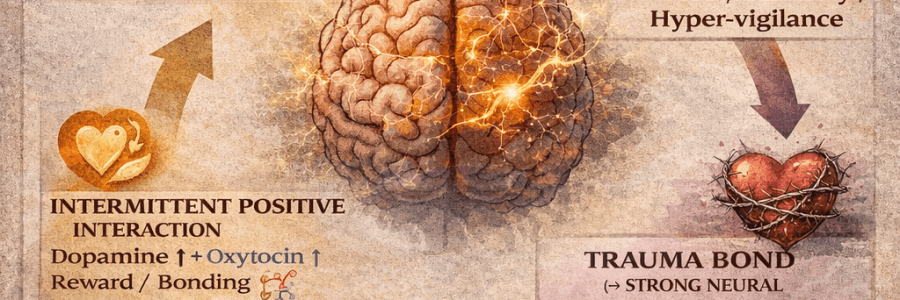
Addiction, Trauma & the Brain Addiction can be difficult to understand — both for the person experiencing it and for the people around them. My approach looks at addiction through both neuroscience and psychology, recognising that addictive behaviour can involve changes in the brain’s reward, motivation, learning, stress and self-regulation systems. Addiction can involve alcohol, recreational drugs… Read More Addiction, Trauma & the Brain

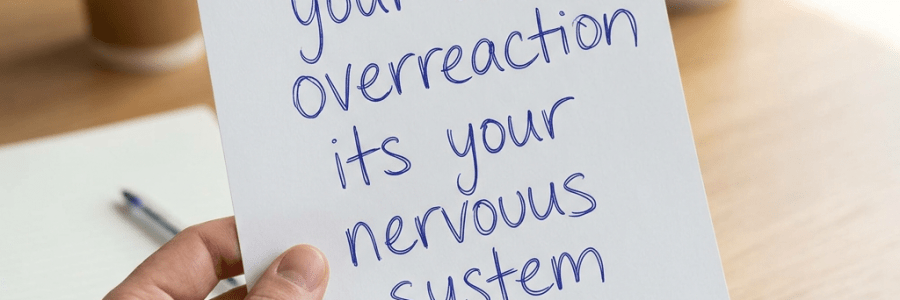
You Aren’t Overreacting: Your Nervous System May Be Responding to What It Learned

Understanding emotional triggers after abuse, trauma and difficult relationships Have you ever reacted strongly to something and then immediately thought: “Why did I react like that?” Perhaps someone raised their voice. Someone didn’t respond to your message. A partner became distant. Someone criticised you. A conversation suddenly felt uncomfortable. Your emotional response may seem much… Read More You Aren’t Overreacting: Your Nervous System May Be Responding to What It Learned

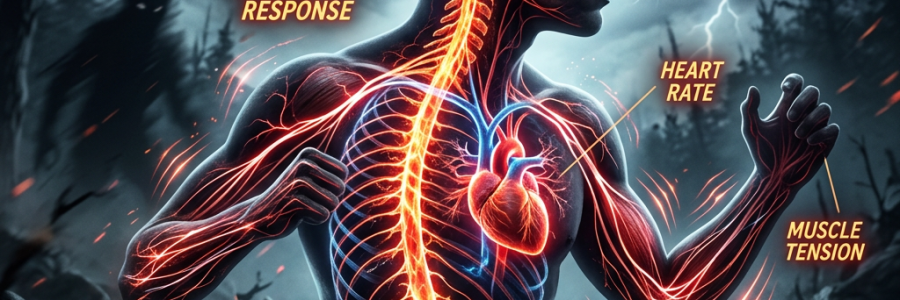
5 Signs Your Nervous System May Still Be in Survival Mode

Why you can feel exhausted, anxious and hyper-alert even when life looks fine from the outside You may be functioning. Going to work. Looking after your family. Paying the bills. Seeing friends. Smiling. And yet inside, you may feel completely exhausted. Perhaps you are constantly thinking about what could go wrong. Perhaps you struggle to… Read More 5 Signs Your Nervous System May Still Be in Survival Mode

Karma, Consequences and the Neuroscience of Human Behaviour

“The pain you give someone else—the lies, betrayal, manipulation and disrespect—never truly disappears. Whether you call it karma or consequences, our actions have a remarkable way of finding their way back to us.” For thousands of years, cultures around the world have embraced the concept of karma: the belief that the energy we put into… Read More Karma, Consequences and the Neuroscience of Human Behaviour

The Neuroscience and Psychology of Sadistic Behaviour: Why Cruelty Can Become Addictive

One of the most difficult questions survivors ask is: “How could someone enjoy causing another person so much pain?” For those who have never experienced coercive control, emotional abuse, or psychological manipulation, the idea that another human being could derive satisfaction from another person’s suffering seems incomprehensible. Yet psychology and neuroscience provide important insights into… Read More The Neuroscience and Psychology of Sadistic Behaviour: Why Cruelty Can Become Addictive

Why Do Some People Ignore a Cry for Help? The Psychology and Neuroscience Behind It

One of the most painful experiences a person can have is finding the courage to ask for help… only to be ignored. The silence can be deafening. For the person reaching out, it can feel like confirmation that they don’t matter. For the person who ignores them, however, the reasons are often far more psychologically… Read More Why Do Some People Ignore a Cry for Help? The Psychology and Neuroscience Behind It

Freedom Feels Different: The Neuroscience of Living Without Control

This year, I’ve been to every local fiesta, celebration, concert, and community event in my town. For the first time in many years, I stayed until I wanted to leave. I laughed without looking over my shoulder. I joined in without worrying about being criticised. I enjoyed the music, the atmosphere, and the company without… Read More Freedom Feels Different: The Neuroscience of Living Without Control

“You Look Different”: The Neuroscience of Finally Feeling Safe

One of the most unexpected parts of healing has not been what I see in myself, but what other people see in me. Recently, friends, family, and even people I haven’t seen for a while have been making similar comments. “You look so much more relaxed.” “You seem more confident.” “You’re glowing.” “You smile so… Read More “You Look Different”: The Neuroscience of Finally Feeling Safe

“He Never Wanted Me to Be Happy”: The Psychology and Neuroscience Behind This Behaviour

During a conversation this morning, someone said something that resonated deeply with me: “He never wanted you to be happy. He was so miserable with his own life and himself long before he met you that he was determined to destroy any happiness you experienced.” Whether or not we can ever know another person’s true… Read More “He Never Wanted Me to Be Happy”: The Psychology and Neuroscience Behind This Behaviour

Why Having Abuse Recognised Matters: The Psychology and Neuroscience of Acknowledgement

For many survivors, divorce is one chapter. A financial settlement is another. Neither of those processes necessarily addresses what happened behind closed doors. Legal matters determine how assets are divided, where people live, and how finances are resolved. They do not automatically acknowledge years of coercive control, emotional abuse, psychological manipulation, intimidation, or violence. For many… Read More Why Having Abuse Recognised Matters: The Psychology and Neuroscience of Acknowledgement