When Someone Suggests They Know Something About A Child That You Don’t Know — Don’t Ignore the Alarm Bells

Sometimes the most important warning sign isn’t what someone tells you. It’s what they imply they know. Imagine someone makes an apparently casual comment about your child. Perhaps they mention something you didn’t know. Perhaps they imply they have information about your child’s life that hasn’t been shared with you. Perhaps they say: “I know… Read More When Someone Suggests They Know Something About A Child That You Don’t Know — Don’t Ignore the Alarm Bells

Would You Believe the Evidence — or Protect the Person You Love?

The content discusses the complexities of recognizing and addressing potential grooming behaviors towards children by trusted individuals. It emphasizes the psychological challenges parents face when confronted with allegations against those they know and care for, urging them to remain vigilant for warning signs and prioritize their children’s safety above discomfort or reputations.… Read More Would You Believe the Evidence — or Protect the Person You Love?

Deny, Deny, Deny: The Psychology of Denial When Someone Is Confronted With Evidence of Grooming

The text discusses how denial, defensiveness, loyalty, and fear can impact responses to suspected grooming behaviors. It highlights psychological conflicts individuals face when confronted with evidence against trusted people, often resulting in minimizing concerns or attacking the witness instead of addressing the allegations. The focus should remain on investigating behavior, not reputation.… Read More Deny, Deny, Deny: The Psychology of Denial When Someone Is Confronted With Evidence of Grooming

You Don’t Have to Rebuild Your Life Alone

Taking control of your life is empowering yet challenging after experiencing various forms of control. It can lead to self-doubt and anxiety, prompting questions about identity and trust. Therapy offers a supportive space to rebuild confidence, establish healthy boundaries, and rediscover your voice. Embrace your journey toward freedom.… Read More You Don’t Have to Rebuild Your Life Alone

Taking Back Your Life: From Control to Freedom

Taking back your life from control involves small, impactful decisions rather than a dramatic transformation. Key steps include recognizing what was taken, reclaiming personal choices, rebuilding support networks, achieving financial independence, and fostering self-confidence. It’s essential to create boundaries, allow for grief, and embrace a future free from past constraints.… Read More Taking Back Your Life: From Control to Freedom

When You Finally Reach a Place of Peace Where No One Can Control You Anymore

Recovery from abuse involves reclaiming control over one’s life, finances, and emotions. It signifies the moment when one realizes they are no longer bound by another’s manipulation or fear. True freedom lies in establishing boundaries, trusting oneself, and recognizing that peace is innate, independent of past trauma. Healing fosters autonomy and personal growth.… Read More When You Finally Reach a Place of Peace Where No One Can Control You Anymore

How Financial Abuse Hides in Long-Term Marriages

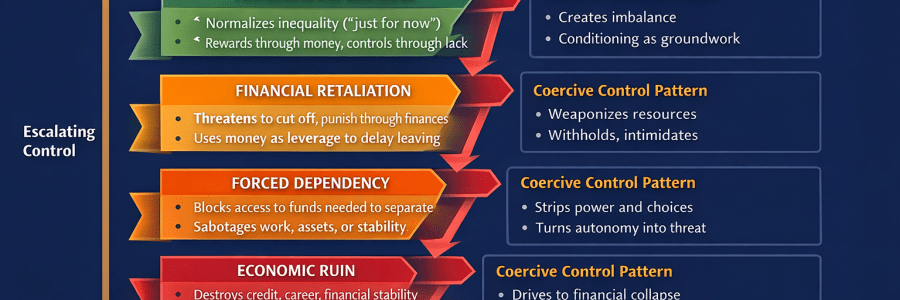
After leaving a toxic relationship, individuals often gain clarity on long-term manipulation and financial abuse. The realization reveals patterns of control, isolation, and hidden finances, highlighting a system designed to benefit one partner. Recovery offers empowerment as survivors understand their experiences and the importance of protecting their assets before it’s too late.… Read More How Financial Abuse Hides in Long-Term Marriages