The Pain of Repeated Abuse in Disbelieving Families

When history repeats itself and a family that once doubted or dismissed abuse finds themselves facing the same painful situation again, the emotional and psychological impact can be devastating. This recurrence often exposes deep patterns of denial, disbelief, and unresolved trauma within the family system. Families that previously did not believe victims of abuse may… Read More The Pain of Repeated Abuse in Disbelieving Families

The Moment of Reckoning: An Abuser Witnessing Their Own Legacy

When an abuser witnesses the impact of their own behavior on their children or grandchildren, especially in a courtroom setting where they observe further abuse unfolding, a complex and profound emotional and psychological dynamic emerges. This scenario reveals layers of denial, accountability, and the cyclical nature of abuse that can affect families deeply. Abuse often… Read More The Moment of Reckoning: An Abuser Witnessing Their Own Legacy

How to Recognise Common Harmful Relational Patterns

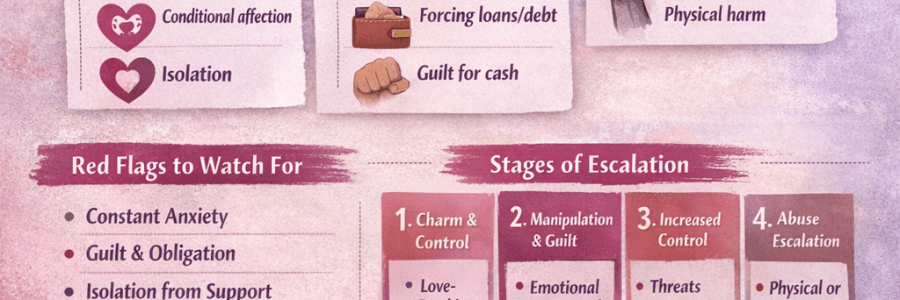
1. Emotionally immature behaviour This is when someone struggles to regulate emotions or take responsibility for their impact on others. Common signs: Blaming others instead of reflecting (“You made me act like this”) Avoiding difficult conversations or shutting down when challenged Big emotional reactions to small frustrations Inability to apologise without defensiveness Making situations about… Read More How to Recognise Common Harmful Relational Patterns

Understanding Harmful Interpersonal Patterns (Including Sadistic Traits)

In psychology, “sadistic traits” refer to patterns where a person may derive satisfaction from another person’s discomfort, distress, or humiliation. These traits exist on a spectrum and are not always obvious or extreme. In everyday life, they may show up in subtle relational dynamics rather than overt cruelty. It’s important to approach this topic with… Read More Understanding Harmful Interpersonal Patterns (Including Sadistic Traits)

You can’t re-engineer someone!

It isn’t your job to fix, rescue, or fundamentally rewire another adult’s personality. Neuroscience and psychology are quite clear on that. Core traits like empathy levels, attachment style patterns, emotional regulation habits, and relational “defaults” are shaped over years of development and repeated reinforcement — not corrected through a partner’s effort alone. In other words: you can influence, but… Read More You can’t re-engineer someone!

Because behaviour follows patterns

When an adult child seems distant, transactional, or only interested when there’s something to gain, psychology doesn’t jump straight to “they’re selfish.” It looks at what was reinforced over time. Because behaviour follows patterns like: Attachment (how safe or valued they felt growing up) Modelling (what they saw relationships look like) Reinforcement (what got rewarded vs ignored) If a… Read More Because behaviour follows patterns

It doesn’t disappear, it circles back.

It doesn’t disappear, it circles back. When children aren’t taught to act with integrity in the hard, uncomfortable, unrewarded moments, they don’t suddenly develop that capacity later. They carry the same pattern forward — and eventually, it shows up in the relationships closest to them. That’s when it bites. Because the child who learned: “I only… Read More It doesn’t disappear, it circles back.

🧭 What rebuilding often actually looks like

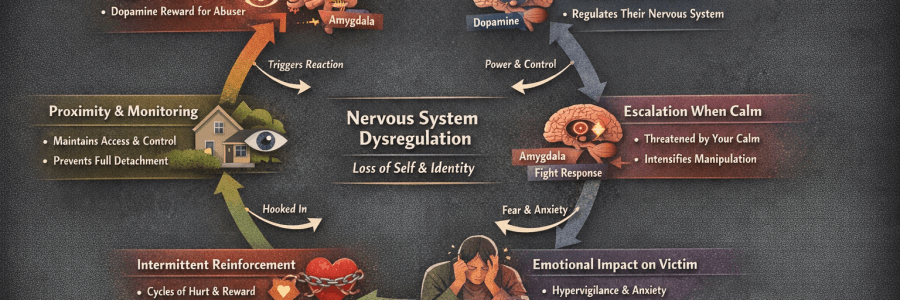
Rebuilding your life after decades of cruelty is less like “starting over” and more like relearning safety, identity, and choice in a system that trained you to survive, not live. It’s a slow reconstruction of both the nervous system and the sense of self. 🧭 What rebuilding often actually looks like 1. Learning that “calm” isn’t… Read More 🧭 What rebuilding often actually looks like