Financial Pressure and the Threat of Losing an Inheritance

Money can be used as a powerful tool of control. Some people are pressured into remaining silent because they fear losing an inheritance or other financial support. This may be expressed directly or indirectly. Examples include: “If you tell anyone, you’ll be written out of the will.” “Keep quiet if you expect to inherit anything.”… Read More Financial Pressure and the Threat of Losing an Inheritance

Silence Through Fear Is Not Privacy

There is an important difference between respecting someone’s privacy and forcing someone into silence. Healthy families and healthy relationships respect personal privacy while allowing people the freedom to speak, seek support, and make their own decisions. An abusive person, however, may try to create a culture of silence through fear, intimidation, manipulation, or threats. This… Read More Silence Through Fear Is Not Privacy

When “Keeping It Private” Becomes a Tool of Control

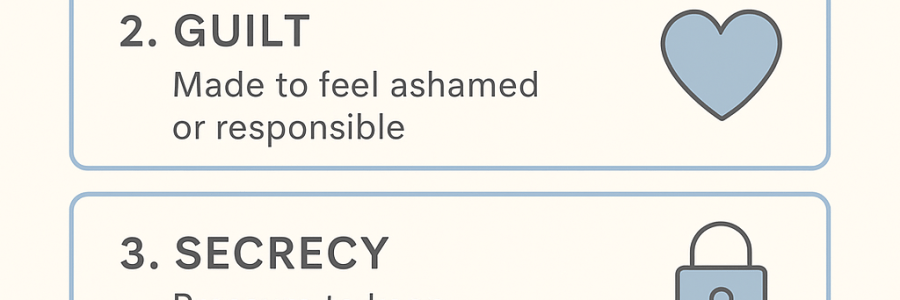
Privacy is healthy. Secrecy that protects abuse is not. One common tactic in controlling families or abusive relationships is creating an unwritten rule that certain things must never be discussed outside the family. This can discourage victims from seeking help and make it easier for abuse to continue. Phrases That May Be Used to Silence… Read More When “Keeping It Private” Becomes a Tool of Control

Questions to Ask When Trying to Understand the Dynamics of a Relationship

No single answer proves that abuse or financial control has occurred. However, asking thoughtful questions can help identify patterns of coercive control, manipulation, or unhealthy relationship dynamics. Communication and Openness Are people free to speak openly, or do they appear afraid of saying the wrong thing? Do family members or friends avoid discussing certain topics?… Read More Questions to Ask When Trying to Understand the Dynamics of a Relationship

What to Do If You Notice These Warning Signs

If several of these warning signs are present, don’t ignore them or assume they will improve with time. Abuse often escalates rather than disappears. Trust your instincts. If something feels wrong, take those feelings seriously. Don’t allow yourself to become isolated from family and friends. Maintain your own support network. Continue your hobbies, work, and… Read More What to Do If You Notice These Warning Signs

Warning Signs of Abuse in a New Relationship

Abuse rarely begins with obvious violence. It often starts with subtle behaviours that become more controlling over time. While no single sign proves someone is abusive, a pattern of these behaviours should never be ignored. Pay Attention to Their History Do they have a history of abusive or controlling relationships? Do former partners describe similar… Read More Warning Signs of Abuse in a New Relationship

How Much Evidence Is Enough Before We Call Abuse What It Is?

One of the most painful experiences for survivors is not just the abuse itself. It is watching people explain it away. A bruise becomes “an accident.” A threat becomes “an argument.” Years of coercive control become “marital problems.” A criminal conviction becomes “a misunderstanding.” A medical report is dismissed. A psychologist’s assessment is questioned. Photographs… Read More How Much Evidence Is Enough Before We Call Abuse What It Is?

When the Evidence Should Not Be Ignored

When someone is subject to a protective order and has criminal convictions for abusive behaviour, these are not matters that should be dismissed or explained away lightly. Protective orders and criminal convictions arise through legal processes. They are not based on rumours, gossip or personal opinions. A criminal conviction means a court has found the… Read More When the Evidence Should Not Be Ignored

Domestic Abuse Cases Are Built on Evidence, Not Assumptions

There is a common misconception that restraining orders, protective measures and criminal convictions are handed out without good reason. They are not. Police do not simply issue protective measures because someone asks for one. Courts do not convict people without considering the evidence presented before them. Every case is different, and the legal thresholds vary… Read More Domestic Abuse Cases Are Built on Evidence, Not Assumptions