Silence Through Fear Is Not Privacy

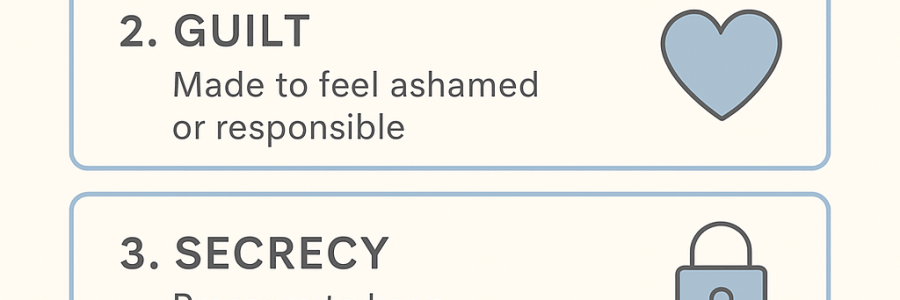
There is an important difference between respecting someone’s privacy and forcing someone into silence. Healthy families and healthy relationships respect personal privacy while allowing people the freedom to speak, seek support, and make their own decisions. An abusive person, however, may try to create a culture of silence through fear, intimidation, manipulation, or threats. This… Read More Silence Through Fear Is Not Privacy

When “Keeping It Private” Becomes a Tool of Control

Privacy is healthy. Secrecy that protects abuse is not. One common tactic in controlling families or abusive relationships is creating an unwritten rule that certain things must never be discussed outside the family. This can discourage victims from seeking help and make it easier for abuse to continue. Phrases That May Be Used to Silence… Read More When “Keeping It Private” Becomes a Tool of Control

What to Do If You Notice These Warning Signs

If several of these warning signs are present, don’t ignore them or assume they will improve with time. Abuse often escalates rather than disappears. Trust your instincts. If something feels wrong, take those feelings seriously. Don’t allow yourself to become isolated from family and friends. Maintain your own support network. Continue your hobbies, work, and… Read More What to Do If You Notice These Warning Signs

Warning Signs of Abuse in a New Relationship

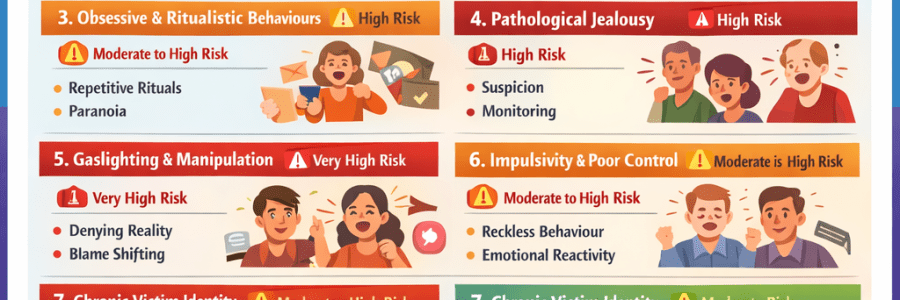
Abuse rarely begins with obvious violence. It often starts with subtle behaviours that become more controlling over time. While no single sign proves someone is abusive, a pattern of these behaviours should never be ignored. Pay Attention to Their History Do they have a history of abusive or controlling relationships? Do former partners describe similar… Read More Warning Signs of Abuse in a New Relationship

When the Evidence Should Not Be Ignored

When someone is subject to a protective order and has criminal convictions for abusive behaviour, these are not matters that should be dismissed or explained away lightly. Protective orders and criminal convictions arise through legal processes. They are not based on rumours, gossip or personal opinions. A criminal conviction means a court has found the… Read More When the Evidence Should Not Be Ignored

“It Wasn’t Me, It Was My Ex…” — Common Narratives Used After an Abusive Relationship Ends

When an abusive relationship ends, the abuse itself often doesn’t disappear. Sometimes, the behaviour changes form. Instead of controlling a partner behind closed doors, the person who was abusive may begin controlling the story. This can be particularly confusing for a new partner, who hears only one version of events. While every situation is different,… Read More “It Wasn’t Me, It Was My Ex…” — Common Narratives Used After an Abusive Relationship Ends

When Someone Tells You They Are Being Abused: Your Response Matters More Than You Think

It takes enormous courage for someone to disclose domestic abuse. Many survivors have spent months—or even years—wondering whether anyone will believe them. By the time they tell you, they may have rehearsed the conversation hundreds of times in their head. They may be terrified of being judged, blamed or dismissed. How you respond in those… Read More When Someone Tells You They Are Being Abused: Your Response Matters More Than You Think

“Keep It in the Family” Can Be Dangerous: Why Silence Protects Abuse, Not Victims

For generations, families have repeated the same phrases: “Don’t make a fuss.” “Keep it in the family.” “Think of the children.” “Don’t tell anyone.” “You’ll ruin the family.” “Just keep the peace.” On the surface, these words may sound like they are protecting the family. Too often, they are protecting the abuse. Silence Gives Abuse… Read More “Keep It in the Family” Can Be Dangerous: Why Silence Protects Abuse, Not Victims