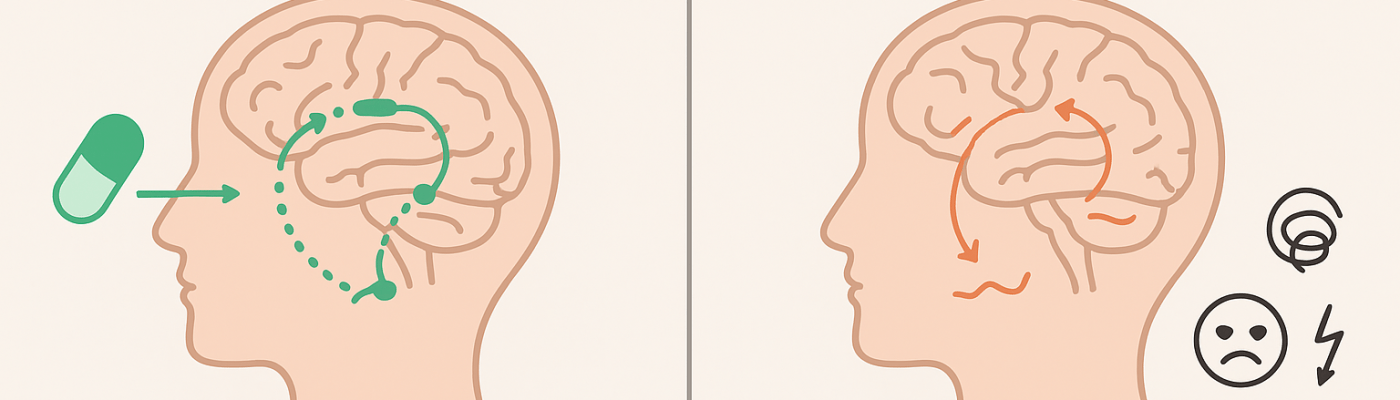
Why Some People Change Dramatically When They Stop Taking Their Medication
Families living with severe mental illness often describe seeing two very different versions of the same person.
While taking their prescribed medication, they may appear calmer, sleep better, think more clearly and cope more effectively with everyday life.
When they stop taking their medication, however, loved ones may notice significant changes. Symptoms can gradually return, sometimes leading to distress for both the individual and those around them.
A Combination of Medications
Some people living with long-term mental health conditions are prescribed more than one medication.
Depending on their individual needs, treatment may include:
- Medication to treat psychosis.
- Medication to help stabilise mood.
- Medication to improve sleep.
- Medication to reduce anxiety.
- Other medicines to manage side effects or additional health conditions.
Every treatment plan is personalised. What is right for one person may not be appropriate for another.
Why Medication Can Make Such a Difference
Conditions involving psychosis can affect how a person thinks, perceives reality and responds to the world around them.
For many people, medication helps to reduce symptoms such as hallucinations, delusions, severe agitation or disorganised thinking. Better sleep can also improve emotional regulation, concentration and daily functioning.
Medication does not change who a person is. Rather, it aims to reduce the symptoms of the illness so they can function more effectively.
What Happens If Medication Is Stopped?
For some people, stopping medication suddenly or without medical supervision can allow symptoms to return.
These symptoms may include:
- Increased confusion.
- Growing suspiciousness.
- Difficulty sleeping.
- Increased agitation or irritability.
- Hallucinations or delusional beliefs.
- Poor judgement.
- Difficulty recognising that they are becoming unwell.
Not everyone experiences these changes, and the effects vary from person to person. However, stopping prescribed medication without medical advice can increase the risk of relapse for many people with psychotic illnesses.
Does Medication Prevent Violence?
This is an important question.
The vast majority of people living with serious mental illness are not violent and are far more likely to be harmed than to harm others.
However, in a small number of cases, if severe psychotic symptoms return—particularly alongside factors such as substance misuse, extreme distress or untreated illness—the risk of aggressive behaviour may increase. This is why early intervention and ongoing treatment are so important.
Families Often Notice the First Changes
Those closest to the person are often the first to notice warning signs, such as:
- Missing medication.
- Sleeping very little.
- Becoming withdrawn or unusually suspicious.
- Increased irritability.
- Talking in ways that seem confused or disconnected from reality.
- Neglecting personal care.
- Significant changes in behaviour.
Recognising these signs early can help someone access support before the situation becomes more serious.
Never Stop Medication Without Medical Advice
Mental health medications should never be stopped suddenly unless advised by a healthcare professional.
If someone is experiencing side effects or wishes to reduce or stop their medication, they should discuss this with their doctor or mental health team. Together, they can make a safe plan that balances benefits and risks.
A Message of Hope
With the right treatment, support and follow-up, many people living with psychosis or schizophrenia lead fulfilling and meaningful lives.
Medication is often one part of that journey, alongside psychological therapies, family support, education, employment and community services.
The goal is not simply to treat symptoms—it is to help people live as well and as independently as possible.

