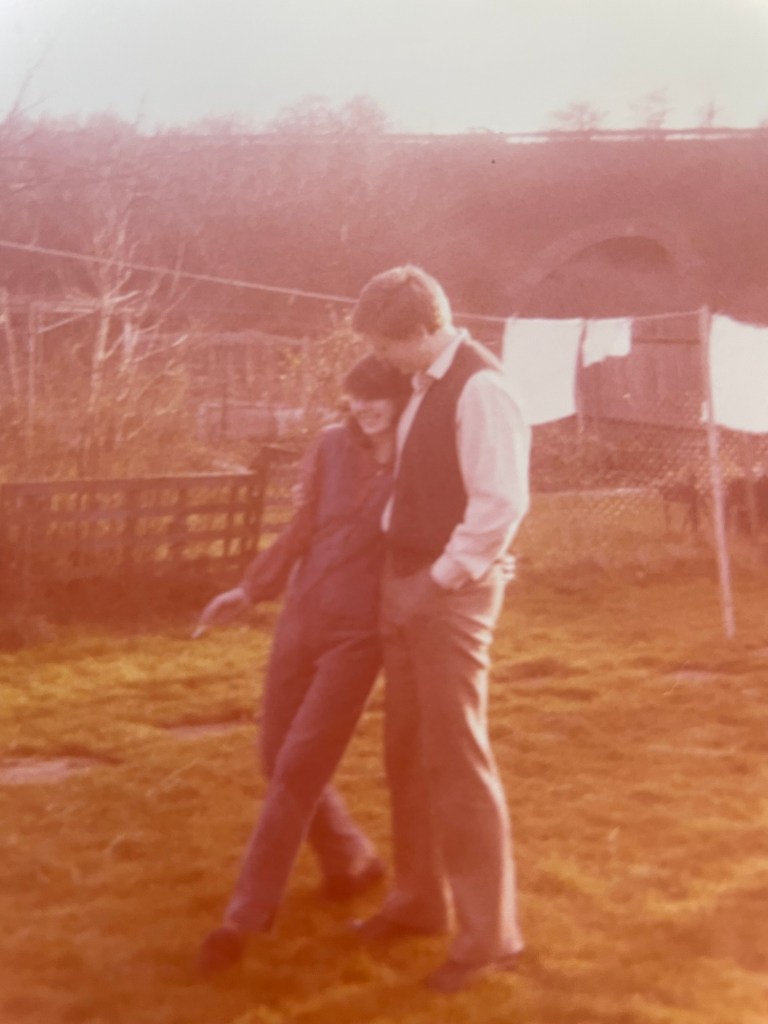
You can have an enormous capacity to love, but that does not mean someone will always have access to it.
There is a moment in my first marriage that I have never forgotten.
Following an argument, I was playing with my two Jack Russell dogs when my husband watched me and made an observation that has stayed with me over the years.
He said:
“You have so much love to give inside of you, sadly not to me.”
It was an interesting observation, and perhaps a rather perceptive one. He recognised that I had a great deal of affection, warmth and love within me, but that something had changed in the way I felt towards him.
What makes this relationship particularly significant is that he was not simply a former partner. He was the father of my two children. We had shared a family, years of memories, experiences and the responsibilities that come with bringing children into the world.
That history does not simply disappear when a marriage changes or comes to an end.
There is a particular emotional complexity in reaching a point where you no longer feel the same romantic love for someone with whom you have built a family.
You may always recognise their place in your life story, but that does not mean you can continue to offer them the same emotional intimacy.
When betrayal changes the availability of love
I have often thought about how betrayal changes a relationship.
When someone cheats, lies or breaks the trust that has been built over years, something fundamental can shift.
It is not always an immediate loss of love. Sometimes it is the gradual erosion of the feelings that once made you want to be close to that person.
You might remember how much you once loved them. You might remember the excitement of falling in love, the early years, the family holidays, the birth of your children and all the ordinary moments that made up your shared life.
But memories cannot necessarily restore what has been damaged.
Trust is an essential part of emotional intimacy. When it is repeatedly broken, affection can become difficult to access.
You may find that you no longer want to share your day, seek their attention, make plans together or offer the tenderness that once came naturally.
This does not necessarily mean that you have become cold or incapable of loving.
It may simply mean that your feelings towards that particular person have changed.
Being the father of your children is a different kind of connection
One of the most complicated aspects of a relationship ending is recognising that the person you no longer wish to be romantically involved with remains the father of your children.
You cannot erase that connection, nor would you necessarily want to.
Your children are part of your shared history and will always represent something significant that came from that relationship.
There is a difference between the love you once felt for your husband and the recognition of his role as your children’s father.
You can acknowledge that role without wanting to return to the marriage.
You can respect the years you spent together without pretending that everything was good.
You can remember the family you created without feeling obliged to recreate the relationship.
And you can wish someone well without wanting them to have the same place in your emotional world that they once occupied.
Sometimes this is one of the hardest things to accept: a person can remain important to your history without remaining important to your future in the same way.
Forgiveness does not automatically restore love
There is often an assumption that if you forgive someone, you should be able to return to the relationship as it was.
But forgiveness and reconciliation are two very different things.
You might eventually let go of anger, stop revisiting the hurt and no longer feel the need to seek explanations.
That does not mean the attraction returns, the trust is restored or the emotional connection can be rebuilt.
Some experiences change how you see someone permanently.
You can forgive without forgetting. You can understand without agreeing. You can move forward without reopening a door that you have consciously chosen to close.
Most importantly, you do not have to keep giving someone access to your affection simply because you once loved them.
Your capacity to love is still there
Looking back at my husband’s observation, I think there was an important truth in what he said.
I did have a great deal of love to give. I still do.
My ability to care, show affection, be generous, enjoy companionship and make someone feel loved was never dependent on one particular relationship.
But I have come to understand that love is not simply something we give without consideration of how we are treated.
It needs trust, mutual respect, emotional safety and a willingness from both people to nurture the relationship.
When those foundations are damaged, our feelings can change.
The love that once belonged within a marriage can gradually find expression elsewhere: in our children, our family, our friendships, our animals, our interests and the life we create for ourselves.
That is not a failure to love.
It is recognising that our emotional world is bigger than one relationship.
A final reflection
Perhaps my first husband’s words stayed with me because they captured something important about human relationships.
We can have so much love within us, but love is not an unconditional promise to remain emotionally available to someone forever.
Being the father of my children will always be part of his place in my life story. The years we shared will always have happened, and the family we created will always be part of who I am.
But being someone’s partner is different from being connected through children, memories and shared history.
I believe we should be able to recognise both truths.
You can honour the past without wanting to return to it. You can acknowledge someone’s importance in your life without continuing to love them as a partner. And you can retain an enormous capacity for love while recognising that a particular person no longer has access to it.
Sometimes the most honest thing we can do is accept that the relationship has changed, rather than continuing to pretend that the feelings are still there.
And that does not make the love we once shared any less real.