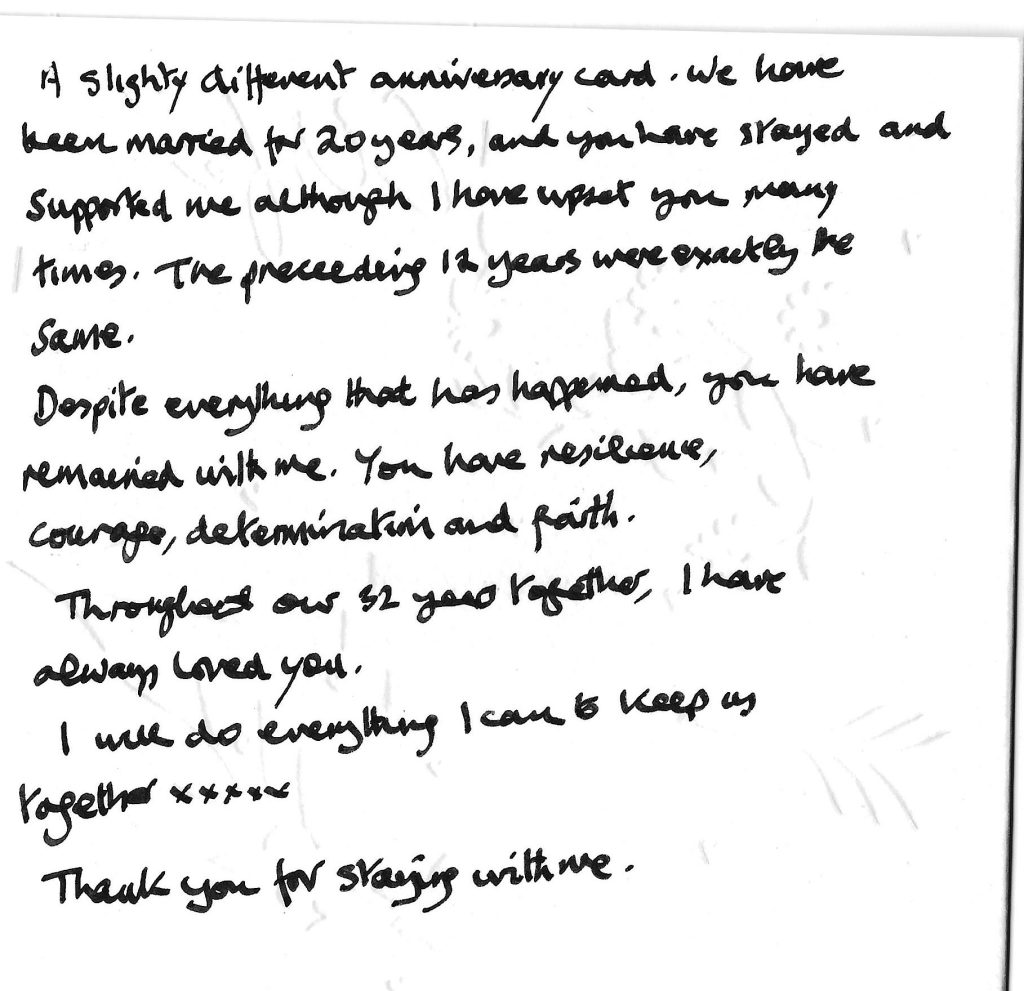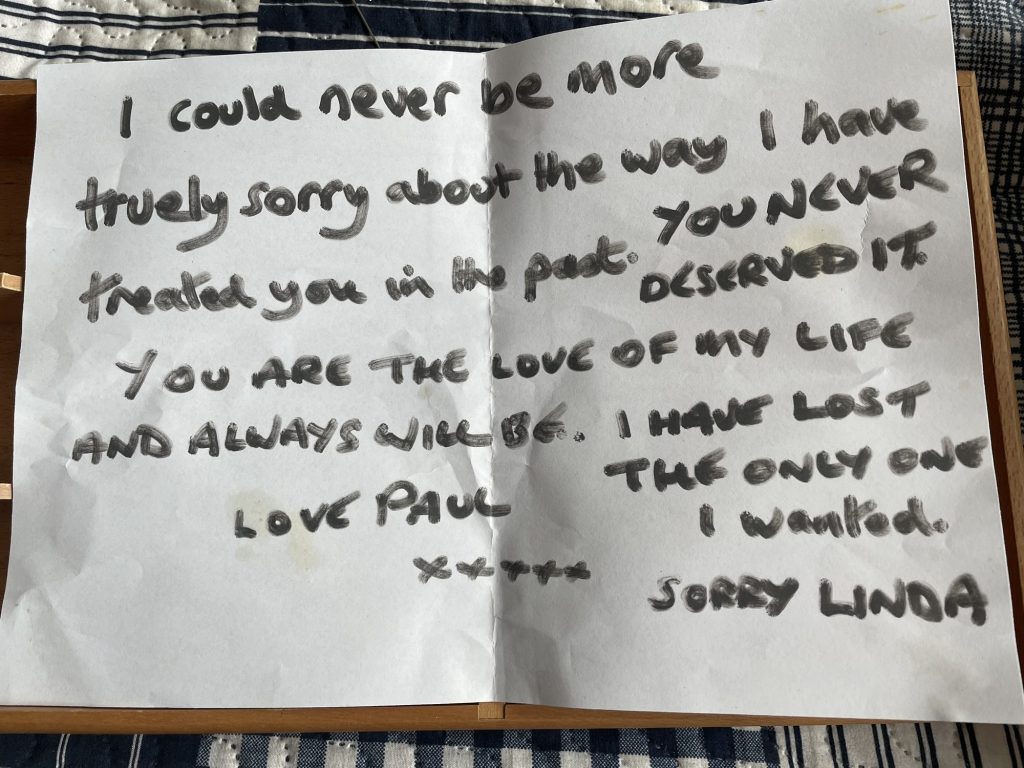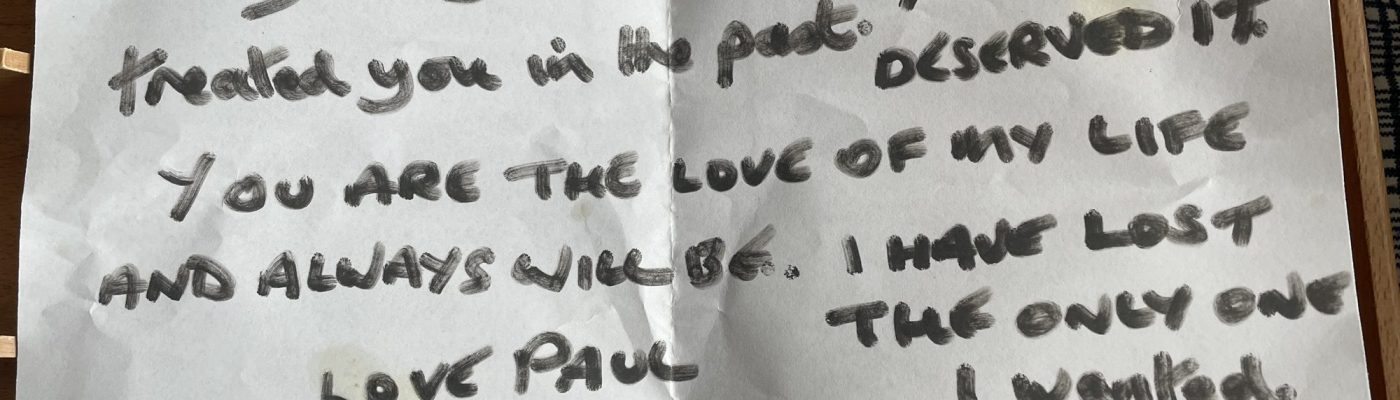
While unpacking boxes after my move, I came across some handwritten notes from my former husband.
They read:
“I will always love you.”
“You are the only one I ever wanted.”
“You never deserved it. I am sorry.”
I paused for a long time.
If those words were true, why were they followed by years of conflict? Why did the arguments over money continue long after our relationship had ended? Why did the legal battles become so prolonged? Why did I experience intimidation, blackmail, and threats that I would be left with nothing? Why did hostile messages from family members become part of the experience?
These are questions that many survivors ask.
When someone’s words consistently contradict their behaviour, it can leave you questioning your own reality. You stop trusting your instincts because what you hear and what you experience are completely different.
This confusion is one of the most painful aspects of psychological abuse.
An apology has little meaning if harmful behaviour continues.
Declarations of love lose their value when they are repeatedly followed by actions that create fear, insecurity, or ongoing conflict.
Real love is demonstrated through respect, honesty, empathy, and accountability. It is shown in everyday actions, especially when relationships become difficult. Love does not require someone to live in a constant state of anxiety or uncertainty.
Looking back now, I no longer spend my energy trying to make sense of every contradiction. I have accepted that not every question will have an answer that satisfies me.
What matters is not what was written on pieces of paper.
What matters is what was lived.
Today, I choose to believe actions over promises, consistency over declarations, and peace over conflict.
The notes no longer confuse me. Instead, they remind me how important it is to judge relationships by patterns of behaviour, not by words spoken in moments of regret.
For anyone recovering from coercive control or psychological abuse, remember this: love is not proven by what someone says. It is proven by how safe, respected, and valued you feel in their presence.
When words and actions don’t match, believe the actions.