The abuse develops gradually
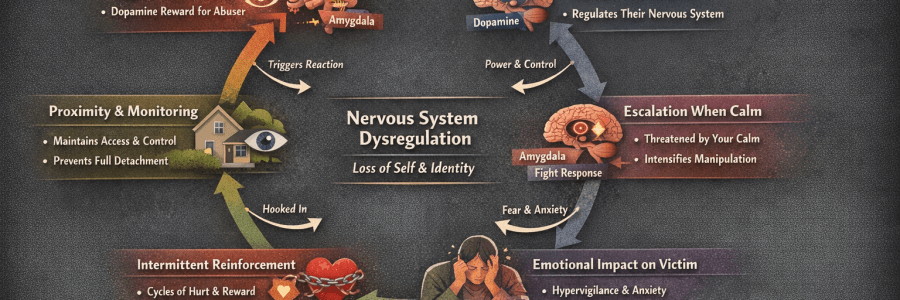
Coercive control is often misunderstood because many people imagine abuse as a series of isolated violent incidents. In reality, coercive control is usually a pattern of domination that gradually strips away a person’s freedom, confidence, independence, and sense of self. 1. The abuse develops gradually The relationship may start with affection, attention, promises, and emotional connection. Control… Read More The abuse develops gradually

Involving underage children in covering up abuse

Involving underage children in covering up abuse, coaching them to lie, or pressuring them to protect adults is considered a very serious safeguarding concern. Psychologically, this can place children into what is called a loyalty bind — where they feel forced to choose between truth and attachment to caregivers. That conflict can create long-term effects on the… Read More Involving underage children in covering up abuse

Abuse is not a “two versions of reality”

Abuse is not a “two versions of reality” situation in any meaningful moral sense.Whatever cognitive or emotional narratives people build afterwards, abuse is defined by behaviour and its impact, not by interpretation. ⚖️ The important distinction 1. Abuse is behaviour-based, not perception-based In psychology and law, abuse is identified through patterns of actions, such as: coercion or… Read More Abuse is not a “two versions of reality”

Trust After Trauma: Learning to Recognise Safe People Again

Introduction After experiencing emotional abuse, coercive control, or relational trauma, many people find that trust feels confusing, fragile, or even unsafe. It is common to ask: “How do I know who is safe?” “Can I trust my judgement again?” “Why do I doubt good people?” These questions are not signs of weakness — they are… Read More Trust After Trauma: Learning to Recognise Safe People Again

Clearing out the old after trauma

Clearing out the old after trauma—is a real process in both therapeutic neuroscience and psychology. It’s less about “forgetting” and more about rewiring. Here’s what happens: 1. Trauma changes the brain’s alarm system Trauma can make the: Amygdala become overactive (“danger!”) Hippocampus store memories as fragments Prefrontal Cortex go partly offline under stress That’s why people can feel “stuck… Read More Clearing out the old after trauma

Emotional blunting

“colours look brighter,” “music sounds better,” “I feel more alive”—is one of the most fascinating and hopeful parts of trauma recovery. It’s not “just psychological.”It’s deeply neurobiological. Your brain is literally changing state. 1. During trauma, the brain conserves energy by turning down feeling Under chronic stress, the brain prioritizes survival over pleasure. The Amygdala says: “Danger first.”… Read More Emotional blunting

No One Is Coming to Save You — And That’s Where Your Power Begins

(The neuroscience and psychology of self-rescue) At first, that phrase can sound harsh: “No one is coming to save you.” Especially after trauma, heartbreak, or abuse—when all you want is relief, rescue, or someone to finally make the pain stop. But psychologically, it is not a punishment. It is an awakening. Because hidden inside that… Read More No One Is Coming to Save You — And That’s Where Your Power Begins

“When the going gets tough, the tough get going.”

“When the going gets tough, the tough get going.” It means that when life becomes difficult, resilient people respond by taking action rather than giving up. In trauma recovery, that can mean something quieter than “pushing harder.” It might mean: asking for help, resting when your body needs it, setting a boundary, walking away from… Read More “When the going gets tough, the tough get going.”