For generations, domestic abuse was often viewed as a “private family matter.” Unless there were visible injuries, many survivors were dismissed, disbelieved, or told to simply “work things out.” Today, the courts are beginning to recognise a truth that survivors have always known: abuse leaves wounds that cannot always be seen.
A recent Canadian court judgment is another important step in that direction. The court acknowledged that a woman who endured decades of violence, threats, intimidation and coercive control had suffered profound physical and psychological harm. The decision reinforces an essential principle: a spouse does not lose the right to safety, dignity or legal protection simply because the abuse occurs within a marriage or continues over many years.
Abuse Is More Than Physical Violence
When people think of domestic abuse, they often picture black eyes or broken bones. While physical injuries are devastating, they are only one part of the story.
Many survivors live with:
- Constant fear of saying or doing the wrong thing.
- Threats that create a state of permanent anxiety.
- Financial control that removes independence.
- Emotional manipulation that destroys self-worth.
- Isolation from family and friends.
- Intimidation that makes escape feel impossible.
These behaviours are known as coercive control—a sustained pattern of domination designed to strip away another person’s freedom, confidence and identity.
The Brain Under Constant Threat
Living in an abusive relationship changes the brain.
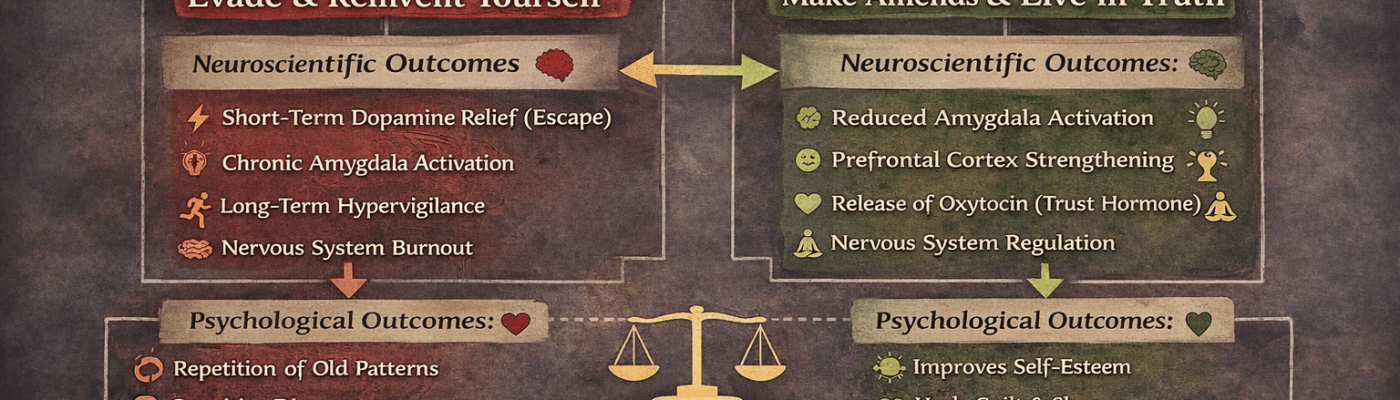
When someone experiences repeated fear, the nervous system remains in survival mode. Stress hormones such as cortisol and adrenaline are continually released. Over months and years, this can affect memory, concentration, sleep, physical health and emotional regulation.
The brain learns to anticipate danger, even when none is immediately present.
Many survivors describe:
- Walking on eggshells.
- Being constantly hypervigilant.
- Losing confidence in their own judgement.
- Feeling numb or emotionally detached.
- Struggling to make even simple decisions.
These are not signs of weakness.
They are normal neurological responses to prolonged trauma.
The Invisible Prison
One of the most misunderstood aspects of domestic abuse is why victims stay.
The answer is rarely simple.
Years of manipulation, intimidation and intermittent kindness create powerful psychological bonds. The victim may genuinely believe leaving will make things worse. Threats against children, pets, finances or even death become part of everyday life.
Gradually, the abusive relationship becomes an invisible prison.
From the outside, others may ask, “Why didn’t you leave?”
A better question is:
“What made leaving so incredibly dangerous?”
The Loss of Identity
Long-term abuse slowly erodes a person’s sense of self.
Many survivors stop expressing opinions.
They avoid making decisions.
They apologise constantly.
They begin to believe they are the problem.
Their world becomes smaller and smaller until surviving each day becomes the only goal.
The damage extends far beyond the relationship itself. Survivors often struggle to trust others, rebuild friendships, return to work, manage finances independently or believe they deserve happiness.
Healing Takes Longer Than Leaving
Walking out of the front door is not the end of the journey.
For many survivors, it is only the beginning.
The body may still react as though danger is present. A raised voice, a slammed door, an unexpected text message or even certain smells can trigger the nervous system back into survival mode.
This is why healing requires patience.
Recovery involves far more than “moving on.” It involves helping the brain and body understand that the threat has finally ended.
Through trauma-informed approaches such as EMDR, somatic therapies, nervous system regulation, mindfulness and compassionate support, survivors can gradually rebuild a sense of safety, confidence and emotional resilience.
Why Legal Recognition Matters
Court judgments that acknowledge psychological harm send a powerful message.
They recognise that abuse is not simply about isolated acts of violence. It is about the cumulative impact of years of fear, coercion and control.
When the legal system validates these experiences, survivors receive something many have been denied for years:
They are believed.
Recognition cannot erase decades of abuse, but it can restore dignity. It tells survivors that what happened to them mattered, that their suffering was real, and that society no longer accepts coercive control as merely “marital problems.”
There Is Life After Abuse
Many survivors worry they will never feel normal again.
Healing is rarely quick, but it is absolutely possible.
The brain has an extraordinary ability to adapt and recover—a process known as neuroplasticity. With the right support, survivors can rebuild confidence, restore healthy relationships, rediscover joy and create lives that are peaceful, purposeful and free.
The scars of abuse may always be part of their story.
But they do not have to define the chapters that come next.
Every survivor deserves to live with safety, dignity, freedom and hope.

