Recognising dangerous relational dynamics.

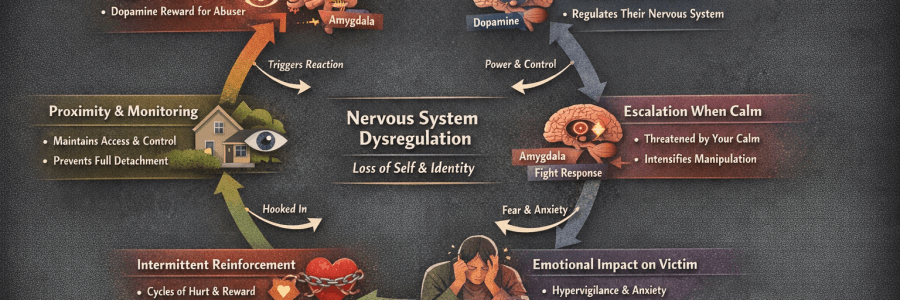
This chart helps identify abusive psychological patterns early, understand why abuse happens, and support trauma recovery and prevention. This is not about labels.This is about recognising dangerous relational dynamics. 🔍 Core Relationship Comparison Chart Psychological Area Healthy Partner Abusive / High-Risk Partner Emotional Regulation Can self-soothe, reflect, calm down Explosive anger, rage, emotional volatility Responsibility Takes accountability, apologises, repairs… Read More Recognising dangerous relational dynamics.

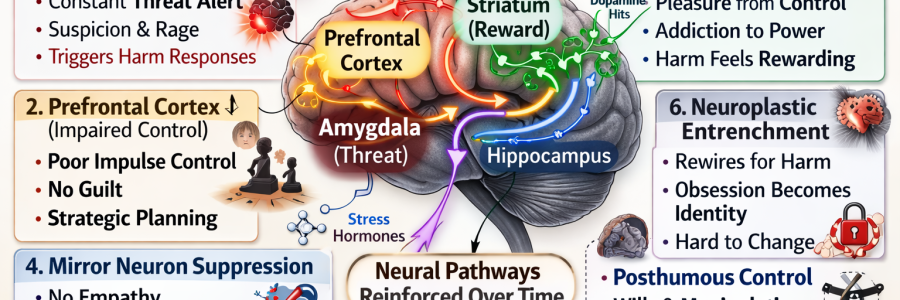
🔴 Core High-Risk Psychological Indicators

High-risk behaviour profiles describe patterns of thinking, emotional regulation, and behaviour that significantly increase the likelihood of psychological harm, emotional abuse, coercive control, and physical violence within relationships. These patterns are not personality flaws.They are deeply ingrained nervous system and psychological survival strategies — often rooted in trauma, attachment disturbance, or maladaptive control systems. Understanding these profiles empowers: 🔴… Read More 🔴 Core High-Risk Psychological Indicators

Q & A – What Does This Pattern of Behaviour Suggest?

I’ll answer clearly, responsibly, and safely — without diagnosing — while giving you psychological insight and protection-focused guidance. You described someone who: This combination of behaviours points to severe emotional dysregulation, control patterns, and possible obsessive or paranoid coping mechanisms — not normal behaviour, and not healthy. 🧠 What These Behaviours Can Indicate (Psychologically) 1. Ritualistic behaviours (paper, symbols, signs) This… Read More Q & A – What Does This Pattern of Behaviour Suggest?

When Families Know About Abuse

One of the reasons many survivors don’t speak out sooner is simple:they already know they won’t be supported. In some families, the abuse isn’t a secret.It has been seen before.Hints have been dropped.Incidents have been witnessed, minimised, or quietly explained away. Instead of intervening, the family: This silence isn’t neutral.It’s a choice. Why This Keeps… Read More When Families Know About Abuse

When Families Know About Abuse — and Choose Silence

One of the reasons many survivors don’t speak out sooner is simple:they already know they won’t be supported. In some families, the abuse isn’t a secret.It has been seen before.Hints have been dropped.Incidents have been witnessed, minimised, or quietly explained away. Instead of intervening, the family: This silence isn’t neutral.It’s a choice. Why This Keeps… Read More When Families Know About Abuse — and Choose Silence

Why It Took So Long to Speak Out. A Trauma‑Informed Neuroscience Perspective

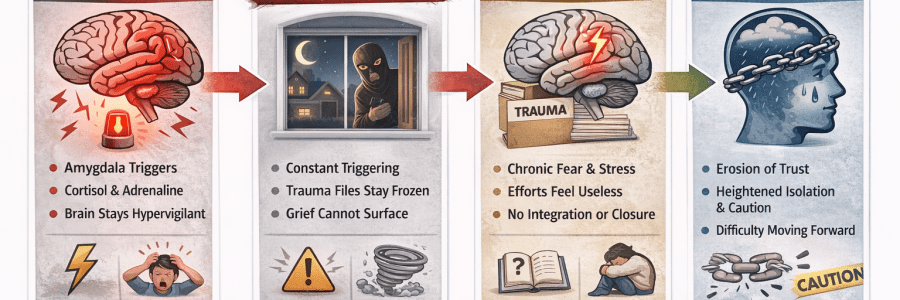
Many survivors ask themselves this question:Why did it take so long to speak out about what happened? The answer isn’t weakness.It’s neuroscience. 1. The Brain Prioritises Safety First When a person is in harm’s way — physically or emotionally — the brain shifts into survival mode.This is not a choice. It’s biology. In threat states:… Read More Why It Took So Long to Speak Out. A Trauma‑Informed Neuroscience Perspective

In Simple Terms: What’s Actually Going On

This isn’t new behaviour.It’s the same pattern that’s been happening for decades — just playing out in a different way. When someone ignores divorce proceedings, doesn’t respond to solicitors, blocks the sale of a house, removes signs, and then later blames or sues you for delays — that isn’t confusion or bad communication. It’s control.… Read More In Simple Terms: What’s Actually Going On

“This Isn’t New — It’s the Same Game in a Different Arena”Why Long-Term Mind Games Continue After Separation

When you’ve lived with decades of psychological manipulation, the most destabilising part isn’t the behaviour itself. It’s the moment you realise:This is just a continuation of the same pattern. Different setting.Different language.Same impact on your nervous system. That recognition is not bitterness.It’s pattern recognition. What Kind of Person Does This? From a trauma-informed and neuroscience perspective,… Read More “This Isn’t New — It’s the Same Game in a Different Arena”Why Long-Term Mind Games Continue After Separation

How to Deal With This Without Going Crazy(A Trauma-Informed, Neuroscience-Based Guide)

First, an important reframe: If you feel anxious, angry, hyper-alert, exhausted, or mentally foggy in this situation, you are not “going crazy.”Your nervous system is responding normally to an abnormal level of prolonged uncertainty and control. The goal is not to “stay calm.”The goal is to stay regulated enough to function and protect yourself. 1. Stop Treating This… Read More How to Deal With This Without Going Crazy(A Trauma-Informed, Neuroscience-Based Guide)