Albert Bandura’s moral disengagement 

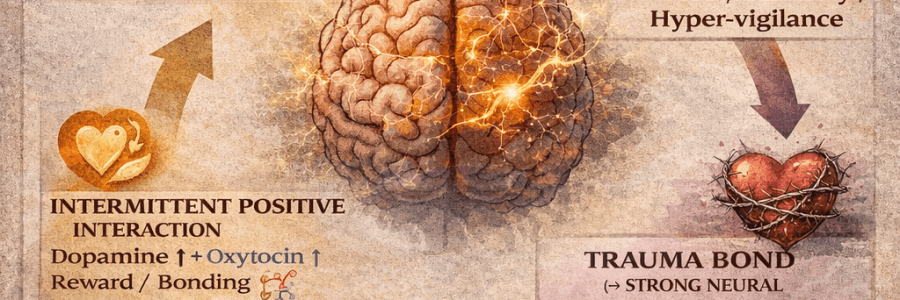
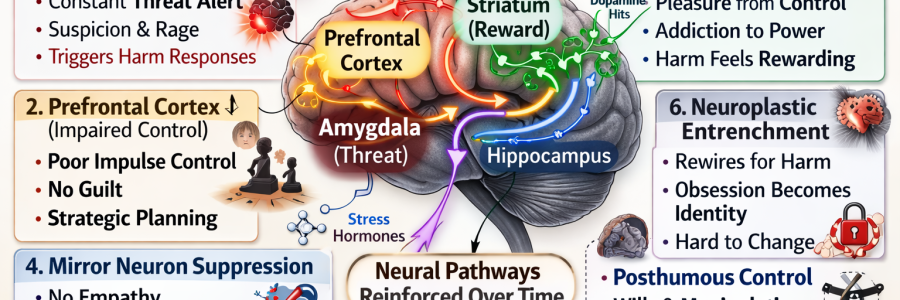
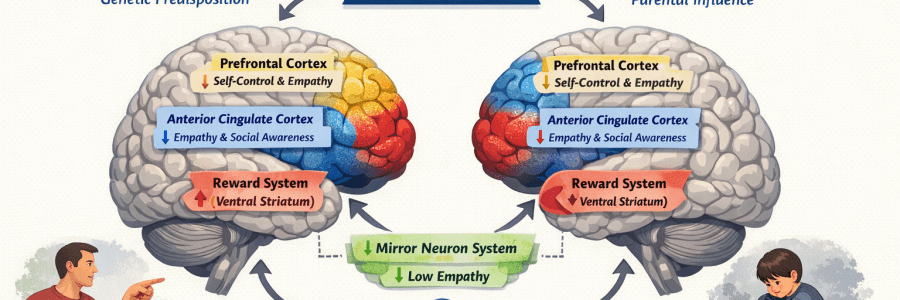
Albert Bandura’s moral disengagement refers to the psychological process by which people justify or rationalise harmful behaviour so they can do it without feeling guilt or self-condemnation. It was developed by psychologist Albert Bandura as part of his social cognitive theory. 🧠 Definition (clear version) Moral disengagement mechanisms are mental strategies that allow a person to: act in ways that… Read More Albert Bandura’s moral disengagement 

The truth about attachment patterns

Attachment styles are formed early through repeated emotional experiences.They become automatic nervous system responses, not just beliefs. So when we say: “Attachment doesn’t change on its own” What we really mean is: ✔️ Without new experiences, it tends to repeat Because the brain keeps using what it already knows: 🔁 Why it doesn’t naturally change Even… Read More The truth about attachment patterns

Childhood Attachment & Abuse Dynamics

Why some people tolerate what others would never accept Not everyone who experiences abuse stays.And not everyone who stays is weak. The difference often begins in childhood. 👶 The Original Blueprint As a child, you don’t choose your environment.You adapt to it. If love, safety, or attention were inconsistent, withdrawn, or conditional, your nervous system… Read More Childhood Attachment & Abuse Dynamics

Childhood Attachment & Abuse Dynamics

Why some people tolerate what others would never accept Not everyone who experiences abuse stays.And not everyone who stays is weak. The difference often begins in childhood. 👶 The Original Blueprint As a child, you don’t choose your environment.You adapt to it. If love, safety, or attention were inconsistent, withdrawn, or conditional, your nervous system… Read More Childhood Attachment & Abuse Dynamics

Childhood Attachment & Adult Relationship Patterns

Where it starts—and how it shows up later Attachment isn’t something that suddenly appears in adulthood.It is formed early—through repeated emotional experiences in childhood. Not just what happened to you.But what was missing, inconsistent, or unsafe. 👶 How Attachment Forms in Childhood A child learns about relationships through one core question: “When I need you, what… Read More Childhood Attachment & Adult Relationship Patterns

Attachment Style Self-Assessment Checklist

Understand how you connect, react, and relate in relationships Instructions:Read each statement and tick the ones that feel true for you. Don’t overthink—go with your instinct. 🔵 SECURE ATTACHMENT ☐ I feel comfortable with closeness and independence☐ I trust people without needing constant reassurance☐ I communicate openly about my feelings☐ I don’t panic when someone… Read More Attachment Style Self-Assessment Checklist

Attachment Styles Compatibility Chart

Your Style ↓ / Partner → Secure Anxious Avoidant Fearful-Avoidant Secure ✅ Best matchStable, mutual, healthy ⚖️ Can workSecure grounds anxious ⚖️ Can workSecure softens avoidant ⚖️ MixedNeeds patience Anxious ✅ Very goodFeels safe, reassured ⚠️ IntenseEmotional highs/lows ❌ Common but painfulPush–pull dynamic ⚠️ ChaoticUnpredictable Avoidant ⚖️ Can workSecure gives space + warmth ❌ Classic trapOne chases, one withdraws… Read More Attachment Styles Compatibility Chart

The classic pairings that feel like a fit

Avoidant + Anxious (often called the “pursuer–distancer” dynamic) Avoidant + Highly self-reliant / “low-demand” partner Avoidant + Caretaking / over-functioning partner What actually works long-term Not a type — but a capacity shift. Avoidant dynamics become sustainable when: So the closest thing to a “healthy match” is: The key insight Avoidant systems don’t look for “perfect matches.”They look… Read More The classic pairings that feel like a fit

Professional Evidence Table: Emotional & Psychological Abuse

Category of Evidence Description What It May Include Why It Matters Reliability Level Victim Contemporaneous Records Notes written close to the time of incidents Diaries, journals, dated logs, personal accounts, email-to-self records Captures immediate emotional impact and reduces hindsight distortion High Digital Communications Messages showing patterns of psychological control Texts, emails, voice notes, WhatsApp messages… Read More Professional Evidence Table: Emotional & Psychological Abuse