When Cruelty Crosses The Line

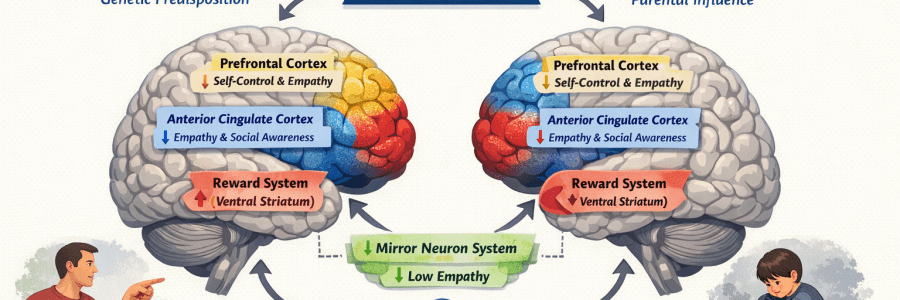
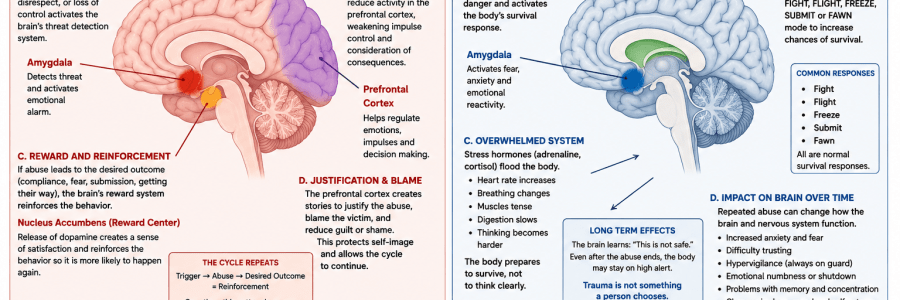
Cruelty can be abuse, but cruelty and abuse are not interchangeable terms. A useful way to understand the progression is: Cruelty describes harmful treatment.Abuse describes a broader pattern of harmful, controlling, exploitative or coercive behaviour. When cruelty becomes repeated, deliberate and part of a pattern that causes physical, emotional, psychological or financial harm, it can properly… Read More When Cruelty Crosses The Line

The important difference

Behaviour What it means What happens to the other person’s suffering? Example Ordinary cruelty Deliberately causing pain, humiliation or distress, or showing a serious disregard for another person’s suffering The suffering is known but disregarded Knowing someone is already distressed and deliberately saying something designed to hurt or humiliate them Bullying Repeated behaviour intended to intimidate,… Read More The important difference

Cruelty, sadism and moral disengagement are not the same thing

Concept What it means Relationship to another person’s suffering Cruelty Deliberately causing or allowing suffering, pain, humiliation or distress The suffering is knowingly inflicted or disregarded Sadism Deriving gratification, pleasure or satisfaction from another person’s suffering or humiliation The suffering itself can become rewarding Moral disengagement Psychological processes that allow someone to harm or exploit… Read More Cruelty, sadism and moral disengagement are not the same thing

When Vulnerability Becomes an Opportunity: The Psychology of Mercenary Behaviour

There are moments in life when human beings are at their most vulnerable. Illness. Hospitalisation. Bereavement. Divorce. Financial crisis. Family emergencies. Exhaustion. Fear. These are the moments when we instinctively expect the people around us to become more compassionate, not less. We expect a friend, partner, relative or trusted person to say: “How can I help?”… Read More When Vulnerability Becomes an Opportunity: The Psychology of Mercenary Behaviour

Privacy Is Not Secrecy

Privacy and secrecy differ significantly in relationships. Privacy allows individuals to maintain personal boundaries, fostering trust, while secrecy may conceal crucial truths that affect informed choices. Healthy relationships thrive on integrity and honesty, not on the manipulation of information. You deserve the right to know relevant past details to make informed decisions.… Read More Privacy Is Not Secrecy

They May Not Discover the Truth Until They Are Already Living It

The text discusses the complex dynamics of hidden abuse within relationships, emphasizing that partners may conceal their abusive pasts through minimization, blame, and family reinforcement. Recognizing abusive patterns is crucial for new partners, as these hidden histories can emerge over time, often leaving victims feeling trapped and deceived.… Read More They May Not Discover the Truth Until They Are Already Living It

When the Past Has Been Hidden: The Next Partner May Not Know

Hidden abusive histories can mislead new partners, who may unknowingly enter relationships with individuals exhibiting harmful patterns. Families often perpetuate this concealment, shielding abusers from accountability. Genuine change requires acknowledgment of past behavior and the demonstration of consistent positive actions. Honesty is crucial for informed decision-making in future relationships.… Read More When the Past Has Been Hidden: The Next Partner May Not Know

The Next Victim: When Abusive Behaviour Follows the Person

“He’ll be different with someone else.” It is something survivors are sometimes told. Perhaps the relationship has ended. Perhaps he has moved on. Perhaps there is already another woman in his life. And you may find yourself wondering: Will he treat her better? Was I the problem? Why couldn’t he behave like that with me?… Read More The Next Victim: When Abusive Behaviour Follows the Person

“Keep It in the Family” Can Be Dangerous: Why Silence Protects Abuse, Not Victims

Abuse thrives in secrecy.

Whether it is physical violence, coercive control, emotional abuse, financial abuse or sexual abuse, perpetrators often rely on silence to continue their behaviour.

When victims are discouraged from speaking, or when those around them minimise what they disclose, the abusive behaviour can become more frequent, more severe and more dangerous.

Silence is not a solution.… Read More “Keep It in the Family” Can Be Dangerous: Why Silence Protects Abuse, Not Victims

Why the Period Around Separation Can Be the Most Dangerous

Survivors of domestic abuse often face heightened risks after leaving their relationship, as abuse can escalate during separation or legal disputes. Abusers may resort to intimidation, stalking, and manipulation to regain control. It’s crucial for survivors to take threats seriously and seek support to ensure their safety.… Read More Why the Period Around Separation Can Be the Most Dangerous