What’s happening in your brain during therapy
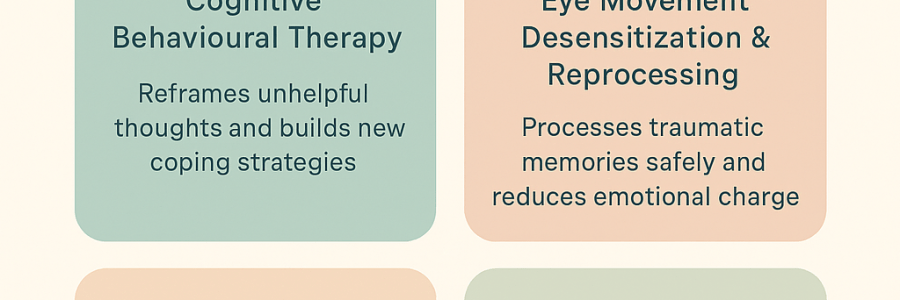
1. The threat system starts to settle At the beginning of therapy—especially if someone is anxious or traumatised—the brain often has a more active: amygdala (alarm system) stress hormones like cortisol As you speak in a safe, structured environment, something important happens: the brain starts to detect “this is not danger” This reduces hypervigilance over time.… Read More What’s happening in your brain during therapy
Why people have therapy (neuroscience + psychology)

1. Emotional overload (the nervous system is stuck “on”) From a neuroscience view, chronic stress keeps the amygdala overactive (threat detection system), while the prefrontal cortex (reasoning, regulation) becomes less effective. People come to therapy because: anxiety won’t switch off panic or hypervigilance persists emotional reactions feel “too big” Therapy helps retrain the brain to feel safety again. 2.… Read More Why people have therapy (neuroscience + psychology)

A divorce party

A divorce party—especially after leaving an abusive relationship—is not really about celebrating a marriage ending. It’s about celebrating you returning to yourself. For many people, divorce marks grief and loss.For others, particularly survivors of coercive control or abuse, it marks something very different: freedom. It can be the first day in years that your nervous system begins… Read More A divorce party

Remember

That experience—when someone enters your life and things suddenly feel different—has a real basis in both neuroscience and psychology. Sometimes one healthy relationship can become a corrective emotional experience. Corrective Emotional Experience It can change not just how you feel about them—but how you feel about yourself, other people, and what is possible. Why it feels so powerful A safe,… Read More Remember

Healthy relationships become a mirror.

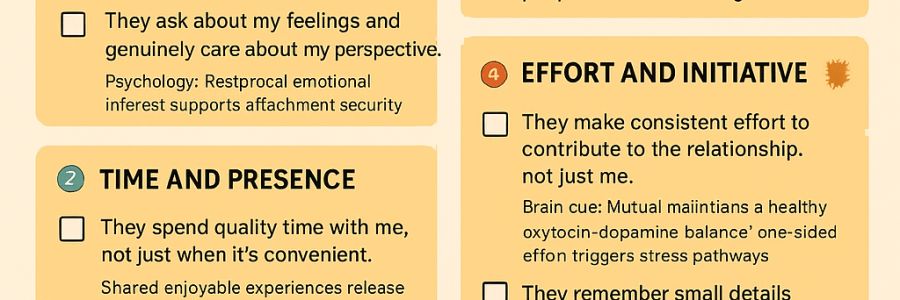
Sometimes you don’t fully understand how abnormal something was until you experience what normal actually feels like. That’s not denial—that’s contrast. The psychology of contrast Your brain learns what “normal” is from repeated experience. Social Referencing If you’ve lived for years around: tension, criticism, secrecy, unpredictability, your nervous system adapts: “this must be how life is.” Then… Read More Healthy relationships become a mirror.

“Normal enough to survive.”

`The human brain is remarkably good at adapting—even to unhealthy environments. That’s one of its greatest strengths, and sometimes one of its greatest traps. Normalization through adaptation. Habituation When something happens repeatedly—criticism, control, emotional coldness, instability—the brain starts to treat it as:“normal enough to survive.” Not because it is healthy.Because it is familiar. 1. The… Read More “Normal enough to survive.”

“It feels like I’ve woken up.”

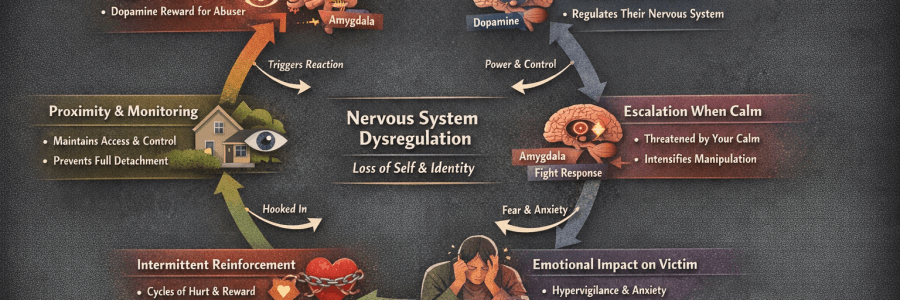
“It feels like I’ve woken up.” That’s not just poetic—it has a strong basis in neuroscience and psychology. When someone lives for a long time under chronic stress, manipulation, or abuse, the brain can function in a kind of survival trance. Hypervigilanceand sometimesDissociation can make life feel: foggy, unreal, narrowed, repetitive, exhausting. Many people say: “I… Read More “It feels like I’ve woken up.”