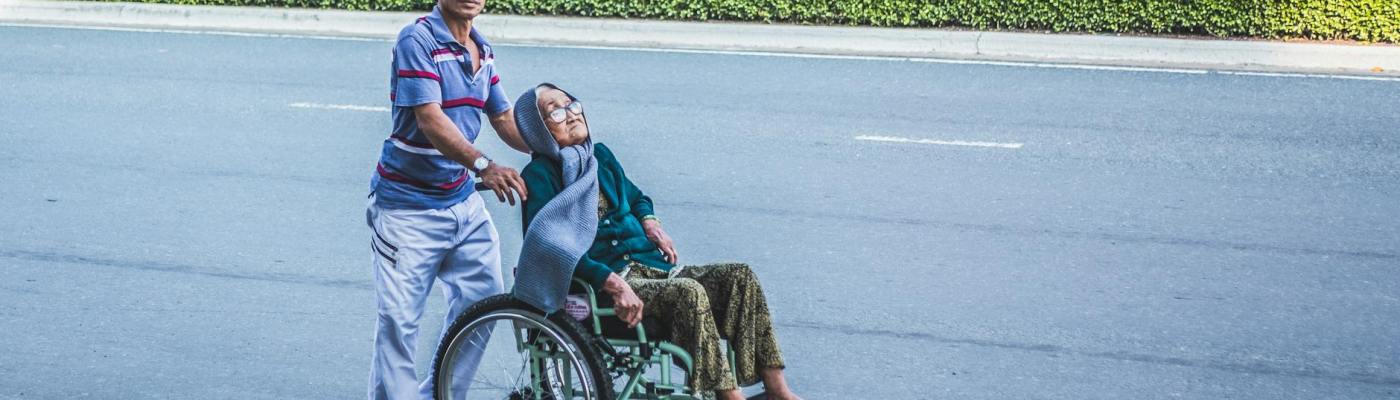
One of the most painful realities some parents face is the growing realisation that their adult children have no intention of helping, supporting, or caring for them as they grow older.
This is not about expecting children to sacrifice their own lives or become full-time carers. Most loving parents want their children to be independent, successful, and happy. What hurts is when the message becomes unmistakably clear: “If things get difficult, you’re on your own.”
Sometimes the signs are subtle. Sometimes they are not.
You may hear conversations that revolve endlessly around money, inheritances, property values, possessions, and what everything is worth. Yet when it comes to offering practical support, emotional care, companionship, or concern for an ageing parent’s wellbeing, there seems to be little interest.
Questions about health are replaced by questions about finances.
Concern is replaced by calculation.
Connection is replaced by transactions.
For parents who have spent decades raising children, making sacrifices, and putting family first, this can be a heartbreaking discovery.
Of course, every family situation is different. Some adult children may be struggling with their own challenges, financial pressures, health problems, or unresolved family wounds. Relationships are rarely simple, and there are often multiple perspectives.
However, there are times when actions speak louder than words.
When someone repeatedly makes it clear they do not wish to be involved, when they openly state they will leave if responsibility arises, when discussions focus almost entirely on assets rather than people, and when support is absent despite genuine need, it becomes difficult to ignore what is being communicated.
One of the hardest lessons in life is accepting people for who they are rather than who we hope they will become.
Many parents spend years waiting for a change of heart, believing that when a crisis comes, their children will step forward. Sometimes that happens. Sometimes it doesn’t.
The challenge then becomes not how to change them, but how to protect yourself.
That may mean making practical plans for later life, building friendships and support networks, seeking professional advice, creating financial security where possible, and refusing to base your future on expectations that may never be fulfilled.
There is a difference between being blind to reality and holding onto hope.
Hope can be healthy.
Denial can be dangerous.
The most empowering position is often to see people clearly, accept what they are showing you through their actions, and make decisions based on reality rather than wishful thinking.
Because when people consistently show you where their priorities lie, it is wise to pay attention.

