Safe Disengagement When ASPD-Type Dynamics Are Present
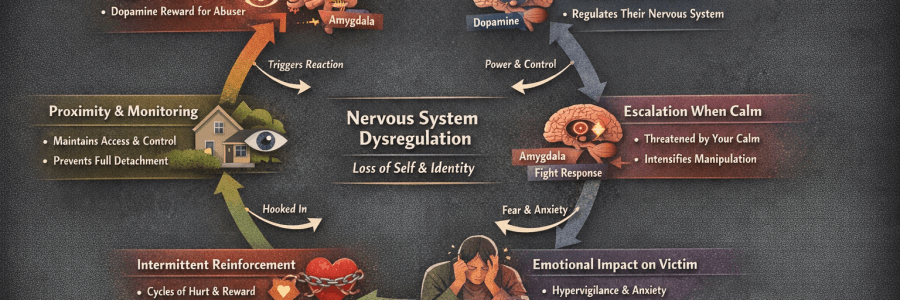
When antisocial traits are involved, disengagement is not relational — it is operational.You are not leaving a mutual bond; you are exiting a system where you were an asset. 🧭 Core Shift (This Is Non-Negotiable) You are not dealing with misunderstanding — you are dealing with entitlement. There is no insight coming.There is no repair coming.There is no shared… Read More Safe Disengagement When ASPD-Type Dynamics Are Present
ASPD vs Narcissistic traits vs Avoidant attachment (in relationships)

Feature ASPD (Antisocial Personality Disorder) Narcissistic traits Avoidant attachment Core issue Low empathy + rule-breaking tendencies Self-worth regulation through admiration Fear of emotional dependence Capacity for love Can form attachment, but often conditional or self-focused Can feel attachment, but often tied to ego/validation Can feel love, but struggles to express/maintain closeness Empathy Often significantly reduced… Read More ASPD vs Narcissistic traits vs Avoidant attachment (in relationships)

ASPD stands for Antisocial Personality Disorder.

It is a mental health condition involving a long-term pattern of disregarding or violating the rights, safety and boundaries of other people. Common features can include: ASPD vs. psychopathy They are not exactly the same thing. ASPD is a formal clinical diagnosis. Psychopathy is a broader psychological construct, often associated with characteristics such as superficial charm, callousness, lack of empathy,… Read More ASPD stands for Antisocial Personality Disorder.

Addiction, Trauma & the Brain

Addiction, Trauma & the Brain Addiction can be difficult to understand — both for the person experiencing it and for the people around them. My approach looks at addiction through both neuroscience and psychology, recognising that addictive behaviour can involve changes in the brain’s reward, motivation, learning, stress and self-regulation systems. Addiction can involve alcohol, recreational drugs… Read More Addiction, Trauma & the Brain

Rebuild Your Self-Trust After Emotional Abuse

You may have left the relationship, but the self-doubt can remain. Emotional abuse can gradually undermine your confidence in your own thoughts, feelings, memories and decisions. You may find yourself constantly second-guessing yourself, apologising when you have done nothing wrong, feeling guilty for having needs, or wondering whether you were “the problem.” You weren’t too… Read More Rebuild Your Self-Trust After Emotional Abuse