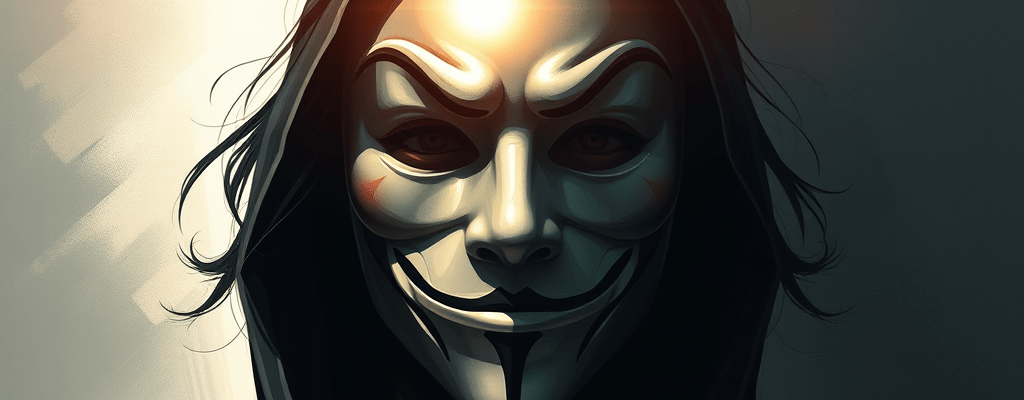
There is a particular kind of behaviour that can be deeply disturbing because what you see on the surface bears little resemblance to what is happening underneath.
They smile at you.
They tell you everything is fine.
They may sit beside you, sleep beside you, share your home and accept your financial support — while behind your back they complain about you, criticise you, undermine you or even actively work against you.
And then there is social media.
Suddenly, the world is presented with photographs of the perfect couple.
“My amazing husband.”
“My beautiful wife.”
“So lucky to have you.”
“My soulmate.”
“Still so in love after all these years.”
Heart emojis. Anniversary photographs. Romantic holidays. Public declarations of devotion.
Yet behind that carefully constructed digital curtain, something very different may be happening.
The bank account is being drained.
Money is constantly being requested.
Bills are being paid by one person while the other continues spending.
Free accommodation is expected.
Free holidays are accepted.
Free meals, gifts, cars, services and favours are taken.
And still the public performance continues:
“Look how much we love each other.”
The perfect relationship — at someone else’s expense
Social media has created an extraordinary opportunity for people to construct a version of their relationship that may bear very little resemblance to their private reality.
A photograph can show affection.
A caption can declare devotion.
A holiday photograph can suggest happiness.
But none of these things tell you what happens when the camera is switched off.
They do not show the bank statements.
They do not show the arguments about money.
They do not show who is paying for everything.
They do not show the resentment, manipulation, entitlement or secret conversations.
And they certainly do not show what is being said about the partner when that partner is not present.
A person can publicly advertise a relationship as loving and privately treat their partner as a resource.
That is one of the most uncomfortable contradictions to recognise.
“I love you” — and “I’ll take whatever you will give me”
There is nothing inherently wrong with couples sharing finances or supporting one another.
Healthy relationships often involve generosity.
The problem is the pattern.
What happens when one person continually takes while the other continually provides?
What happens when generosity becomes an expectation?
What happens when saying “no” results in anger, guilt, pressure or punishment?
What happens when the person receiving the money shows little appreciation but continues to demand more?
And what happens when, despite all of this, they continue presenting themselves publicly as the loving, devoted partner?
At that point, the issue may no longer be simply financial.
It can become about entitlement.
The belief that:
“I am entitled to what you have.”
“You should provide for me.”
“I deserve the lifestyle you can give me.”
“I don’t have to acknowledge what it costs you.”
And perhaps most disturbingly:
“I can take from you while still presenting myself as the loving partner.”
Bleeding someone financially while performing love publicly
Financial exploitation does not always look dramatic.
Sometimes it happens gradually.
One payment.
Then another.
A loan that is never repaid.
A bill “just this once.”
A holiday.
A shopping trip.
A car expense.
A phone contract.
Free accommodation.
Free meals.
Free transport.
Free childcare.
Free professional services.
Free use of someone’s possessions.
And eventually the person who is giving may realise that the relationship has become extraordinarily one-sided.
Their partner is not simply accepting occasional generosity.
They are living from the generosity.
Meanwhile, social media tells everyone how lucky they are to have such a wonderful relationship.
That contrast can be deeply unsettling.
Because the public narrative says:
Love.
The financial reality says:
Consumption.
When affection becomes part of the performance
One of the most confusing aspects of this behaviour is that affection itself can become difficult to interpret.
Is the kiss genuine?
Is the public declaration genuine?
Is the loving photograph genuine?
Or is affection being used because it helps maintain the relationship — and therefore maintains access to the security, money, lifestyle or benefits that come with it?
We cannot know another person’s private motives simply by looking at social media.
But we can examine behaviour.
And behaviour becomes particularly revealing when there is a repeated contradiction between:
what someone says, what they take, and how they behave when nobody is watching.
The social-media theatre
Social media can become a stage.
The audience sees the carefully selected moments:
The flowers.
The champagne.
The anniversary dinner.
The holiday.
The embrace.
The declaration of everlasting love.
What the audience does not see may be the private reality.
The resentment.
The criticism.
The financial demands.
The secret conversations.
The manipulation.
The arguments.
The entitlement.
The calculating behaviour.
The constant expectation that someone else will pay.
The person can therefore maintain two identities simultaneously:
The loving partner everyone sees.
And the person who privately takes advantage of the relationship.
The more convincing the public performance, the harder it may be for outsiders to believe what is happening privately.
Why other people may believe the performance
This is where the person being exploited can become particularly isolated.
Friends may say:
“But they look so happy together.”
“They always post such lovely photographs.”
“They seem completely devoted to each other.”
“They’ve been together for years.”
And that can be incredibly invalidating.
Because photographs are not evidence of what happens behind closed doors.
A carefully selected photograph represents one moment.
A relationship is thousands of moments.
The public sees the advertisement.
The partner lives the reality.
The two-faced economy of relationships
There is another uncomfortable question worth asking:
What happens when someone values what you provide more than they value you?
They may appear affectionate when they need something.
They may become particularly loving when money is available.
They may praise you publicly while complaining about you privately.
They may portray themselves as devoted while simultaneously looking for the next thing they can obtain from you.
And when the source of money, accommodation, gifts or favours disappears?
The behaviour may change.
The affection may disappear.
The hostility may emerge.
The public narrative may change.
Suddenly, the person who was supposedly the love of their life becomes the villain in their story.
That change can reveal how conditional the relationship may have been.
The difference between generosity and exploitation
Generosity says:
“I want to give because I care.”
Healthy receiving says:
“I appreciate what you are doing for me.”
Exploitation says:
“You have it, therefore I am entitled to it.”
The difference is not necessarily the amount of money involved.
It is the attitude towards the person giving it.
Someone can receive substantial financial support and remain deeply grateful.
Someone can receive very little and still behave exploitatively.
The warning signs are often found in entitlement, pressure, deception, lack of reciprocity and what happens when the giver finally says:
“No.”
Watch what happens when the supply stops
Sometimes the clearest information comes when generosity ends.
What happens when the money is no longer available?
What happens when the free holidays stop?
What happens when the credit card is no longer accessible?
What happens when the person providing the home asks for a fair contribution?
What happens when gifts are no longer forthcoming?
What happens when the answer is simply:
“I can’t — or I won’t — do that anymore.”
A healthy relationship can tolerate boundaries.
An exploitative relationship may react very differently.
The affection may turn into anger.
Gratitude may turn into accusation.
Entitlement may turn into hostility.
And the person who once publicly celebrated the relationship may suddenly begin publicly rewriting its history.
Behind the smile
The most disturbing part of duplicity is not necessarily that someone complains about their partner.
People complain.
People disagree.
People have bad days.
The deeper issue is when there is a sustained pattern of taking while pretending to give, exploiting while pretending to love, and undermining while pretending to support.
That is when the contrast becomes significant.
The smile becomes part of the disguise.
The social-media post becomes part of the performance.
The affectionate photograph becomes part of the public story.
And the private behaviour tells another story entirely.
Look beyond the photograph
A relationship should never be judged solely by what appears on social media.
The real questions are much less glamorous:
Do they respect each other?
Do they tell the truth?
Do they contribute fairly?
Can either person say no without being punished?
Is generosity appreciated or expected?
Are private conversations consistent with public declarations?
Does one person continually take while the other continually gives?
Does the relationship survive when financial benefits disappear?
And perhaps the most important question:
Would the relationship still look the same if there were no money, no free lifestyle, no gifts, no accommodation and no material benefits attached to it?
That question can be uncomfortable.
But sometimes uncomfortable questions reveal more than beautiful photographs ever could.
Love should not require an audience
Real affection does not need a social-media audience to prove that it exists.
And a photograph cannot compensate for dishonesty behind closed doors.
You can post a hundred photographs of two people kissing.
You can write “forever” beneath every one.
You can tell the world how lucky you are.
But none of that changes the reality of what happens when the phone is put down.
Because ultimately, love is not measured by how convincingly someone performs it in public.
It is measured by how they treat the person who trusts them in private.
And if someone can smile lovingly for the camera while quietly draining the bank account, taking everything they can get for free, criticising their partner behind their back and working against them behind the scenes, the photograph may tell you very little about the relationship.
The real story is happening somewhere else.
Behind the smile.
Behind the caption.
Behind the closed door.


DAILY CONFESSIONS
I know who I am!I am not the sick trying to get healed! No, I am the healed living in divine health. No sickness can successfully fasten itself on my body.The Word has been sent for my healing and health in Christ, the Anointed One and His anointing. I live in the rejuvenating power of the resurrected Christ from this day forth. I am free from sicknesses and diseases of any kind, for the life of God is in me, Hallelujah!
I am working in God’s timing for my life; thus, none of my steps shall slide . Assuredly, my going out and coming in are preserved by the Lord and the wisdom of God is at work in me and I am confident that I’ll consistently make progress and walk in victory .I have no consciousness of need, because Christ is in me, and He is my all! With Him, I have everything I require for an excellent life . My life is one of ever-increasing Glory as I live in, and by, the Word of God, *in the Precious and Matchless Name of the Lord Jesus Christ! Hallelujah!!!!
Christ has been made unto me wisdom; therefore, I’m wise, and I make Word-based choices. I’m precise and accurate in all that I do, walking in God’s perfect will and purpose for my life. I’m born of God; therefore, I’m a living epistle, a letter from Christ, known and read by all. I live the life of the Word, full of glory, virtue and honour. I express the divine nature, living the Kingdom life of victory, prosperity, peace and joy now and always in Jesus’ name. Amen.
LikeLiked by 1 person