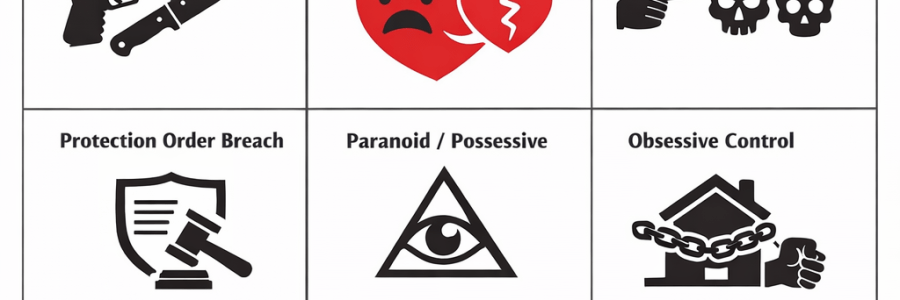
There is a difficult conversation that society needs to have about domestic abuse: what happens when the language of abuse is used to describe a situation that does not genuinely constitute abuse? Domestic abuse and coercive control are serious matters that can leave victims frightened, isolated and psychologically damaged. People who disclose abuse deserve to be heard, protected and treated with dignity. But taking allegations seriously must also mean examining them fairly, carefully and objectively. The concept of coercive control exists to identify patterns of behaviour through which one person seeks to dominate, intimidate, restrict or control another. It was not designed to turn every disagreement, rejected demand, failed negotiation or isolated incident of conflict into evidence of an abusive relationship. When someone does not get the outcome they want, feels rejected, loses an argument or becomes dissatisfied with a decision, they may experience genuine anger, distress or a sense of injustice. Those feelings deserve to be understood. But they do not automatically establish that the other person has abused them. And when an ordinary conflict is deliberately presented as coercive control, a serious issue arises: the difference between experiencing distress and being subjected to abuse can become lost in the accusation itself. 1. The difference between a single incident and a pattern of control One of the most important distinctions is between a specific incident of conflict and an established pattern of behaviour intended to exercise power over another person. Under the law of England and Wales, the criminal offence of controlling or coercive behaviour generally requires repeated or continuous behaviour over time, alongside other legal elements. A single incident, on its own, does not establish that particular offence. However, a single incident can still constitute another offence or fall within the wider legal definition of domestic abuse. This distinction matters because context is everything. A person refusing to agree to a financial demand, withdrawing from a transaction, setting a boundary, ending a relationship or declining to comply with another person’s wishes is not automatically exercising coercive control. Equally, a person may feel frightened or distressed during a disagreement without the other person necessarily having committed abuse. Investigators must examine the facts, the surrounding circumstances, the history of the relationship and any available evidence. The seriousness of an allegation should never replace the need to establish what actually happened. 2. When an accusation becomes a weapon There is a psychological difference between reporting genuine abuse and using the language of abuse to gain leverage in a dispute. Imagine a situation in which two people disagree about a property sale or financial settlement. One person refuses to proceed because the other has not honoured an agreement. The disagreement escalates, and one party subsequently reports the other, describing the disagreement as coercive control. Several explanations are possible. The person making the allegation may genuinely interpret the interaction as abusive. They may misunderstand the legal concept. They may be reacting emotionally to rejection or loss of control. In some cases, an allegation may be knowingly fabricated to punish, intimidate or influence the other person. These possibilities cannot be treated as interchangeable. The fact that an allegation follows a disagreement does not prove that it is false, just as making an allegation does not establish that it is true. The appropriate response is to examine the evidence rather than automatically accept either person’s interpretation. Where evidence establishes that a person has knowingly made a false criminal allegation, that conduct can itself have serious legal consequences. Spanish Criminal Code Article 456 addresses false accusations and reports made with knowledge of their falsity or reckless disregard for the truth, subject to the statutory requirements. BOE 3. The psychology of retaliation and perceived loss of control When people experience rejection, frustration or a loss of influence over a situation, they may struggle to regulate their emotions. Some respond by reflecting, negotiating or accepting the other person’s decision. Others may respond with blame, hostility or attempts to regain control. In a conflict, an accusation can sometimes serve several psychological functions: Retaliation: attempting to punish someone for refusing a demand or ending an arrangement. Reframing: presenting oneself as the injured party and the other person as the aggressor. Moral positioning: using the language of victimhood to make one’s own position appear unquestionably justified. Leverage: attempting to influence financial negotiations, legal proceedings, family relationships or public opinion. Externalising responsibility: focusing entirely on the other person’s alleged wrongdoing rather than examining one’s own behaviour. These are possible explanations, not diagnoses. None can be established simply from the fact that someone has made an accusation. The critical question is whether the allegation is supported by credible evidence and whether the behaviour described actually meets the relevant legal definition. 4. The damage caused by false or misleading allegations An unsubstantiated allegation is not necessarily a deliberately false one. This distinction is essential. Nevertheless, a knowingly false allegation can have profound consequences for the person accused. It may damage their reputation, relationships, employment, financial position and emotional wellbeing. It can also divert attention and resources away from people who genuinely need protection. The accused person may experience anxiety, anger, humiliation and a sense of powerlessness, particularly when they believe that their actions have been stripped of context or that their words have been interpreted in the worst possible light. They may begin to question whether defending themselves will make matters worse. They may feel compelled to produce evidence for every interaction, explain every decision and justify ordinary boundaries. In this way, an allegation can become a source of continuing distress even before its truth has been established. There is also a wider social consequence: when the concept of coercive control is applied carelessly, public understanding of genuine coercive abuse can become confused. That does not mean allegations should be discouraged. It means they should be assessed with the seriousness, impartiality and evidential rigour they deserve. 5. Why context and evidence matter more than labels A fair investigation should examine the actual conduct, not simply the terminology used to describe it. Questions worth asking include: What precisely happened, and what evidence supports the account? Was the incident isolated, or was it part of a wider pattern? Was there an attempt to intimidate, dominate, restrict or punish the other person? What happened immediately before and after the incident? Are there contemporaneous messages, documents, independent witnesses or other evidence? Does the account remain consistent when the full context is considered? Is there evidence of a deliberate falsehood, or is this a disagreement about interpretation? These questions protect everyone involved. They help genuine victims receive appropriate recognition while ensuring that an accused person is not treated as guilty merely because an allegation has been made. 6. The importance of accountability in relationships Healthy relationships require both people to accept that the other person has autonomy. A partner is entitled to disagree. They are entitled to say no, withdraw consent to a proposed arrangement where legally permitted, refuse an unreasonable demand and establish boundaries. Those decisions may disappoint or anger the other person, but disappointment is not proof of abuse. At the same time, the language of boundaries must not be used to disguise intimidation, threats or a sustained pattern of domination. The nature of the conduct, rather than the label either party chooses, must determine how it is understood. Accountability means being prepared to examine one’s own behaviour, acknowledge the possibility of being mistaken and distinguish between feeling wronged and having actually been wronged. It also means recognising that another person’s refusal to comply with our wishes is not, in itself, an injustice. Conclusion: Abuse is too serious to be used carelessly… Read More When Conflict Is Reframed as Coercive Control: The Psychology of False Accusations, Power and Weaponising Abuse