Living with Anxious Attachment

Many people find themselves trapped in relationships where their anxious attachment style keeps them holding on longer than is healthy, hoping things will improve. This pattern often leads to emotional pain, especially in abusive relationships. After years of struggle and self-reflection, healing is possible. Here’s a personal journey and insight into why recognizing and moving… Read More Living with Anxious Attachment

The Pain of Repeated Abuse in Disbelieving Families

When history repeats itself and a family that once doubted or dismissed abuse finds themselves facing the same painful situation again, the emotional and psychological impact can be devastating. This recurrence often exposes deep patterns of denial, disbelief, and unresolved trauma within the family system. Families that previously did not believe victims of abuse may… Read More The Pain of Repeated Abuse in Disbelieving Families

The Moment of Reckoning: An Abuser Witnessing Their Own Legacy

When an abuser witnesses the impact of their own behavior on their children or grandchildren, especially in a courtroom setting where they observe further abuse unfolding, a complex and profound emotional and psychological dynamic emerges. This scenario reveals layers of denial, accountability, and the cyclical nature of abuse that can affect families deeply. Abuse often… Read More The Moment of Reckoning: An Abuser Witnessing Their Own Legacy

How to Recognise Common Harmful Relational Patterns

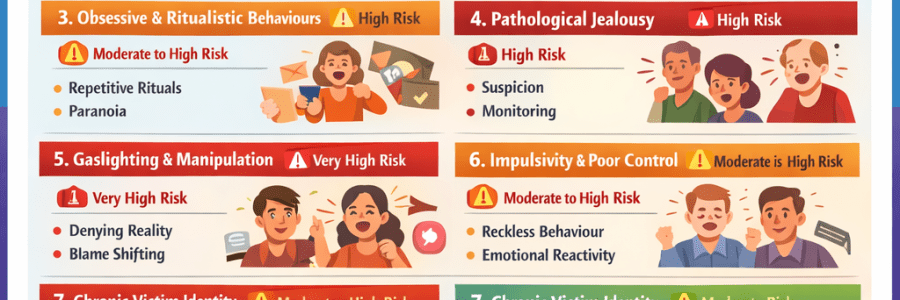
1. Emotionally immature behaviour This is when someone struggles to regulate emotions or take responsibility for their impact on others. Common signs: How it feels to you:You may feel like you’re constantly “managing” their reactions rather than having an equal relationship. 2. Entitled behaviour patterns This involves expecting special treatment or exemptions from rules that… Read More How to Recognise Common Harmful Relational Patterns

Understanding Harmful Interpersonal Patterns (Including Sadistic Traits)

In psychology, “sadistic traits” refer to patterns where a person may derive satisfaction from another person’s discomfort, distress, or humiliation. These traits exist on a spectrum and are not always obvious or extreme. In everyday life, they may show up in subtle relational dynamics rather than overt cruelty. It’s important to approach this topic with… Read More Understanding Harmful Interpersonal Patterns (Including Sadistic Traits)

You can’t re-engineer someone!

It isn’t your job to fix, rescue, or fundamentally rewire another adult’s personality. Neuroscience and psychology are quite clear on that. Core traits like empathy levels, attachment style patterns, emotional regulation habits, and relational “defaults” are shaped over years of development and repeated reinforcement — not corrected through a partner’s effort alone. In other words: you can influence, but… Read More You can’t re-engineer someone!

Because behaviour follows patterns

When an adult child seems distant, transactional, or only interested when there’s something to gain, psychology doesn’t jump straight to “they’re selfish.” It looks at what was reinforced over time. Because behaviour follows patterns like: If a child grows up in an environment where: …they can internalise a very specific belief: “Relationships are based on value… Read More Because behaviour follows patterns