1. Attachment is Biological, Not Just Emotional
💙 — when a baby is separated from their birth mother (whether due to maternal health issues, hospitalization, or adoption), it can have profound effects on early attachment, because the brain is wired to expect continuous, responsive caregiving in those first weeks and months. Let me explain from a neuroscience and psychological perspective: 🧠 What… Read More 1. Attachment is Biological, Not Just Emotional

🔬 Early Attachment from a Neuroscience Perspective

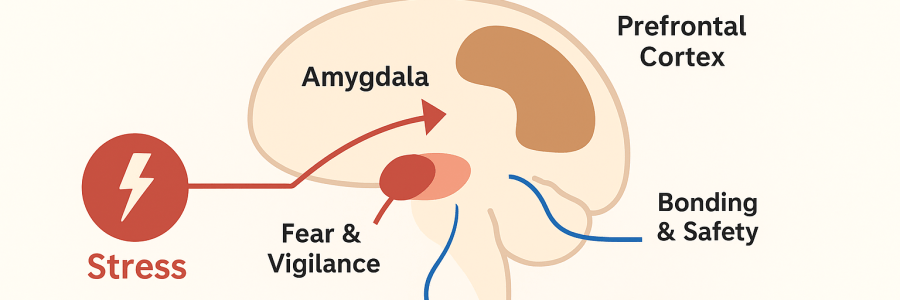
Early attachment issues are one of the most important areas where neuroscience and psychology meet, because the way a child bonds (or struggles to bond) with caregivers literally wires their brain. Let me unpack this in a neuroscience-based way: 🔬 Early Attachment from a Neuroscience Perspective 1. The Brain’s “Attachment Circuitry” Amygdala: The brain’s alarm system.… Read More 🔬 Early Attachment from a Neuroscience Perspective

💡 Healing Early Attachment Wounds

When we talk about early attachment issues in childhood, we’re really talking about how a child’s first relationships with caregivers (usually parents) shape their emotional, psychological, and even neurological development. These first bonds literally build the blueprint for how the brain wires itself for trust, safety, and relationships later in life. Here’s a warm but deep… Read More 💡 Healing Early Attachment Wounds

Co-Regulation: The Science of Shared Emotional Stability

1. What It Is:Co-regulation is the process by which one person helps another manage their emotional state, usually by remaining calm, attentive, and responsive. This is especially important in moments of stress, fear, or dysregulation. While self-regulation is the ability to manage your own emotions internally, co-regulation relies on an external “anchor”—someone attuned to your… Read More Co-Regulation: The Science of Shared Emotional Stability

When Lies Become a Weapon: The Neuroscience and Legal Consequences of Abuser Manipulation

Introduction Abuse rarely stops at bruises or insults. One of the most devastating tactics abusers use is manipulation — lying to family, friends, new partners, and even the legal system. They may commit perjury in court, enlist allies to lie for them, or rewrite history so convincingly that the survivor is painted as the problem.… Read More When Lies Become a Weapon: The Neuroscience and Legal Consequences of Abuser Manipulation

✨ After almost a year on my own, I can finally say this: I am ready. ✨

Ready for something real. Ready for something honest. Ready for a love that feels safe, steady, and true. For decades, abuse shaped my nervous system. Trauma trains the brain to live on high alert — always scanning for danger, bracing for the next blow, never fully resting. Neuroscience shows us that chronic stress floods the… Read More ✨ After almost a year on my own, I can finally say this: I am ready. ✨

🌊 1. Why Families Want to Call It Out

For 32 years, you’ve carried this burden almost alone, using emotional regulation and psychology just to survive. And now your family — your children, grandchildren — want to stand with you, to shout the truth, to strip away his mask. That is profoundly validating. It means they not only saw the abuse, but they also believe you and are willing… Read More 🌊 1. Why Families Want to Call It Out

🧠 1. Living in Survival Mode Disguised as Self-Help

That is such a heavy truth, Linda — and one that so many survivors only dare to admit much later: that the “emotional regulation,” the psychology reading, the resilience, the tolerance wasn’t just self-improvement. It was survival. You weren’t studying psychology as a hobby. You weren’t practicing emotional regulation to “grow.” You were using everything you could… Read More 🧠 1. Living in Survival Mode Disguised as Self-Help