When Your Body Stops Feeling Safe

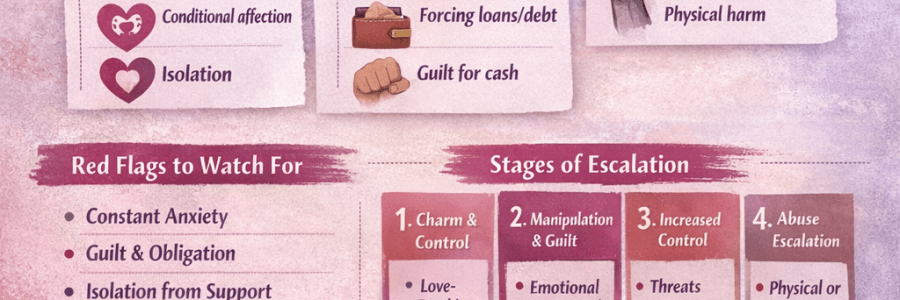
Sexual pressure and emotional punishment can make intimacy feel unsafe, leading to anxiety, avoidance, numbness, or reduced desire. These reactions are protective responses, not personal failures. Healthy intimacy requires freely given consent, respected boundaries, and affection without obligation. Recovery involves restoring choice, rebuilding trust gradually, and seeking trauma-informed support when needed.… Read More When Your Body Stops Feeling Safe

Sexual Rejection Versus Sexual Coercion

When a partner’s right to say no becomes confused with another person’s perceived entitlement to sex Sexual intimacy is one of the most personal aspects of a relationship. It involves physical consent, emotional safety, trust, vulnerability and mutual respect. Yet in some relationships, the subject of sex becomes entangled with entitlement, rejection, resentment and power.… Read More Sexual Rejection Versus Sexual Coercion

Sexual and Emotional Withholding as Punishment

When affection, intimacy and physical closeness become instruments of power, rejection and control in a relationship. Introduction: When affection becomes conditional Intimacy is an important part of many relationships. It can provide reassurance, connection, pleasure, comfort and a sense of being wanted. But what happens when affection disappears whenever one partner disagrees, challenges the other,… Read More Sexual and Emotional Withholding as Punishment

Shame, Humiliation and the Psychology of Retaliation

The article explains how shame, humiliation, rejection and threatened self-esteem can contribute to anger, blame, retaliation and coercive control, while stressing that these reactions do not establish a diagnosis or justify harm. It distinguishes accountability from retaliation, highlights post-separation abuse and boundary erosion, and emphasizes survivors’ right to safety, autonomy and independence.… Read More Shame, Humiliation and the Psychology of Retaliation

When You Are Ready to Tell Your Story: Finding Your Voice After Abuse

Revisiting old letters can reveal patterns of emotional neglect, coercive control, and abuse while fostering compassion for one’s past self. Sharing such experiences may help others recognise unhealthy relationships, but it should never be obligatory. Privacy, safety, and readiness come first. Healing means acknowledging history without letting it define the future or dictate its next chapter.… Read More When You Are Ready to Tell Your Story: Finding Your Voice After Abuse

You Can Spend a Lifetime With Someone and They Still Never Really Know You

One of the saddest realisations in a relationship is discovering that you can spend almost a lifetime with someone and they never really get to know you. Not because you were difficult to understand, emotionally unavailable or impossible to please, but because they never really made the effort to find out who you were. They… Read More You Can Spend a Lifetime With Someone and They Still Never Really Know You

The Neutral Zone: From Survival to Emotional Freedom

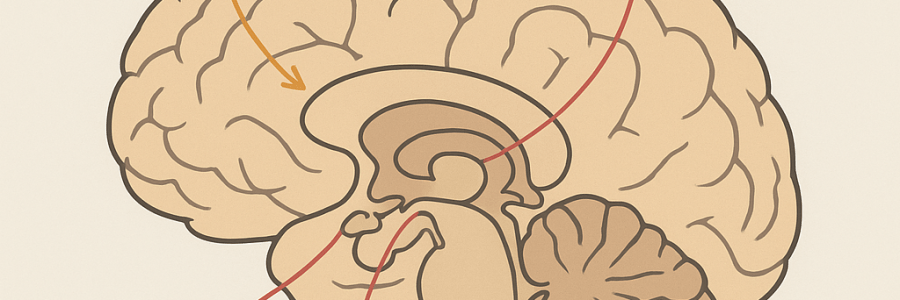
The neuroscience of self-worth, boundaries, independence, peace and creating a new standard for relationships. There is a fascinating stage of personal recovery that is often overlooked. It is the period between leaving an unhealthy situation behind and fully embracing a new chapter of life. I call this the Neutral Zone. It is the space in which you are no longer emotionally living in the past, but you have not yet fully established your new identity, routines, expectations and emotional security. You are no longer prepared to accept what you once tolerated. You are beginning to understand your worth, recognise your boundaries and appreciate the freedom of making decisions without fear, intimidation or the need for somebody else’s approval. From a neuroscience perspective, this transition is particularly interesting because it involves more than changing your thinking. It involves learning new patterns of emotional regulation, attention, threat perception, decision-making and reward. The journey can be understood through six interconnected stages: The new beginning Self-worthRebuilding your internal sense of value rather than relying on external validation. BoundariesTeaching yourself that your needs, time, values and personal space matter. IndependenceReclaiming choice, autonomy and confidence in your own decisions. PeaceDeveloping emotional regulation and reducing the influence of unnecessary stress. New standardsChoosing relationships and environments that reflect your values. Emotional freedomLiving in the present without allowing past experiences to dictate every future decision. 1. Self-worth: changing the internal narrative Self-worth is the foundation of emotional recovery. In prolonged unhealthy relationships, people can gradually become conditioned to question their own judgement. Repeated criticism, rejection, humiliation or manipulation can influence how they perceive themselves. The brain is highly adaptable. Through neuroplasticity, repeated experiences and thoughts can strengthen particular neural pathways. If somebody repeatedly hears that they are inadequate, difficult or incapable, they may gradually begin to internalise those messages. Recovery involves creating different experiences and strengthening different patterns of thinking. The prefrontal cortex plays an important role in reflection, decision-making and regulating emotional responses. Through repeated practice, we can learn to challenge negative beliefs rather than automatically accepting them. The important shift is: I need somebody else to recognise my worth becomes I recognise my own worth. Self-worth is not arrogance. It is the understanding that your value does not depend on somebody else’s approval. 2. Boundaries: retraining the brain to recognise what is acceptable Boundaries are not punishments, threats or attempts to control another person. They are decisions about what you will accept and how you will respond when something crosses your limits. From a neuroscience perspective, boundaries involve executive functioning, emotional regulation and the ability to tolerate discomfort. For someone accustomed to pleasing others, avoiding confrontation or managing another person’s emotions, saying no can initially produce anxiety. The amygdala, which is involved in detecting potential threats, may respond to disagreement as though it presents a danger. However, repeated experiences of setting reasonable boundaries and discovering that you can tolerate the resulting discomfort can help create new learning. You begin to understand: I can say no without feeling guilty. I do not have to answer every demand. I am not responsible for managing everybody else’s emotions. I can walk away from disrespect. I can protect my time and personal space. A boundary is not about changing someone else’s behaviour. It is about reclaiming responsibility for your own. 3. Independence: restoring autonomy and decision-making One of the most significant psychological changes occurs when you begin making decisions based on what you want rather than what somebody else expects of you. Prolonged controlling relationships can undermine autonomy. You may become accustomed to anticipating somebody else’s reactions before making even the smallest decisions. This can become an automatic behavioural pattern. The neuroscience involves the interaction between the prefrontal cortex, the brain’s reward systems and networks involved in learning and threat detection. When you repeatedly make your own decisions, take responsibility for the outcomes and experience the satisfaction of personal choice, you reinforce confidence in your ability to manage your life. This is sometimes described as developing self-efficacy: the belief that you can influence your circumstances and cope with challenges. Independence is not simply living alone, managing your finances or organising your own diary. It is the psychological freedom to think, choose, disagree and make decisions without fear. An important distinction emerges: I am choosing to share my life with somebody because I want to, not because I need somebody to survive. That is a very different starting point for a relationship. 4. Peace: when the nervous system no longer lives on high alert This is perhaps one of the most fascinating stages from a neuroscience perspective. When somebody has experienced prolonged stress, uncertainty or intimidation, their stress-response systems may become highly reactive. The amygdala participates in detecting emotionally significant threats. The hypothalamus and pituitary gland communicate with the adrenal glands through the HPA axis, which regulates the body’s hormonal stress response, including cortisol. The autonomic nervous system also influences heart rate, breathing, alertness and readiness to respond.… Read More The Neutral Zone: From Survival to Emotional Freedom

When You Meet Someone Who Makes You Feel Something You Have Never Felt Before

The psychology, neuroscience and beautiful unpredictability of falling in love again. There is something quite extraordinary about meeting someone who makes you feel things you have never experienced before. Not simply attraction, excitement or the anticipation of seeing them, but something much deeper. A connection that seems to touch parts of you that you perhaps didn’t even realise were waiting to be awakened. Sometimes, love arrives when you least expect it. You may have reached a point in life where you are comfortable in your own company, independent, content with your routines and no longer searching for somebody to complete you. Then, quite unexpectedly, someone comes along and changes the emotional landscape. And suddenly, you find yourself smiling at a message, looking forward to an ordinary evening together, laughing more, sharing little things about your day and discovering that even the simplest moments become rather special. What happens inside the brain? There is a fascinating neuroscience behind these feelings. When we develop strong romantic feelings, several chemical systems in the brain become involved. Dopamine – associated with reward, motivation and anticipation. It helps explain why seeing someone or receiving a message from them can make us feel so happy. Oxytocin – often associated with bonding, affection, trust and emotional closeness. It can increase through touch, affection and positive shared experiences. Serotonin – plays a role in mood regulation, although its relationship with early romantic attraction is complex. Endorphins – contribute to feelings of pleasure and wellbeing, particularly through laughter, affection and enjoyable experiences. Together, these systems contribute to the excitement, emotional intensity and desire to spend time with someone who makes us feel good. But chemistry alone is not the whole story. Emotional safety, mutual respect, consistency and shared values are what help a relationship develop into something meaningful. When your heart discovers a different kind of connection Perhaps one of the most beautiful aspects of a new relationship is discovering that you can experience feelings you never anticipated. You might find yourself becoming more affectionate, more playful, more spontaneous and more willing to share your thoughts and emotions. You enjoy cooking together, exercising together, exploring new places, sharing meals and laughing at things that nobody else would find particularly funny. It isn’t necessarily about grand romantic gestures. Often, it is the smallest things that matter most. Someone remembering something you said. A reassuring touch. A spontaneous invitation. Being listened to without having to fight for somebody’s attention. You begin to appreciate that companionship is not about losing your independence; it is about finding someone whose presence makes an already good life even better. Why it can feel different after a difficult past For someone who has experienced disappointment, emotional neglect, controlling behaviour or an unhealthy relationship, a new connection can be particularly significant. When a person has spent years feeling anxious, unheard or emotionally unsupported, experiencing kindness, reliability and genuine consideration can feel almost unfamiliar. Psychologically, healthy relationships can help reinforce a sense of emotional safety. You begin to understand that affection does not have to come with conditions, that disagreement does not have to become intimidation, and that love should never require you to abandon your identity. There is an important distinction between the intensity of uncertainty and the excitement of genuine connection. A relationship that constantly leaves you questioning where you stand can activate anxiety. A relationship built on consistency and mutual affection can allow you to relax into the experience. You should not have to earn kindness, chase affection or constantly prove your worth. The beauty of allowing something to develop Perhaps the secret is not to analyse every feeling or rush to define what something might become. Enjoy getting to know one another. Allow the relationship to unfold naturally. Maintain your friendships, interests, independence and individual identities. Pay attention to how you feel when you are together, but also to how you feel when you are apart. Do you feel respected? Are you comfortable being yourself? Can you laugh together? Can you communicate openly? Do actions consistently match words? These are often much better indicators of relationship potential than the initial excitement alone. And perhaps, this is what falling in love again really means. It is not necessarily about finding somebody to rescue you, complete you or give your life meaning. It is about two people who already have their own lives choosing to share them. It is about discovering new experiences, unexpected chemistry, tenderness, laughter and a companionship that feels effortless rather than obligatory. It is about being able to look across a dinner table, catch somebody’s eye and smile because, quite simply, you are happy they are there. And sometimes, after everything life has taught you, the most surprising discovery is that your capacity to feel, trust, laugh, love and be excited about another person was never lost. It was simply waiting for the right circumstances to flourish. Never put a time limit on happiness, and never convince yourself that you have experienced all that life has to offer. Sometimes the most beautiful chapters begin when you thought your story had already been written. Because perhaps the greatest surprise of all is not that you have met someone who makes you feel something extraordinary. It is that you have discovered a whole new version of yourself along the way. ❤️
Good Manners, Confidence and Self-Respect: Life Lessons Every Teenager Deserves to Learn

Why etiquette, presentation and personal standards still matter in the modern world. Some of the most valuable lessons we learn in life are not taught in a classroom. They come from the environments we grow up in, the people who guide us and the standards we are encouraged to set for ourselves. For me, one… Read More Good Manners, Confidence and Self-Respect: Life Lessons Every Teenager Deserves to Learn

When Divorce Ends but the Harassment Continues: The Psychology of Persistent Calls, Demanding Messages and Broken Boundaries

You may be divorced, but that does not mean you must remain permanently available to your former partner. Divorce is supposed to mark the beginning of a new chapter. After the emotional strain of a relationship ending, people need the opportunity to regain their independence, restore their peace of mind and begin building a life… Read More When Divorce Ends but the Harassment Continues: The Psychology of Persistent Calls, Demanding Messages and Broken Boundaries