When People Sabotage Their Own Relationships: A Neuroscience and Psychology Perspective
One of the most painful things people experience is watching themselves — or someone they love — damage a relationship they deeply wanted. They may say: “Why did I push them away?” “Why did I start an argument when things were going well?” “Why do I pull back when someone gets close?” This is often… Read More When People Sabotage Their Own Relationships: A Neuroscience and Psychology Perspective
🧠 Emotional Memory vs Factual Memory

In Psychology, we often separate what happened from how it is stored in the brain. 📌 1. Factual Memory (What happened) This is the objective record of events. It includes: dates, places, actions who said what physical events that occurred “camera-like” recall (when accurate) Example: “We lived in Spain and the UK.” “The car was damaged while I was away.”… Read More 🧠 Emotional Memory vs Factual Memory

Reactions

These are core processes studied in both Psychology and Neuroscience—they help explain why people react differently to the same situation. 1. Emotional Processing Emotional Processing This is how you: notice emotions (your own and others’) interpret what they mean regulate your response Example:Someone criticizes you. One person feels mild disappointment and moves on. Another feels deep shame… Read More Reactions

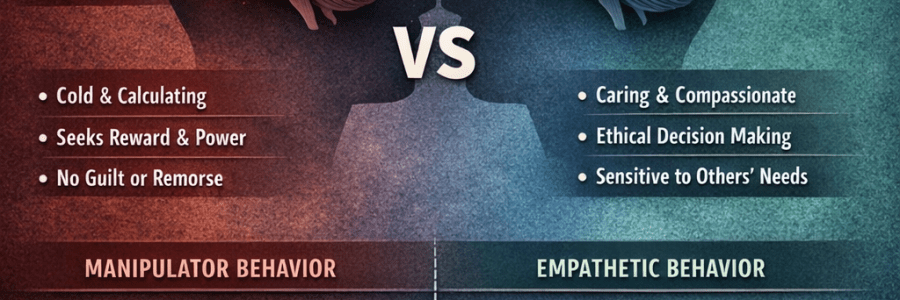
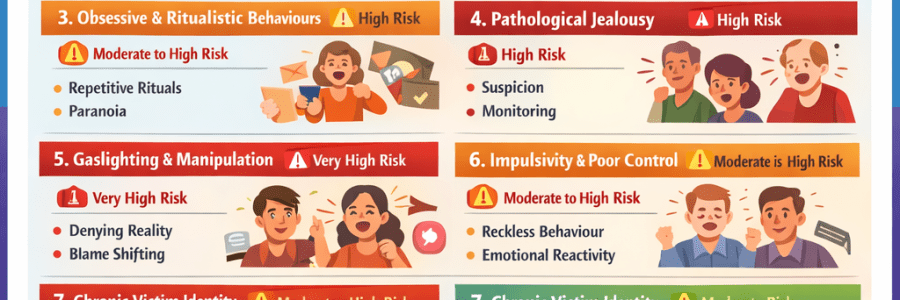
The “abusive pattern” in the brain (psychology + neuroscience)

1. Control is used as emotional regulation Many abusive behaviours function as a way to manage internal discomfort. Brain systems involved: amygdala (threat + emotional reactivity) prefrontal control systems (planning, inhibition) Pattern: distress → attempt to regain control over another person dominance reduces internal anxiety short-term So control becomes: a regulation strategy, not just behaviour 2.… Read More The “abusive pattern” in the brain (psychology + neuroscience)

🧠 Why trauma bonding is so sticky (neuroscience + psychology)

Trauma bonding and coercive control are hard to break because they don’t just sit in “thoughts” or “choices” — they get wired into reward systems, threat systems, and attachment systems in the brain at the same time. That combination creates a powerful loop that feels emotionally convincing even when it’s harmful. 1. Intermittent reinforcement = strongest… Read More 🧠 Why trauma bonding is so sticky (neuroscience + psychology)

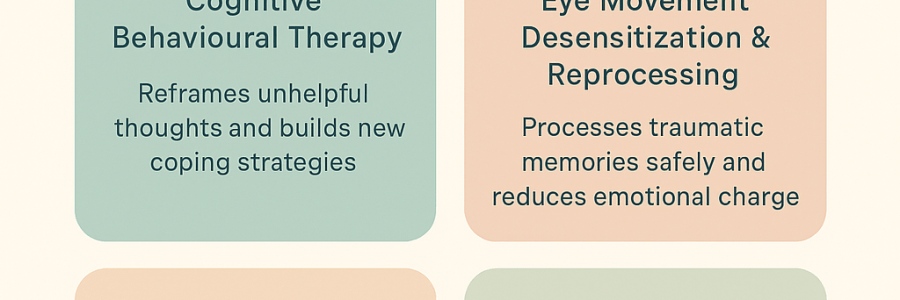
Why people have therapy (neuroscience + psychology)

1. Emotional overload (the nervous system is stuck “on”) From a neuroscience view, chronic stress keeps the amygdala overactive (threat detection system), while the prefrontal cortex (reasoning, regulation) becomes less effective. People come to therapy because: anxiety won’t switch off panic or hypervigilance persists emotional reactions feel “too big” Therapy helps retrain the brain to feel safety again. 2.… Read More Why people have therapy (neuroscience + psychology)

When “Connection” Drains You: What Neuroscience and Psychology Reveal About Inauthentic Relationships

Feeling emotionally drained rather than grounded after interacting with someone often signals a deeper truth your nervous system is trying to communicate. Neuroscience and psychology explain why certain relationships, despite seeming genuine on the surface, leave you unsettled and exhausted. Understanding this dynamic can help you protect your well-being and cultivate authentic connections. The Nervous… Read More When “Connection” Drains You: What Neuroscience and Psychology Reveal About Inauthentic Relationships

The Neuroscience of Social Interaction and Time Investment

The concept of time as a precious resource is deeply rooted in both neuroscience and psychology, emphasizing the importance of how we choose to spend it—especially in social interactions. Engaging with people who uplift us rather than confuse or manipulate us has profound effects on our mental well-being, cognitive function, and emotional health. The Neuroscience… Read More The Neuroscience of Social Interaction and Time Investment

Neuroscience and Revenge

The desire for revenge is a complex human behavior influenced by multiple factors, including brain function, genetics, and environment. Neuroscience explores how certain brain regions and neurochemical processes contribute to feelings related to revenge, but it is not determined solely by genetics or heredity. Neuroscience and Revenge Brain Regions Involved: The amygdala (emotion processing), prefrontal… Read More Neuroscience and Revenge

Here’s a neuroscience and psychology lens on the questions

Those questions aren’t random—they tend to show up when people are trying to “map” your situation, consciously or not. Some of it is curiosity, some of it is social positioning, and some of it can be concern (even if it comes out clumsily). Here’s a neuroscience and psychology lens on the questions—and your responses: 1.… Read More Here’s a neuroscience and psychology lens on the questions