Cortisol and Recovery: How the Body Learns Safety Again

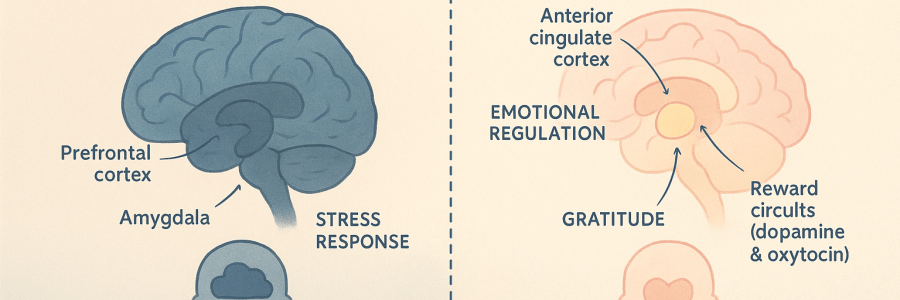
One of the most remarkable discoveries in neuroscience is that the brain and body are designed to recover. Years of stress can change cortisol rhythms, but those changes are not necessarily permanent. Through neuroplasticity—the brain’s ability to reorganise itself—the nervous system can gradually move from survival back to regulation. What is cortisol? Cortisol is often called… Read More Cortisol and Recovery: How the Body Learns Safety Again
🧠 Recovery timeline (what usually shifts and when)

Here’s a realistic recovery timeline after leaving coercive control / trauma bonding, based on what we know from psychology, attachment science, and nervous system recovery. Everyone varies, but the pattern is surprisingly consistent. ⏳ First days to 2 weeks: “shock + withdrawal” This is the most unstable phase. What you might notice: intense longing or urge to reconnect… Read More 🧠 Recovery timeline (what usually shifts and when)

🌿 What life often feels like after removing yourself from cruelty

Leaving a cruel or harmful dynamic doesn’t usually feel instantly “free” in a cinematic way. It tends to feel more like a nervous system recalibrating after long-term tension—subtle, uneven, but very real. Here’s what people often notice once they’ve stepped out of cruelty or chronic emotional harm: 🌿 What life often feels like after removing yourself… Read More 🌿 What life often feels like after removing yourself from cruelty

First 30 Days After Leaving – Recovery Checklist

Week 1: Stabilise & Contain the Chaos This is usually the most emotionally volatile stage. ☐ Reduce or stop contact (no-contact if possible) ☐ Block or mute if messages/emails are destabilising ☐ Remove triggers (photos, chats, social media checking) ☐ Prioritise sleep, food, hydration—basic regulation first ☐ Tell at least one trusted person what’s happened… Read More First 30 Days After Leaving – Recovery Checklist

Cruelty, Betrayal, Recovery

Part 1: The Neuroscience of Cruelty Cruelty rarely announces itself as cruelty. It often presents itself as power, control, or superiority. But in the brain, cruelty is not abstract — it is processed through systems that evaluate threat, meaning, and emotional pain. The amygdala detects emotional danger.The anterior insula registers internal distress.The anterior cingulate cortex… Read More Cruelty, Betrayal, Recovery

When You Start Enjoying Life Again (Without Overthinking It)

There’s a moment after a relationship ends when things begin to feel… different. Not in a dramatic, life-changing way.But quietly. Subtly. You walk into a place you know well, see familiar faces, hear the same laughter—and realise something has shifted. You’re not carrying the same weight anymore. The Unexpected Return of You At first, it’s… Read More When You Start Enjoying Life Again (Without Overthinking It)

A Warrior’s Heart Stays Whole – Resilience is a beauty that never fades

There’s a quiet myth in the way we talk about strength—that it looks unbreakable, untouched, invincible. But a warrior’s heart is not one that has never been wounded. It is one that has been cracked open, tested, stretched beyond what seemed survivable—and still chooses to remain whole. Wholeness is not the absence of pain. It… Read More A Warrior’s Heart Stays Whole – Resilience is a beauty that never fades

On Staying the Course: When Delay Stops Being a Distraction

There comes a point in any long, high-friction process where something quietly shifts. Not in the situation itself — but in perspective. What once felt urgent, reactive, and emotionally charged begins to look more structured. Less personal. More mechanical. A sequence rather than a story. The Cost of Constant Delay In extended negotiation or legal… Read More On Staying the Course: When Delay Stops Being a Distraction

What Happens Over Time

There is a thread that runs through all of this work—one that connects perception, survival, healing, and ultimately, self-trust. At the beginning, there is confusion. The experience of false accusations, projection, and emotional distortion. Psychology helps us name some of it—projection, cognitive dissonance, attachment patterns—but naming it does not immediately make it easier to live… Read More What Happens Over Time