Does it ever end!!!
Just clearing out before I move house after 32 years of abuse. Another letter of truth.
Just clearing out before I move house after 32 years of abuse. Another letter of truth.

Many people feel that they can “read” emotion in someone’s eyes. In therapy, for example, clinicians often notice subtle facial cues that seem to reveal more than words. While there is some scientific truth to this idea, neuroscience shows that the reality is more complex. The brain is highly sensitive to eye cues Research in… Read More Can You Read Emotion in Someone’s Eyes? Neuroscience and Psychology Explained

The feeling that “the universe is reading your mind” is surprisingly common, especially during periods of major life change, emotional upheaval, grief, recovery, or when people are actively searching for meaning and direction. From a neuroscience and psychology perspective, several processes can create this experience. Pattern Detection: The Brain’s Superpower The human brain evolved to… Read More Pattern Detection: The Brain’s Superpower

2025 “So… if it wasn’t the money, and it wasn’t the sex, and it definitely wasn’t the looks… WHY were you with him?” View • 💋”Must’ve kept him young having a younger wife!” they say… View • 💔 “No, It Was Never for the Money” — A Truth Behind the Facade View • 💔 “No one falls in love faster… Read More Posts from June 2025

One of the most frustrating experiences reported by survivors is not only the abuse itself, but the reaction they receive when they finally disclose it. A relative may say: “I doubt he’ll kill you.” “He wouldn’t do that.” “You’re overthinking it.” “Just leave and move on.” Then, when separation or divorce begins, the same relative… Read More I doubt he’ll kill you.

A phenomenon that psychologists sometimes call normalcy bias, optimism bias, and, in some cases, epistemic injustice. When someone finally discloses domestic abuse and hears responses such as: “I doubt he’ll kill you.” “You’ll both meet someone else and move on.” “Every couple argues.” the speaker may think they are being reassuring. However, from a psychological perspective, they may… Read More Epistemic injustice.

The death of Katherine ‘Kat’ Torbick, a 43-year-old nurse and mother from Schaumburg, Illinois. Prosecutors allege that her former boyfriend, Kevin Motykie, subjected her to a prolonged assault that was captured on a recording device found after his arrest. Authorities allege the recording lasted more than seven hours and documented arguments, restraint, violence, and ultimately… Read More Why record it?

Katherine ‘Kat’ Torbick, a 43-year-old nurse and mother from Schaumburg, Illinois. Prosecutors allege that her former boyfriend, Kevin Motykie, subjected her to a prolonged assault that was captured on a recording device found after his arrest. Authorities allege the recording lasted more than seven hours and documented arguments, restraint, violence, and ultimately her death. He has… Read More Seven hour recording

The concept of coercive control is most closely associated with Evan Stark, a sociologist and forensic social worker whose research helped shift understanding of domestic abuse beyond physical violence alone. When Stark described coercive control as a “liberty crime,” he was making the point that the harm is not only the assaults or threats themselves.… Read More Liberty crime
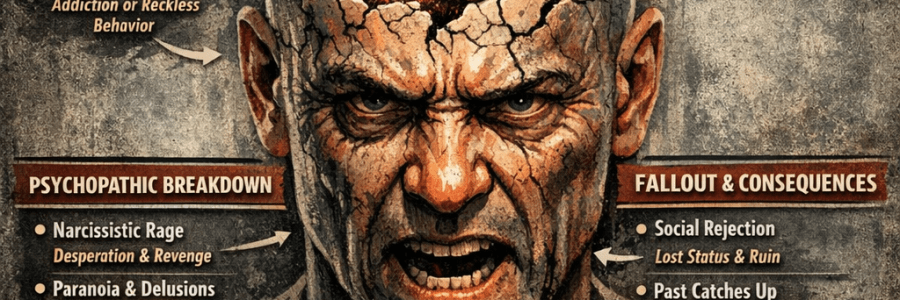
Coercive control is often misunderstood because many people imagine abuse as a series of isolated violent incidents. In reality, coercive control is usually a pattern of domination that gradually strips away a person’s freedom, confidence, independence, and sense of self. 1. The abuse develops gradually The relationship may start with affection, attention, promises, and emotional connection. Control… Read More The abuse develops gradually

