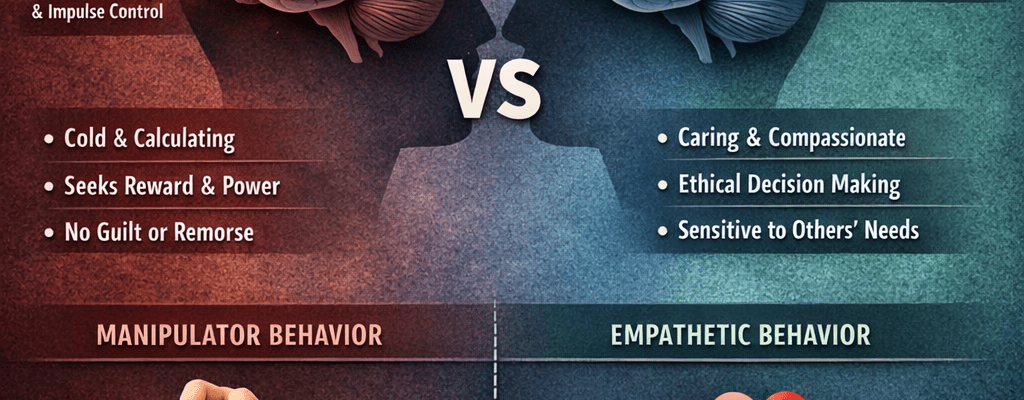
There is an important distinction in life that many people learn only after years of difficult relationships, disappointment and emotional exhaustion: not everything that hurts you is something you are supposed to fix, and not everything you understand is something you should tolerate.
We often spend far too much time trying to understand other people’s behaviour, making allowances, finding explanations and hoping that, with enough patience, kindness and support, things will eventually change.
But understanding someone’s behaviour does not mean accepting it.
There are some things we can work through together. There are others that require professional help, commitment and personal responsibility. And then there are behaviours that should never be negotiated, excused or normalised.
It is worth remembering a few fundamental truths.
Abuse is a choice. Cruelty is a choice. Intimidation is a choice. Humiliation is a choice.
Mental illness is not a choice. Addiction is not a choice. Trauma is not a choice. These are complex human experiences that can benefit from compassion, understanding, treatment and professional support.
However, having a mental health condition, an addiction or a difficult past does not give anyone permission to abuse another person.
There is a difference between explaining behaviour and excusing it.
Understanding what can be helped and what must never be tolerated
We need to stop confusing compassion with unlimited tolerance.
You can love somebody who is struggling. You can support somebody through addiction. You can encourage somebody to seek help for their mental health. You can stand beside someone experiencing depression, anxiety or trauma.
But you cannot do their recovery for them.
And you certainly cannot sacrifice your own emotional, physical or psychological wellbeing in the process.
Here is an important distinction.
The relationship boundaries chart
Things that can be worked on
With willingness, accountability, professional support where needed, and consistent effort.
Mental health difficulties
Professional assessment, therapy, treatment and ongoing support.
Addiction
Recovery programmes, medical support, therapy and personal commitment.
Poor communication
Learning to listen, communicate respectfully and resolve disagreements.
Insecurity and jealousy
Building self-esteem, trust, emotional regulation and healthier attachment.
Anger management
Recognising triggers, developing emotional regulation and taking responsibility.
Past trauma
Therapy, appropriate treatment, self-awareness and time.
Relationship difficulties
Honest conversations, mutual respect, counselling and changed behaviour.
Making mistakes
Acknowledgement, sincere apologies, repair and learning from the experience.
Lines that should never be crossed
These are not ordinary relationship difficulties. They are serious warning signs and may constitute abuse.
Physical violence
Hitting, pushing, choking, restraining or any unwanted physical aggression.
Psychological abuse
Gaslighting, intimidation, degradation, threats and deliberate humiliation.
Coercive control
Monitoring, isolating, restricting freedom or controlling everyday decisions.
Financial abuse
Withholding money, financial exploitation, restricting access to funds or creating dependency.
Sexual coercion
Pressure, threats or sexual activity without freely given consent.
Threatening behaviour
Using fear, intimidation, threats or property damage to control another person.
Harassment and stalking
Persistent unwanted calls, messages, surveillance or contact after boundaries have been made clear.
Deliberate cruelty
Using someone’s vulnerabilities, fears or personal information to cause distress.
The psychology of what we tolerate
There is an interesting psychological process that happens when people repeatedly tolerate unacceptable behaviour.
It is sometimes called normalisation of abuse.
It rarely happens overnight.
Initially, a person may be shocked by someone’s behaviour. They might make excuses for it, particularly if the other person is loving, charming or apologetic at other times.
Gradually, the boundaries begin to move.
- You excuse the first outburst because they have had a difficult day.
- You overlook the next because they are under pressure.
- You accept the apology because you want to believe things will improve.
- You begin changing your own behaviour to avoid upsetting them.
- Eventually, you find yourself managing someone else’s emotions rather than living your own life.
This can also involve intermittent reinforcement: alternating periods of affection and distress can make someone cling to the hope that the loving version of the person will return.
The result can be a gradual erosion of self-confidence, independence and personal boundaries.
What you repeatedly tolerate can become what you unconsciously learn to expect.
That does not mean someone is responsible for being abused. Responsibility always belongs to the person choosing abusive behaviour. It means that recognising the pattern and accessing support can help restore safety and autonomy.
The difference between compassion and enabling
Compassion says:
“I understand you are struggling, and I encourage you to get help.”
Enabling says:
“I will continue accepting the consequences of your behaviour while you refuse to take responsibility.”
Compassion has boundaries.
You can support somebody without funding their addiction, excusing their aggression, accepting their dishonesty or allowing them to undermine your wellbeing.
You can recognise someone’s mental health difficulties without becoming their emotional punching bag.
You can understand their childhood trauma without allowing them to create trauma in yours.
And you can love someone without remaining in a relationship that is damaging you.
Five questions worth asking yourself
- Am I accepting this behaviour because I genuinely believe it is healthy, or because I am afraid of what might happen if I challenge it?
- Am I supporting someone who is actively trying to change, or repeatedly rescuing someone who refuses responsibility?
- Are their apologies followed by consistent behavioural change?
- Have I gradually changed who I am to keep somebody else happy?
- If somebody I loved were experiencing this relationship, would I encourage them to stay?
Sometimes the answers are uncomfortable, but they can be incredibly revealing.
Boundaries are not punishments
A boundary is not an attempt to control another person. It is a decision about what you will and will not accept in your own life.
You cannot make someone respectful, honest, kind or accountable.
But you can decide what access they have to you.
You can say no to conversations involving intimidation. You can refuse to engage with harassment. You can insist that financial or legal matters go through the appropriate professionals. You can walk away from relationships where respect is consistently absent.
And if you are experiencing abuse, you do not have to confront the person or announce your boundaries if doing so could put you at risk. Safety and specialist support come first.
A final thought: Your tolerance sets the standard for your life
As we grow older, we hopefully become wiser about where to invest our time, energy and emotional resources.
We learn that not every broken situation is ours to repair. Not every unhappy person needs rescuing. Not every apology deserves another opportunity. And not every relationship deserves unlimited access to us.
There is enormous strength in being compassionate, but there is equal strength in recognising when compassion needs to be accompanied by distance.
Never confuse being understanding with being endlessly accommodating.
Never confuse forgiveness with reconciliation.
Never confuse someone’s potential with their actual behaviour.
And never allow another person’s struggles to become a lifelong obligation for you to endure mistreatment.
You can have empathy without accepting abuse. You can offer support without sacrificing yourself. You can forgive without returning. And you can wish somebody well without allowing them back into your life.
Perhaps one of the most important lessons we can learn is this:
Be careful what you tolerate. Because the moment you begin believing that disrespect, cruelty and control are simply part of loving somebody, you risk losing sight of what a healthy relationship should feel like.
Respect is not an unreasonable expectation. Kindness is not too much to ask. Safety is not a luxury.
They are the foundations upon which every healthy relationship should be built.
The reminder worth keeping
Understand what can be healed. Support what can be treated. Work on what can be improved. Never normalise what is harming you.
LINDA CJ TURNER
Trauma Therapist | Neuroscience & Emotional Intelligence Practitioner | Women’s Empowerment

