There are moments in life when human beings are at their most vulnerable.
Illness. Hospitalisation. Bereavement. Divorce. Financial crisis. Family emergencies. Exhaustion. Fear.
These are the moments when we instinctively expect the people around us to become more compassionate, not less.
We expect a friend, partner, relative or trusted person to say:
“How can I help?”
“What do you need?”
“Don’t worry about anything right now. Concentrate on getting better.”
But sometimes something very different happens.
Instead of protecting vulnerability, someone exploits it.
They see another person’s distress not as a reason to step closer with compassion, but as an opportunity to obtain something for themselves.
Money.
Passwords.
Bank access.
Personal information.
Property.
Control.
Influence.
And sometimes, simply an advantage.
This is where behaviour can move beyond ordinary selfishness into something far more troubling: exploitation of vulnerability.
When someone’s crisis becomes someone else’s opportunity
Consider a person who is seriously ill or hospitalised and is already struggling to think clearly because of pain, medication, exhaustion or fear.
Instead of offering reassurance, someone pressures them to disclose passwords, provide access to bank accounts, transfer money or make important financial decisions.
The question is not simply what was requested?
The more important question is:
Why was it requested at that particular moment?
Timing matters.
A genuine offer of help usually seeks to reduce a vulnerable person’s burden.
Exploitation does the opposite.
It uses the person’s reduced capacity, emotional distress or dependence to obtain something that benefits the other person.
That is why the same request can have completely different meanings depending upon the circumstances.
There is a profound difference between:
“You’re in hospital. Let me help you manage things until you’re feeling better.”
and:
“I need your password, access to your money or a transfer from you now.”
One may represent care.
The other may represent exploitation.
Mercenary behaviour
The word mercenary is often associated with someone motivated primarily by personal gain.
In human relationships, mercenary behaviour can describe a pattern in which another person’s value becomes closely connected to what can be obtained from them.
The relationship becomes transactional:
“What can you do for me?”
rather than:
“What can I do for you?”
This can be particularly disturbing when the person being exploited has previously been generous, trusting or supportive.
Their kindness becomes a resource.
Their loyalty becomes something to use.
Their vulnerability becomes an opening.
Their trust becomes leverage.
And their compassion can actually make them more vulnerable to exploitation, because compassionate people often assume that others operate according to the same moral principles they do.
They may think:
“Surely someone who knows I am struggling wouldn’t take advantage of me now.”
Unfortunately, that assumption is not always safe.
Predatory opportunism
When exploitation repeatedly occurs at moments of vulnerability, another useful description is predatory opportunism.
This does not necessarily mean that someone is consciously planning every action in advance. It means that vulnerability is being treated as an opportunity rather than as something deserving protection.
The pattern might look like this:
Vulnerability → opportunity → pressure → personal gain.
The vulnerable person may be too exhausted to challenge what is happening.
They may feel indebted.
They may fear confrontation.
They may trust the person asking.
They may simply be overwhelmed and unable to process the implications of what they are agreeing to.
This is precisely why ethical boundaries matter.
A person’s temporary vulnerability should never become a licence for someone else to obtain inappropriate access to their finances, possessions or private information.
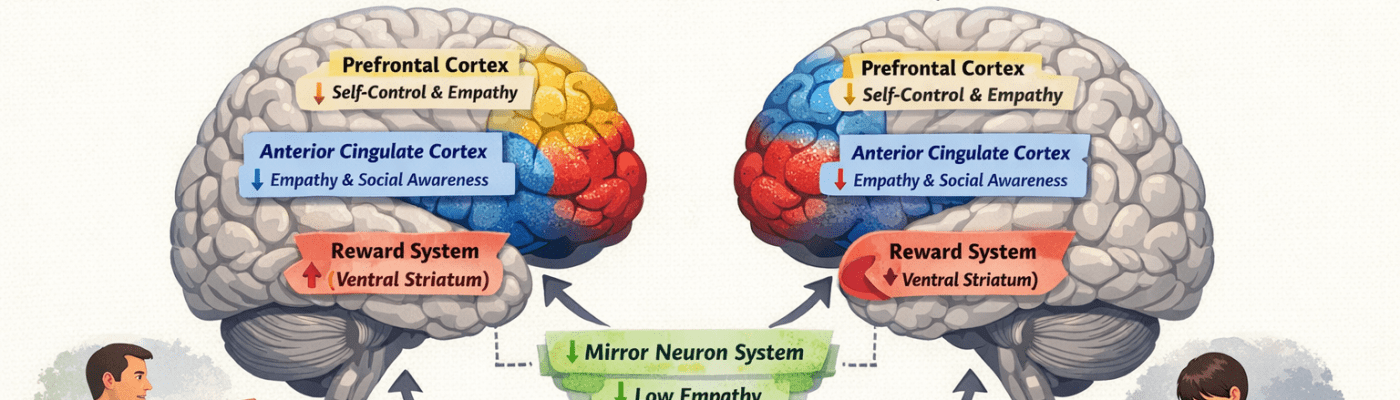
Where is the empathy?
Empathy does not mean that everyone must be self-sacrificing.
Healthy relationships contain boundaries. People are allowed to say no. People are allowed to protect their own financial interests. People can disagree.
But there is an important moral distinction between protecting yourself and profiting from another person’s vulnerability.
When someone knows that another person is frightened, seriously ill, exhausted or dealing with a major family crisis, ordinary empathy would generally make us more cautious about placing additional pressure upon them.
The absence of that caution can be revealing.
Repeatedly taking advantage of vulnerable people may indicate a profound disregard for reciprocity, trust and ethical boundaries.
We should be careful about declaring that another person has literally “no conscience” or “no empathy.” We cannot see inside another person’s mind.
But we can evaluate behaviour.
And behaviour matters.
The psychology of exploitation
Exploitative behaviour can arise for different reasons. Not every person who behaves selfishly has the same psychological characteristics.
Possible factors can include:
- entitlement
- extreme self-interest
- opportunism
- poor empathy
- manipulative interpersonal strategies
- financial desperation
- learned behaviour
- a strongly transactional view of relationships
- disregard for boundaries
- willingness to rationalise behaviour that benefits oneself
The important point is that understanding a behaviour is not the same as excusing it.
A person’s background may help explain why they behave in a particular way.
It does not automatically make the behaviour acceptable.
The kindness trap
One of the cruelest aspects of exploitation is that the qualities that make someone a good person can sometimes be used against them.
Kind people often give second chances.
They explain away behaviour.
They assume misunderstanding rather than malice.
They feel uncomfortable confronting others.
They may think:
“Perhaps they didn’t mean it.”
“Maybe they are under pressure too.”
“I don’t want to be difficult.”
“They helped me once, so perhaps I owe them.”
But kindness without boundaries can become dangerous.
Compassion does not require unlimited access.
You can be generous without giving someone your passwords.
You can love someone without giving them control of your finances.
You can help someone without allowing yourself to be exploited.
You can forgive someone without trusting them again.
And you can have empathy while still saying no.
Vulnerability should activate protection — not exploitation
One of the clearest indicators of a healthy relationship is what happens when one person becomes vulnerable.
Do they become more protective?
More patient?
More respectful?
More considerate?
Or do they become more demanding?
More controlling?
More financially interested?
More intrusive?
More opportunistic?
These moments can reveal something that ordinary day-to-day interactions sometimes conceal.
How someone treats you when you have nothing to offer them can tell you a great deal about the nature of the relationship.
And perhaps even more revealing is how they behave when you have something they want — but are temporarily too vulnerable to protect it effectively.
Trust should never be confused with access
Trust is not the same as unrestricted access.
Being someone’s partner does not automatically entitle a person to every password.
Being someone’s relative does not automatically entitle them to their money.
Being someone’s friend does not give them ownership of their private information.
And being trusted does not mean being entitled to exploit that trust.
Healthy relationships contain mutual respect, consent, transparency and boundaries.
When those boundaries disappear, particularly during periods of vulnerability, the relationship can become unsafe.
The question worth asking
When faced with behaviour that feels deeply wrong, it can be tempting to spend endless hours trying to determine:
“What kind of person does this?”
Sometimes a more useful question is:
“What does this behaviour tell me about what I need to protect?”
You do not need to diagnose someone to recognise exploitation.
You do not need to prove that someone lacks a conscience.
You do not need to understand every psychological motivation behind their behaviour.
You can simply observe the pattern.
Were they aware you were vulnerable?
Did they increase the pressure at that time?
Did they seek something that benefited them?
Did they disregard your distress?
Did they respect your boundaries when you said no?
Did they show genuine concern afterwards?
Patterns matter.
Compassion should never be a weakness
The answer to exploitation is not to become cold, suspicious or incapable of trusting anyone.
It is to combine compassion with discernment.
You can remain kind while becoming more boundaried.
You can remain generous while protecting your finances.
You can remain loving while refusing manipulation.
You can remain compassionate without making yourself available for exploitation.
Because vulnerability is not an invitation.
Illness is not an opportunity.
Kindness is not a resource for others to consume.
And trust is not permission to take what has not been freely given.
A person’s crisis should bring out our humanity — not our appetite for personal gain.

