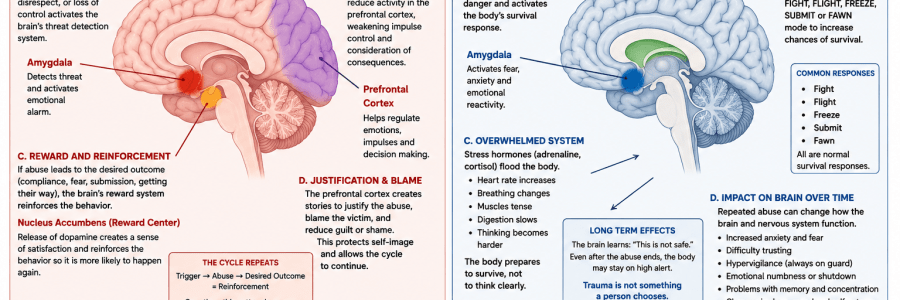
Playing head games with vulnerable people has clear roots in neuroscience and psychology.

Let’s break it down in a way that helps you see it, understand it, and protect yourself. 🧠 What “head games” actually are (psychologically) At their core, head games are about control through confusion. Common tactics include: These aren’t random — they destabilize your nervous system. 🧠 The Brain Science Behind It 1. Intermittent Reinforcement (the addiction loop) This… Read More Playing head games with vulnerable people has clear roots in neuroscience and psychology.

The Danger of Putting Yourself Out There on Dating Apps Before You’re Ready

Dating apps can feel like a thrill—a swipe, a message, and suddenly someone new is in your life. But here’s the truth: if you’re not truly ready, you’re setting yourself up for frustration, emotional exhaustion, and encounters with people who are not actually available, despite what they say. 1. The “Relationship” Illusion Many profiles say: “Looking for… Read More The Danger of Putting Yourself Out There on Dating Apps Before You’re Ready

Life’s Too Short for Losers, Time-Wasters, and Drama Queens (and Kings)

Let’s get something straight: life is finite. Your energy is precious. Your time is sacred. And yet, somehow, we keep letting people show up who are basically emotional potholes—leaving us drained, stressed, and questioning why we even bothered. Here’s the thing—psychology tells us that our brains are wired to respond to novelty, drama, and intensity. That’s… Read More Life’s Too Short for Losers, Time-Wasters, and Drama Queens (and Kings)

Not all chemistry is healthy

What people call “chemistry” can sometimes be engineered. Some people are very good at psychological attunement, meaning they: This can create: 👉 In manipulative cases, this is used strategically to build trust quickly. This is often why: “It felt so real at the start” ⚠️ Where it becomes misleading The statement implies that chemistry = manipulation, which isn’t true. Because:… Read More Not all chemistry is healthy

🔍 The early warning signs

1. The Manipulator Core trait: Control through emotion and psychology What they do: Typical phrases: 👉 Goal: keep you emotionally hooked and off-balance 🎭 2. The Joker / Charmer Core trait: Avoids depth through humour and charm What they do: Looks harmless, but: 👉 Not always malicious—but often emotionally unavailable 💔 3. The User Core trait: Self-serving What they do: Pattern: 👉… Read More 🔍 The early warning signs

Genuine interest with emotional maturity

Here are the 3 subtle signs someone has genuine feelings but is just pacing things carefully: 🌱 1. They are consistent… just not intense What it looks like: Key difference from manipulation: 👉 You won’t feel “highs and lows”…You might feel: “I wish it was progressing faster”—but not anxiety. 🧠 2. They are emotionally present, but not rushing intimacy… Read More Genuine interest with emotional maturity

🔍 Genuine Interest vs Manipulation

At the start, genuine interest and manipulation can feel almost identical. The difference only becomes clear when you look at patterns over time, not just how someone makes you feel in the moment. Let’s break it down in a very real, practical way: 🔍 Genuine Interest vs Manipulation ❤️ 1. Consistency vs Intensity Genuine interest: Manipulation: 👉 Key… Read More 🔍 Genuine Interest vs Manipulation

Dating Sites

Dating sites themselves aren’t inherently dangerous—but they do carry real risks, mainly because they connect you with strangers quickly and often emotionally. The level of danger depends much more on how they’re used than the platform itself. Here’s a clear, grounded breakdown: ⚠️ The main risks 1. Emotional manipulation (very common) This is actually the biggest risk—not physical harm.… Read More Dating Sites

Guidelines for a New Relationship

In a new relationship, how often you see each other can make a big difference in building a healthy connection without overwhelming the bond. Neuroscience and psychology give us some insight into pacing. 1. The Science Behind Early Connection 2. Psychological Considerations 3. Guidelines for a New Relationship 4. Red Flags of “Too Much Too Soon” 5. Red Flags of “Too… Read More Guidelines for a New Relationship