🧠 Dark Psychology Tactics List

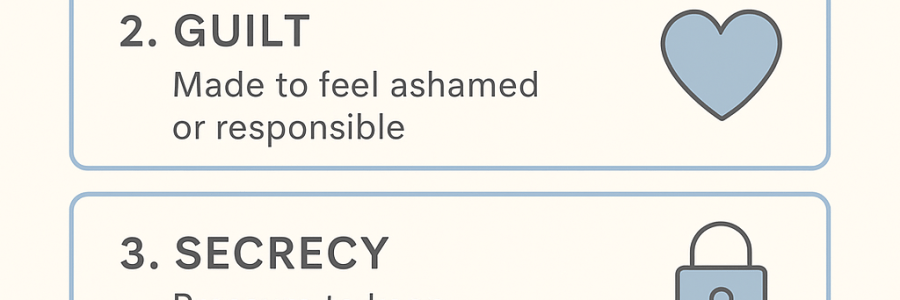
Dark Psychology Tactics List — a clear, neuroscience-based field guide to the manipulation methods used in dating, relationships, families, workplaces, and power dynamics. This is awareness, not paranoia.Once you can see tactics, they lose their power. How manipulation actually works (and how to spot it instantly) 1️⃣ Love Bombing Weapon: Intensity + emotional flooding What it looks like: Psychological goal:Create emotional dependency before trust… Read More 🧠 Dark Psychology Tactics List

Dating & Relationship Safety Guide

How to spot genuine connection vs hidden danger 🚦 PHASE 1: FIRST IMPRESSIONS — The Nervous System Test Before logic, attraction, or emotion: 👉 Scan your body. Body Signal Meaning Calm, grounded, relaxed Safe Tension, tight chest, uneasy Caution Confusion, dizziness, fog Manipulation Urgency, intensity, pressure High-risk 🧠 Your nervous system detects character before your brain does.… Read More Dating & Relationship Safety Guide

Manipulative Touch vs Genuine Touch

Neuroscience + Psychology + Real-World Examples 🧬 The Neuroscience Behind Touch Touch is processed primarily by: Your body detects intention before your conscious mind does. That’s why: You often feel something is wrong before you can explain why. 🔍 Core Difference Genuine Touch Manipulative Touch Comes from connection & care Comes from control, power, or advantage Regulates your nervous system Dysregulates… Read More Manipulative Touch vs Genuine Touch

Forensic Psychology Explanation:

How Crossing the Line Can Escalate Into Severe Violence — and Sometimes Murder In forensic psychology, extreme violence is rarely viewed as a sudden, unpredictable act.It is most often the end point of a gradual psychological and neurological escalation process. 1. Boundary Erosion & Desensitization Repeated exposure to cruelty — whether inflicted, witnessed, or fantasized —… Read More Forensic Psychology Explanation:

Rebuilding Trust After Betrayal

1. Recognize the betrayal clearly Before you can rebuild trust, you must acknowledge the truth of what happened: Why:Denial or minimisation keeps your nervous system in confusion and hypervigilance. 2. Rebuild internal trust first After betrayal, your inner compass can feel shaken. Ask: Actions to strengthen internal trust: Why:You cannot safely trust others until you trust yourself. 3. Set clear boundaries Boundaries… Read More Rebuilding Trust After Betrayal

Rebuilding Safety & Peace After Family Betrayal

1. First — name what happened (without minimising) What you experienced is betrayal trauma. This type of pain cuts deeply because it violates: So if you feel: That is a normal trauma response. You are not overreacting. Betrayal by family destabilises our sense of safety in the world. 2. Rebuild internal safety before external trust After betrayal, your nervous… Read More Rebuilding Safety & Peace After Family Betrayal

Common Inheritance Manipulation Tactics

(Especially in controlling or corrupt family systems) 1. Isolation of the vulnerable person One of the first moves is to isolate the dying or vulnerable person. This looks like: Why?Because isolation creates control and influence. No witnesses = no accountability. 2. Legal override & pressure tactics Families often: Especially when: This is coercive legal manipulation, not justice. 3. Undermining your… Read More Common Inheritance Manipulation Tactics

Understanding the Dynamics:

Why families push for inheritance before death — and why people get pushed out 1. Fear-driven behaviour (not love-driven behaviour) When someone is nearing death or becoming frail, it activates deep survival fears in families: Instead of sitting with grief and vulnerability, many people move into control mode. Control feels safer than fear. So they start managing: This… Read More Understanding the Dynamics:

“I feel safer when I am not alone with them.”

“I feel safer when I am not alone with them.”— especially drawn from patterns seen in previous abusive or unhealthy relationships. This is written gently, for awareness — not blame. Signs You Felt Safer When You Were Not Alone With Them (From previous relationships) 1. You constantly arranged group settings Meaning: Your nervous system felt safer with witnesses. 2.… Read More “I feel safer when I am not alone with them.”

Real-World Behavioral Examples – Dark Triad Traits

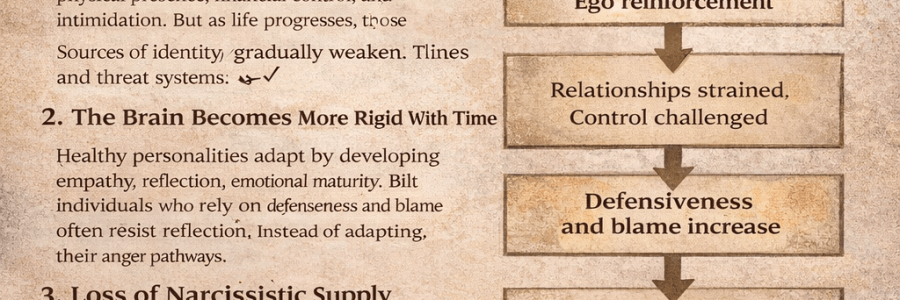
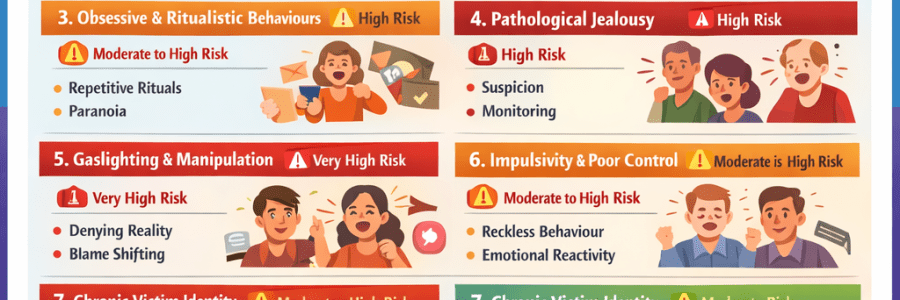
1. Machiavellianism — The Strategic Manipulator Core pattern: Calculated, deceptive, emotionally detached, controlling. Common behaviors: Relationship examples: Typical impact on partners:Confusion, self-doubt, emotional exhaustion, anxiety, hyper-vigilance 2. Narcissism — The Ego-Centered Taker Core pattern: Entitlement, superiority, validation-seeking, lack of empathy. Common behaviors: Relationship examples: Typical impact on partners:Low self-esteem, emotional neglect, walking on eggshells, loneliness 3. Psychopathy — The Emotionally… Read More Real-World Behavioral Examples – Dark Triad Traits