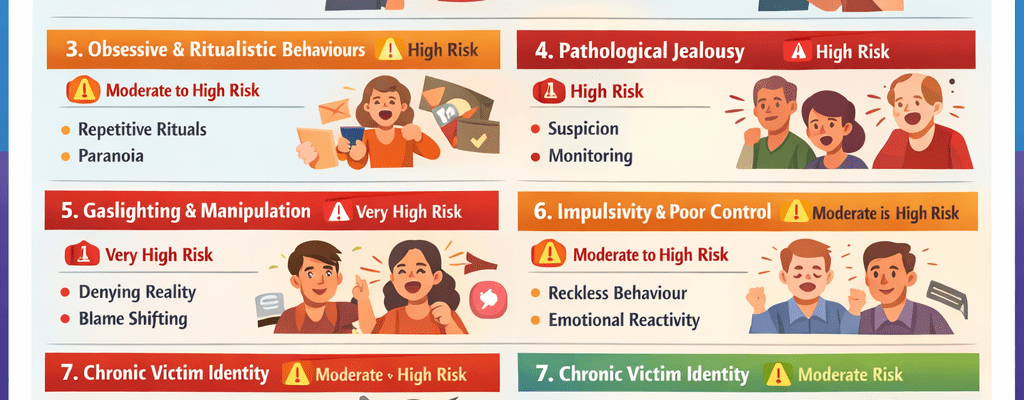
One of the most common mistakes people make when trying to understand abusive behaviour is focusing on what the abuser says rather than what they consistently do.
When someone has experienced emotional, psychological, financial, or physical abuse, they are often encouraged to focus on the latest apology, excuse, promise, or explanation. However, the real answers are usually found in the long-term patterns of behaviour.
Look at the history.
Look at previous relationships.
Look at friendships that have broken down.
Look at family dynamics.
Look at how they react when challenged, criticised, or held accountable.
Abusive behaviour rarely appears out of nowhere. In many cases, the patterns can be traced back years or even decades. While some individuals work hard to address their behaviour through professional help and genuine accountability, many continue repeating the same destructive patterns throughout their lives.
The signs are often there if you are willing to see them.
Observe the behaviour of those around them. Sometimes there are clues within the family system itself. You may notice patterns of denial, secrecy, blame-shifting, minimisation, or enabling. Family members may have known about the behaviour for years and, for various reasons, choose not to acknowledge it openly.
This does not mean every family member is complicit, nor does it mean every difficult family dynamic indicates abuse. However, it is important to recognise that relatives are not always the best source of objective advice. They may have emotional investments, loyalties, fears, or their own reasons for protecting the status quo.
This is why independent support can be so valuable.
A trusted friend, family member, counsellor, therapist, domestic abuse advocate, psychologist, or legal professional can help you step back and view the situation more clearly. Sometimes it takes an outside perspective to help identify patterns that have become normalised over time.
The goal is not to tell you what decision to make. The goal is to help you see the reality of the situation so that you can make informed choices about your future.
Most importantly, physical abuse should never be ignored.
Violence in a relationship is a serious warning sign. Research consistently shows that physical abuse often escalates over time, becoming more frequent, more severe, or accompanied by other forms of coercive and controlling behaviour.
If physical violence is present, seek professional advice and support as soon as possible. Your safety must come first.
Trust what you see, not just what you are told.
Look at the patterns.
Look at the history.
Listen to the evidence.
Then make the decisions that are right for you and your future.

