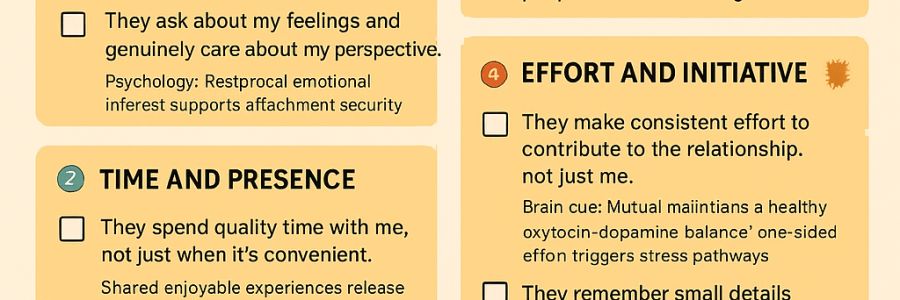
When “Love” Is Everything But Love: My Personal Journey and a Guide to Recognizing Abuse

For 32 years, I believed I was living in a loving relationship. It felt like care, affection, and connection. But looking back now, I can see that it was everything but love. It was emotional, psychological, financial, and at times physical abuse, all carefully disguised as love. When you are inside it, you don’t see it. You justify… Read More When “Love” Is Everything But Love: My Personal Journey and a Guide to Recognizing Abuse
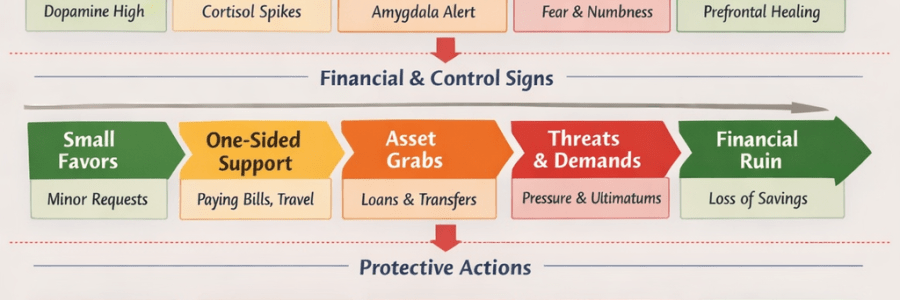
🧠 Narcissist vs Sociopath vs Psychopath

Here is a clear, clinical, side-by-side comparison of narcissist vs sociopath vs psychopath, using psychology + neuroscience + real-world behavior, so you can spot the differences instantly. This removes confusion and over-labeling — and gives you accurate detection clarity. Side-by-Side Comparison Table Trait Narcissist Sociopath Psychopath Core Problem Fragile ego + validation addiction Antisocial behavior + emotional instability Severe emotional deficit… Read More 🧠 Narcissist vs Sociopath vs Psychopath

🧠 Covert Narcissist Detection Guide

Covert Narcissist Detection Guide — a deep psychology + neuroscience-based framework to help you spot hidden narcissistic manipulation early, before emotional damage occurs. This focuses on subtle, quiet, hard-to-detect narcissism — the kind that causes maximum psychological harm while appearing kind, sensitive, or wounded. How to spot the most dangerous form of narcissism 🧩 What Is Covert Narcissism? Unlike overt narcissists (loud, dominant,… Read More 🧠 Covert Narcissist Detection Guide

🧠 Dark Psychology Tactics List

Dark Psychology Tactics List — a clear, neuroscience-based field guide to the manipulation methods used in dating, relationships, families, workplaces, and power dynamics. This is awareness, not paranoia.Once you can see tactics, they lose their power. How manipulation actually works (and how to spot it instantly) 1️⃣ Love Bombing Weapon: Intensity + emotional flooding What it looks like: Over-the-top compliments Fast emotional closeness… Read More 🧠 Dark Psychology Tactics List

Common Inheritance Manipulation Tactics

(Especially in controlling or corrupt family systems) 1. Isolation of the vulnerable person One of the first moves is to isolate the dying or vulnerable person. This looks like: controlling access limiting visits filtering communication intercepting messages discouraging outside relationships Why?Because isolation creates control and influence. No witnesses = no accountability. 2. Legal override & pressure tactics Families often:… Read More Common Inheritance Manipulation Tactics

Real-World Behavioral Examples – Dark Triad Traits

1. Machiavellianism — The Strategic Manipulator Core pattern: Calculated, deceptive, emotionally detached, controlling. Common behaviors: Lies easily and convincingly — even when there’s no real need Plans conversations to steer outcomes Twists facts to suit their narrative Withholds information intentionally Creates confusion to maintain control Gaslights: “That never happened.” / “You’re imagining things.” Plays people against each other quietly… Read More Real-World Behavioral Examples – Dark Triad Traits

ASPD vs Narcissistic Abuse — What’s the Difference?

Core Difference (In Plain Terms) ASPD = Disregard for othersNarcissistic abuse = Use of others to regulate self-esteem They can overlap — but the motivation, emotional structure, and risk profile are different. 1. Internal World ASPD Limited or absent remorse Minimal emotional attachment Low anxiety about harming others Relationships are instrumental (useful or not useful) People with ASPD don’t need admiration to… Read More ASPD vs Narcissistic Abuse — What’s the Difference?

What is ASPD (Antisocial Personality Disorder)?

Antisocial Personality Disorder (ASPD) is a clinical diagnosis used to describe a persistent pattern of disregard for the rights, safety, and boundaries of others. It’s not about being “difficult” or having a bad temper. It’s about how someone relates to people, rules, and responsibility over time. Common features include: Repeated lying, manipulation, or deceit Lack of remorse after harming others… Read More What is ASPD (Antisocial Personality Disorder)?

How to Spot Entitlement Early (Before Emotional Investment)

1. Boundary Micro-Tests (the fastest tell) What you do:You make a small, neutral limit early (time, pace, availability). Entitlement response: Pushes back immediately Questions or negotiates your limit Acts confused or offended by a simple “no” Healthy authority response: Accepts it without drama Adjusts or moves on Doesn’t need explanation 🔑 People who respect small boundaries… Read More How to Spot Entitlement Early (Before Emotional Investment)

ENTITLEMENT vs HEALTHY AUTHORITY (Clinical Comparison)

CORE SELF-STRUCTURE Entitlement Fragile or unstable self-worth Identity requires external validation Power is borrowed from others’ compliance Healthy Authority Integrated, stable self-worth Identity is internally referenced Power is self-contained NERVOUS SYSTEM REGULATION Entitlement Poor internal regulation Uses control, dominance, or compliance to feel safe Boundaries trigger threat responses Healthy Authority Strong internal regulation (ventral vagal)… Read More ENTITLEMENT vs HEALTHY AUTHORITY (Clinical Comparison)