One-sided or exploitative relationships
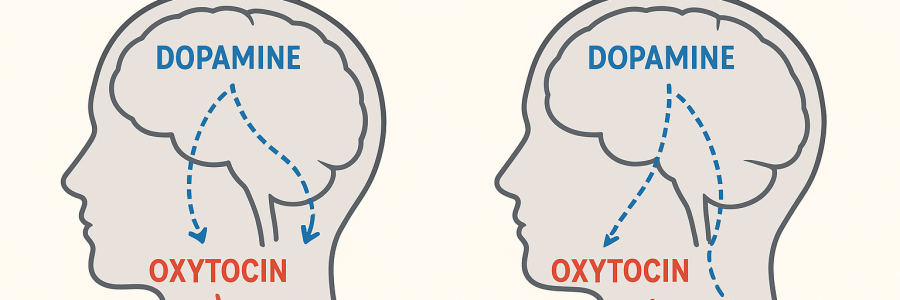
A classic pattern of one-sided or exploitative relationships, and both psychology and neuroscience give powerful insight into why these dynamics feel so draining and confusing. Here’s a breakdown that connects behaviour, brain science, and emotional impact 👇 ⚖️ 1. The Psychology of One-Sided Relationships People who make everything about what you can do for them often show traits linked to narcissistic or emotionally avoidant patterns:… Read More One-sided or exploitative relationships
💭 “You Don’t Miss What You Never Had”

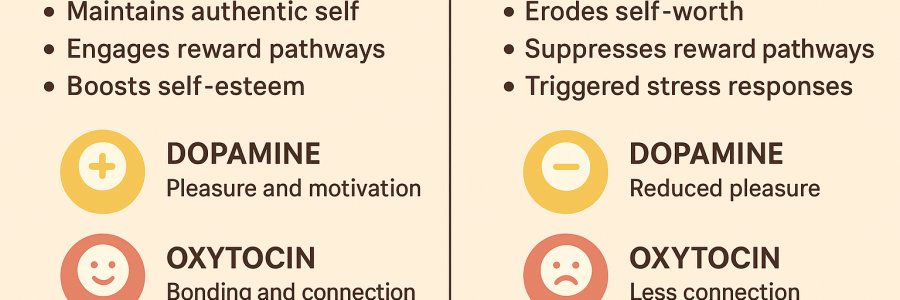
The Psychology and Neuroscience of Absence, Longing, and Emotional Imprinting We often hear the phrase “you don’t miss what you never had” — and on the surface, it sounds simple.But in psychological and neurological terms, this truth carries layers of meaning about attachment, emotional learning, and the brain’s relationship with experience. 🧠 The Brain Only Grieves What It… Read More 💭 “You Don’t Miss What You Never Had”

🧠 When You Know What You Don’t Want:

The Neuroscience of Rebuilding Direction and Desire There comes a time when you’re certain of what no longer fits — relationships, environments, or versions of yourself that feel constraining — yet you’re not quite sure what comes next.That in-between space can feel confusing or even empty. But from a psychological and neuroscientific perspective, it’s one… Read More 🧠 When You Know What You Don’t Want:

🧘‍♀️ The Power of Solitude: How Time Alone Rewires the Brain for Clarity and Authentic Living

In a world that constantly demands attention — partners, family, social media, work — time alone can feel uncomfortable, even wrong. Yet solitude is not loneliness; it’s the space where your true self recalibrates. Psychologically and neurologically, time alone is essential to understand who you are and what you truly want from life. 🧠 The Neuroscience… Read More 🧘‍♀️ The Power of Solitude: How Time Alone Rewires the Brain for Clarity and Authentic Living

🧠 Maintaining Your Lifestyle Without Compromising Your Self-Worth

The Psychology of Standards, Identity, and Financial Control There’s a profound difference between being spoilt and being cultured in quality.Some of us were raised to appreciate the finer things — not as excess, but as expressions of care, beauty, and dignity. When you grow up with standards, you’re not demanding; you’re maintaining a learned sense of what feels… Read More 🧠 Maintaining Your Lifestyle Without Compromising Your Self-Worth

Tactical Guide: Presenting a Psychologist’s Report in Court

1️⃣ Structure the Report Clearly Executive Summary: Start with a short, neutral summary of the findings — objective and fact-based. Background: Include context: who was assessed, dates, sessions attended, and purpose of the evaluation. Methods: Clearly describe clinical tools, assessments, and observations used (standardized tests, structured interviews, behavioral observations). Findings: Stick to observable behaviors and measurable outcomes, not subjective opinions or labels.… Read More Tactical Guide: Presenting a Psychologist’s Report in Court

1️⃣ Understand the Purpose of the Report

A psychologist’s report can serve multiple functions in a divorce: Child custody or parenting evaluations: Demonstrating the best interests of the child. Evidence of mental health issues or manipulation: Showing patterns of coercion, emotional abuse, or trauma. Supporting claims of abuse or misconduct: Providing professional, objective observations. Courts value objective, fact-based analysis over opinionated or emotional statements.… Read More 1️⃣ Understand the Purpose of the Report

A. Lawyer changes

When one partner in a Spanish divorce keeps changing lawyers and re-framing their story, it tends to have both legaland psychological layers. Here’s how it works and what you can do: ⚖️ 1. The Legal Side (Spain) A. Lawyer changes In Spain, a party may change their abogado (lawyer) or procurador (court representative) at any time.Each change must be formally notified to the court. It doesn’t stop… Read More A. Lawyer changes

When They Threaten You with Court to Control You

The psychology behind false defamation claims and emotional manipulation Sometimes, the people who shout the loudest about “defamation” are the very ones who’ve been spreading rumours themselves. When someone makes damaging or unkind comments about their own family and then threatens to take you to court for simply repeating or acknowledging them, it’s rarely about truth —… Read More When They Threaten You with Court to Control You