NEUROSCIENCE OF “CONNECTION WITHOUT PROGRESSION”

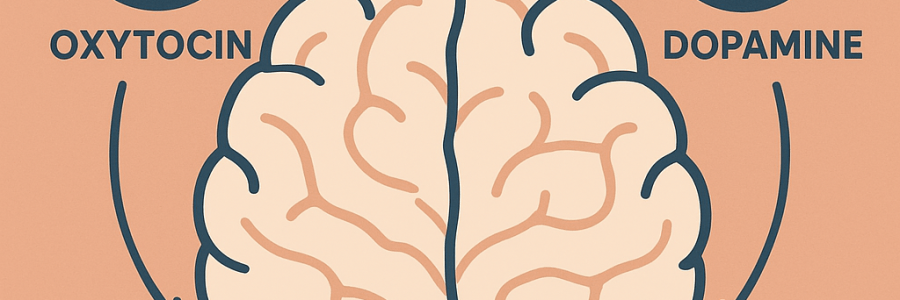
1. The Dopamine–Oxytocin Trick: Emotional Bonding Without Action When someone checks in, calls, sends photos, or maintains friendly emotional contact, your brain releases: dopamine (reward) oxytocin (bonding, trust) This creates a strong felt connection — even if nothing concrete happens. From their side, those same interactions give them enough emotional stimulation that their brain also feels: connected safe validated… Read More NEUROSCIENCE OF “CONNECTION WITHOUT PROGRESSION”

Neuroscience Comparison Chart

Trusting Brain vs Manipulative Brain Neural Feature Trusting Brain Manipulative Brain (Dark-Triad Traits) Empathy Circuits (Anterior Insula, ACC) Highly active — can feel others’ emotions easily. Underactive — low resonance with others’ feelings; emotional detachment. Oxytocin Sensitivity Strong — bonding happens quickly; warmth feels natural. Low or strategically used — may mimic bonding to gain… Read More Neuroscience Comparison Chart

I Left My Abusive Husband Over a Year Ago — And Honestly, I’ve Never Had This Much Fun in Decades

Leaving an abusive man is a bit like taking off a pair of shoes that never fit:you don’t realise how much they were cutting off your circulation until your toes start dancing again. For years, I lived in a world where joy was rationed, laughter was suspicious, and fun was only allowed if it made… Read More I Left My Abusive Husband Over a Year Ago — And Honestly, I’ve Never Had This Much Fun in Decades

Working With Attraction While Healing

1. Acknowledge the Chemistry Recognize that feeling drawn to someone is normal brain chemistry (dopamine, oxytocin, and serotonin spikes). Feeling desire or attachment does not mean weakness — it’s your nervous system responding to novelty, bonding cues, or emotional reward. Key practice: name the physiological response: “My body is experiencing dopamine and oxytocin surges; this is normal.” 2. Name What… Read More Working With Attraction While Healing

Self-Assessment Questions: Am I Co-Dependent?

Here’s a self-reflection guide with questions to help you assess whether you might exhibit co-dependent patterns. These are grounded in psychology and behavioral science. Answer honestly, in a non-judgmental way — this is for self-awareness, not diagnosis. Self-Assessment Questions: Am I Co-Dependent? 1. Relationship Dynamics Do I feel responsible for other people’s feelings, problems, or happiness? Do I… Read More Self-Assessment Questions: Am I Co-Dependent?

Co-Dependent Individuals: Neuroscience and Psychology

Co-dependency refers to a pattern where an individual consistently prioritizes others’ needs over their own, often to the point of emotional, psychological, or even physical detriment. It’s commonly observed in relationships with emotionally unavailable, abusive, or high-conflict partners. 1. Brain Mechanisms in Co-Dependency A. Reward System Dysregulation Helping or “fixing” others releases dopamine, reinforcing self-sacrificing patterns.… Read More Co-Dependent Individuals: Neuroscience and Psychology

PSYCHOLOGICAL PROFILE OF THE DAUGHTER

IN A MANIPULATIVE, DECEPTIVE FAMILY SYSTEM This type of daughter does not behave out of love, morality, or independence.She behaves out of conditioning, control, fear, and psychological fusion with the manipulative parent. Her loyalty is not chosen.It is shaped. Here is the research-based breakdown. 1. Enmeshed Child: She Becomes the Father’s Emotional Extension In dysfunctional families,… Read More PSYCHOLOGICAL PROFILE OF THE DAUGHTER

Karma and the Cost of a Life Built on Cruelty

Cruelty has a price.Always.No one escapes it — not in the mind, not in the body, not in the spirit. Everything done in secret eventually comes to light. And when someone lives a life of: theft deception manipulation betrayal cruelty exploitation lying using their own daughter as a shield storing documents to prepare for harm… Read More Karma and the Cost of a Life Built on Cruelty