🧠 1. What happens in the brain (neuroscience perspective)
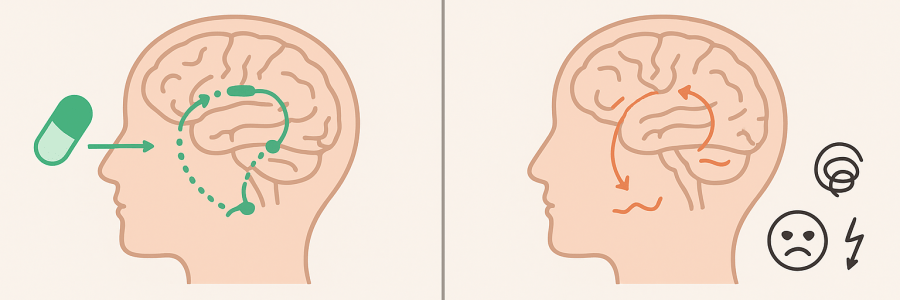
Antipsychotic medication (used for conditions like schizophrenia, schizoaffective disorder, or severe bipolar disorder) works by regulating dopamine and sometimes serotonin activity in key brain circuits — especially those involving: The prefrontal cortex (thinking, planning, judgment) The limbic system (emotion and fear regulation) The striatum (motivation and reward) When you’ve been on these medications for years, your brain adapts to their presence: Receptors adjust (for example,… Read More 🧠 1. What happens in the brain (neuroscience perspective)