“Everyone Said the Same Thing”: When Other People Notice Something Isn’t Right

One of the most confusing experiences for survivors of coercive control is discovering, often years later, that other people had quietly felt uncomfortable too. Friends may say: “There was always something that didn’t feel right.” “I couldn’t relax around them.” “They seemed cold.” “There was something intimidating about them.” “I couldn’t understand why you always… Read More “Everyone Said the Same Thing”: When Other People Notice Something Isn’t Right

Helping Someone Recover After Abuse: What Matters Most?

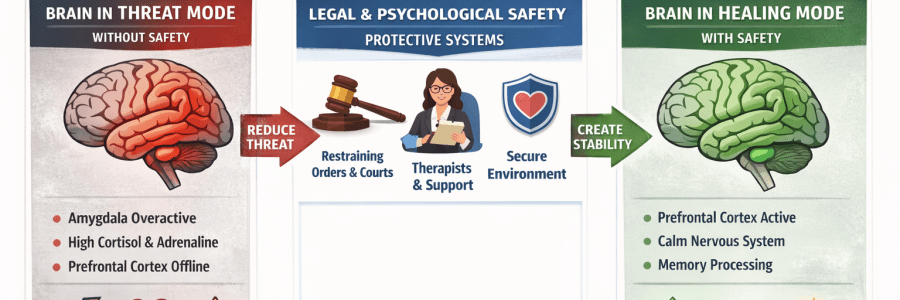
When someone leaves an abusive or controlling relationship, many people assume the hardest part is over. Often, it isn’t. Leaving may end the relationship, but recovery takes time. Years of criticism, control, intimidation and emotional manipulation can change how a person sees themselves and the world around them. The question becomes: What helps someone recover? The… Read More Helping Someone Recover After Abuse: What Matters Most?

Looking After Yourself During and After Trauma

One of the most important lessons to learn during and after trauma is that you cannot pour from an empty cup. When life has been turned upside down, your wellbeing must become a priority, not an afterthought. Think of the safety instructions on an aeroplane: “Put your own oxygen mask on first before assisting others.” This advice is… Read More Looking After Yourself During and After Trauma

Different Types of Water Therapy

Water has been used for centuries to promote relaxation, healing, and wellbeing. While water therapy is not a substitute for medical treatment, many people find it helpful for reducing stress, easing muscle tension, and supporting physical recovery. 1. Shower Visualization Therapy Using a shower as a mindfulness practice. As the water flows over your body,… Read More Different Types of Water Therapy

When the Wounded Child Wants the Parent to Suffer

One of the most difficult emotions for survivors of childhood abuse to talk about is the desire to see an abusive parent suffer. Society expects children to love, forgive, and honour their parents, no matter what happened behind closed doors. As a result, many adult survivors carry feelings of anger, resentment, and even thoughts of… Read More When the Wounded Child Wants the Parent to Suffer

From this day, June 22. ☀️

2025   Jealous? Of Who? Of What?” — The Baffling Accusation That Says More About Them Than You   View • Reblog   🧠 1. Naïveté is Not Your Fault, But Wisdom Is Now Your Responsibility   View • Reblog   💬 “When There’s Chemistry, But You Stay Friends: The Beauty of Uncomplicated Connection”   View • Reblog   🧠 Trauma-Informed Perspective   View • Reblog   🌹 Therapeutic Response: What I’d Say to a… Read More From this day, June 22. ☀️

My New Chapter: Calm, Boundaries, and a Life That Feels Like Mine Again

There comes a point where life quietly shifts from enduring everything to choosing everything. Not dramatically. Not with fireworks. More like a slow internal decision that says: “I think I’d like peace now.” And suddenly, everything starts to look a little different. The Great Simplification The new chapter isn’t about perfection. It’s about less noise. Less emotional chaos. Less… Read More My New Chapter: Calm, Boundaries, and a Life That Feels Like Mine Again

The Zeigarnik Effect: The Brain Hates Unfinished Stories

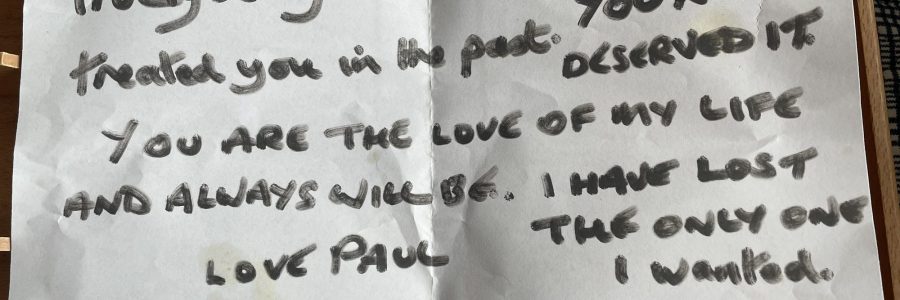
Leaving behind a trail of letters, cards, cryptic messages, song lyrics, gifts, or symbolic references after a separation can have many psychological meanings. The behavior itself is not enough to diagnose someone’s intentions, but neuroscience and psychology offer several explanations for why some people communicate this way instead of speaking directly. The Brain and Ambiguous… Read More The Zeigarnik Effect: The Brain Hates Unfinished Stories

The Price of Peace: Why Walking Away Is Sometimes the Greatest Victory

“Your sanity is worth a lot more.” It wasn’t the advice I expected to stay with me. It wasn’t a legal argument or a financial calculation. It was a simple recognition of something neuroscience and psychology have been telling us for decades: Chronic stress is expensive. Not just emotionally, but physically, cognitively and neurologically. After… Read More The Price of Peace: Why Walking Away Is Sometimes the Greatest Victory