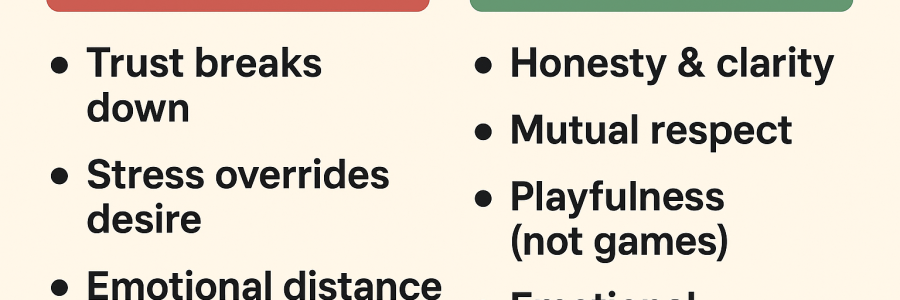
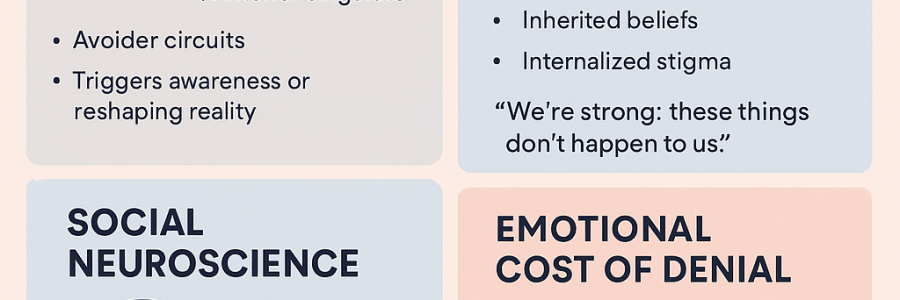
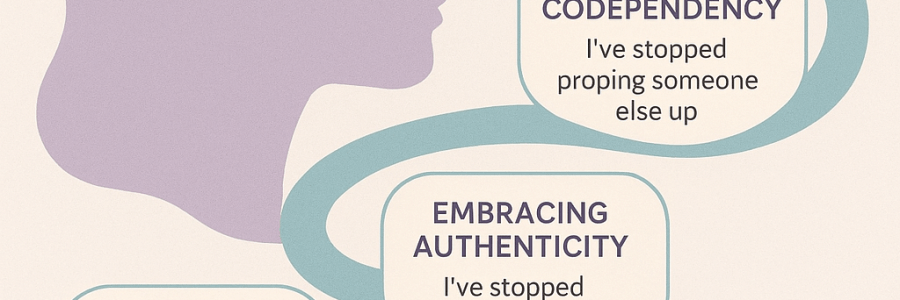
🧠 1. Neuroscience: Low Dopamine & Emotional Fatigue

When someone feels “tired” all the time — not just physically, but existentially — it often reflects dopamine depletion or chronic stress response. Dopamine (the motivation and reward neurotransmitter) drops when people lose purpose, novelty, or connection. Chronic cortisol elevation (stress hormone) causes fatigue, pessimism, and irritability. The prefrontal cortex (the part that makes plans and sees the future positively) goes “offline” when… Read More 🧠 1. Neuroscience: Low Dopamine & Emotional Fatigue
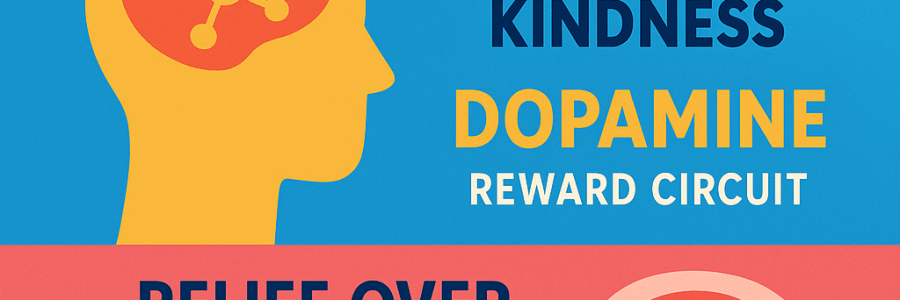
🧠 1. The “Better Than the Last One” Trap — Contrast Bias

Your brain doesn’t evaluate people objectively — it evaluates them comparatively.When you’ve had a painful or toxic experience before, your prefrontal cortex and amygdala create a mental “reference point” for safety and danger. So when someone new shows slightly better behavior — a little kindness, a bit of respect — your brain lights up with relief: “Ah, this feels safer. Better. Maybe… Read More 🧠 1. The “Better Than the Last One” Trap — Contrast Bias

Let’s unpack Moral Disengagement (Bandura, 1999) clearly and deeply 👇

🧩 What It Is Albert Bandura — the same psychologist who developed Social Learning Theory — coined moral disengagement to describe how people disconnect their actions from their moral standards so they can behave unethically while still thinking of themselves as “good people.” In other words: “I know this is wrong, but I’ll convince myself it’s fine — so I can do… Read More Let’s unpack Moral Disengagement (Bandura, 1999) clearly and deeply 👇

🧠 NEUROSCIENCE: HOW THE BRAIN OF A CHRONIC LIAR WORKS

1. Reduced Gray Matter in the Prefrontal Cortex Research using MRI scans (e.g., Yang et al., British Journal of Psychiatry, 2005) found that habitual liars have less gray matter in the prefrontal cortex — the brain’s honesty and moral reasoning hub.👉 This means poorer impulse control, ethical judgment, and empathy regulation. 2. Overactive Reward Circuitry The nucleus accumbens and ventral tegmental area (VTA) — the brain’s reward… Read More 🧠 NEUROSCIENCE: HOW THE BRAIN OF A CHRONIC LIAR WORKS

🧠 Neuroscience: The Brain Under Threat

When someone lies — especially when the truth threatens their self-image — their brain enters a defensive survival mode. Amygdala activation (the fear and threat center) increases when a person fears shame, exposure, or loss of control. Prefrontal cortex (responsible for rational thought and honesty) may shut down or twist logic to maintain a sense of safety. The brain releases stress… Read More 🧠 Neuroscience: The Brain Under Threat

🧠 When Control Masquerades as Negotiation

The Neuroscience of Coercive Control After Divorce A year ago, I filed for divorce after thirty-two years together — twenty of them married. All I asked for was the bare minimum: the 50% that Spanish law entitles me to.I didn’t ask for hidden pensions, secret savings, or anything he’d spent years concealing.Just equality. Nothing more. His… Read More 🧠 When Control Masquerades as Negotiation

Freedom After Chaos: The Neuroscience of Peace in Solitude

Walking along the seafront, ice cream in hand, dog by my side — I watch the world in motion.Couples passing by with tired eyes.People at dinner tables scrolling through glowing screens.Lovers bickering between mouthfuls of food.And I realize — I don’t miss any of it. Not the tension, not the performance, not the quiet loneliness… Read More Freedom After Chaos: The Neuroscience of Peace in Solitude

Love isn’t flashy. It’s stabilizing, healing, and transformative — every day, in quiet ways.

By Linda C J Turner, Therapist & Advocate — Linda C J Turner Trauma Therapist | Neuroscience & Emotional Intelligence Practitioner | Advocate for Women’s Empowerment ©Linda C J Turner © 2025 Linda Carol Turner. Content protected by copyright.Reproduction or redistribution in any form requires prior written permission from the author.When quoting or referencing, please cite:… Read More Love isn’t flashy. It’s stabilizing, healing, and transformative — every day, in quiet ways.