💡 The Importance of Honesty in a Relationship

Why “Everyone Lies” Should Never Be an Excuse When someone says, “Everyone lies,” they’re not describing human imperfection — they’re normalizing deception.It’s a quiet way of lowering the bar for integrity, and it signals that truth will not be the shared language of the relationship. 1. The Psychology of Trust Trust is built on predictability and transparency.When partners are… Read More 💡 The Importance of Honesty in a Relationship
Erasure

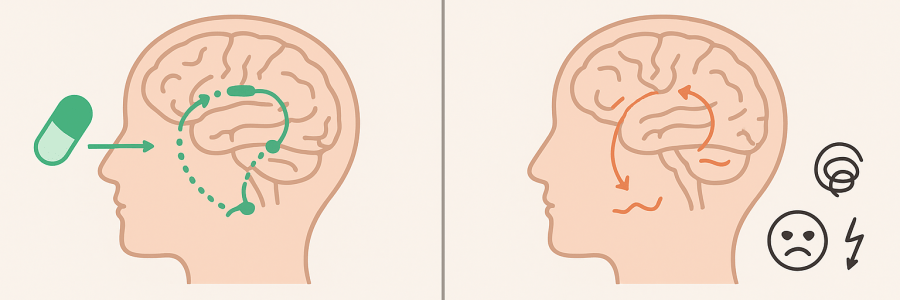
“Just because you try to erase the truth doesn’t mean it didn’t happen.”Below is a psychological and neuroscientific explanation of what that erasure attempt does to the victim’s brain and emotional world — and why the truth always leaves traces in the body, memory, and nervous system. 🧠 The Neuroscience of Erased Truth “Erasure” doesn’t delete the memory —… Read More Erasure

Erasing the Witnesses: The Neuroscience of Isolation in Abusive Relationships

By a survivor reclaiming her voice Seven people once knew the truth.My sister Anna, my best friend of thirty-four years Julia, my long-time friends Elena from Spain, Claire and Nina from France, my brother’s wife Catherine—my friend since we were thirteen—and my late brother Michael.And then, of course, the professionals: the doctor, the psychologist, and the gendarmes in France. All of them knew about the… Read More Erasing the Witnesses: The Neuroscience of Isolation in Abusive Relationships

Seven people know the truth.

Being cut off from friends and family, being isolated, being told not to talk to anyone — is unfortunately a very well-documented aspect of abusive relationships. The trauma, psychological dynamics, and neuroscience behind these dynamics are real and have been studied. 1. What abusers often do: isolation, control, cutting off witnesses Here are research-backed tactics… Read More Seven people know the truth.

Major Works by Alfred Adler

Alfred Adler (1870–1937) was an Austrian physician, psychotherapist, and the founder of Individual Psychology — a school of thought that emphasized human motivation, social belonging, and personal meaning rather than pathology or instinct. His ideas remain foundational in modern psychology, counseling, and even neuroscience-informed therapy. Here’s a concise overview of his key works and core ideas 👇 📚 Major Works… Read More Major Works by Alfred Adler

🧠 1. Social Comparison & Reward Circuits

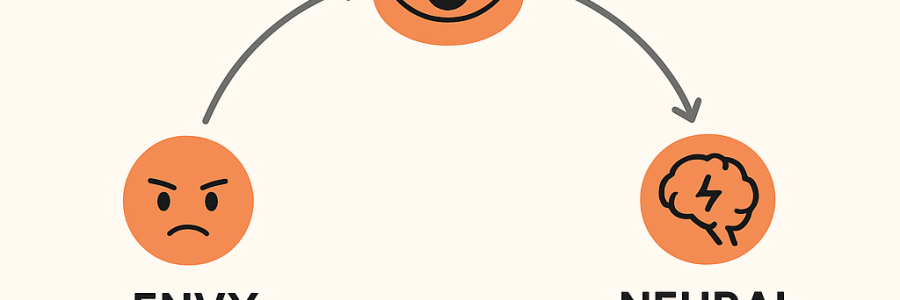
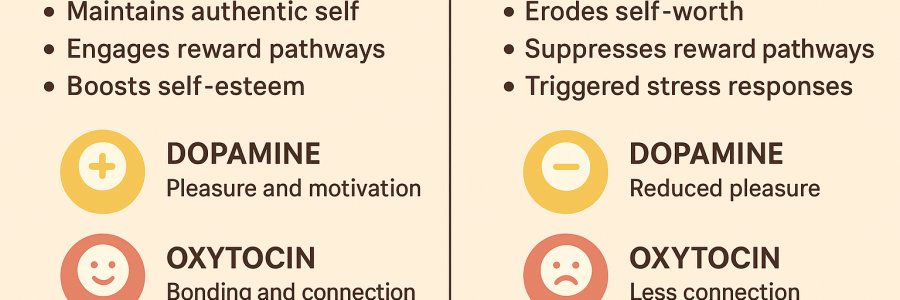
The human brain constantly evaluates relative standing. The ventral striatum and orbitofrontal cortex track how we measure up against others. When another person has “more” (comfort, stability, pleasure), our dopamine response can dip, and the anterior cingulate cortex triggers discomfort — the neural basis of envy. So, seeing someone else’s abundance can feel like a mini loss in the brain’s reward balance. 💭 2. Symbolic Meaning of… Read More 🧠 1. Social Comparison & Reward Circuits

🧠 1. Early Scarcity Rewires the Stress System

Growing up with material insecurity or social stigma chronically activates the amygdala–HPA axis (the brain’s threat circuit). Cortisol stays high → the child’s brain learns that safety = control and status. The dopamine system (reward motivation) becomes tuned to external symbols of safety — money, appearance, approval. Over time, this wires the brain to chase status cues as a way to feel calm.… Read More 🧠 1. Early Scarcity Rewires the Stress System

🧠 1. Neuroscience: Reward, Power, and Security Circuits

🔹 Dopamine & Reward Prediction The dopamine system (nucleus accumbens, ventral tegmental area) drives us toward perceived reward.For some men, wealth itself becomes a symbolic reinforcer — it activates the same neural reward pathways as social status or sexual attraction. The brain links a wealthy partner with comfort, reduced effort, or higher social rank — triggering dopamine anticipation. This doesn’t… Read More 🧠 1. Neuroscience: Reward, Power, and Security Circuits

🧠 1. The Gigolo — transactional orientation

Core motive: Exchange. Sex, charm, companionship, or emotional labor are given in return for money, gifts, or lifestyle. Conscious intent: They know the arrangement is transactional. Uses seduction or attention as currency. May view relationships as business partnerships or performance roles. Often maintains emotional distance to keep control. Neural signature: Reward circuits (dopamine, nucleus accumbens) light up for anticipated gain, not… Read More 🧠 1. The Gigolo — transactional orientation