Threat Detection

This manoeuvre has a name and a function. What this tactic is called It sits at the intersection of: Isolation abuse Information control Reputation management / impression control Pre-emptive smear prevention In domestic-abuse and coercive-control literature, it’s often described as“restricting the victim’s social world to control the narrative.” What’s really happening psychologically When someone says… Read More Threat Detection

🛑🧠 Boundary Breaches & How to Respond Without Re-Traumatizing

Core Rule A healthy response: does not explain does not escalate does not seek understanding ends access, calmly and predictably 📊 Boundary Breach → Regulating Response Map Type of Boundary Breach What It Looks Like Why It’s Triggering Non-Re-Traumatizing Response Neuroscience Effect Direct Contact After No-Contact Emails, texts, “just checking in” Violates safety expectation Do not reply. Document. Block or route to… Read More 🛑🧠 Boundary Breaches & How to Respond Without Re-Traumatizing

🧭🧠 Healthy Boundaries Post-Conflict: A Nervous-System Map

Core Principle Boundaries work when they are: consistent low-drama externally supported internally calm If a boundary requires constant explaining, it isn’t stable yet. 🌱 Boundary Map (Before vs After Healing) Area Pre-Healing (Threat-Conditioned) Post-Healing (Healthy Boundary) Contact Responds to “keep the peace” No contact or strictly structured Tone Over-explaining, apologizing Brief, neutral, factual Emotional Access Shares… Read More 🧭🧠 Healthy Boundaries Post-Conflict: A Nervous-System Map

🌱🧠 What Recovery Looks Like After Intimidation Ends

This is the part people rarely explain — but it matters most.Recovery after intimidation is real, predictable, and neurological. It doesn’t happen all at once, and it doesn’t mean “forgetting.” It means your nervous system relearns safety. Here’s what recovery actually looks like, stage by stage. 🌱🧠 What Recovery Looks Like After Intimidation Ends Phase 1: Threat Removal… Read More 🌱🧠 What Recovery Looks Like After Intimidation Ends

🧠⚠️ How Intimidation Escalates When It Stops Working

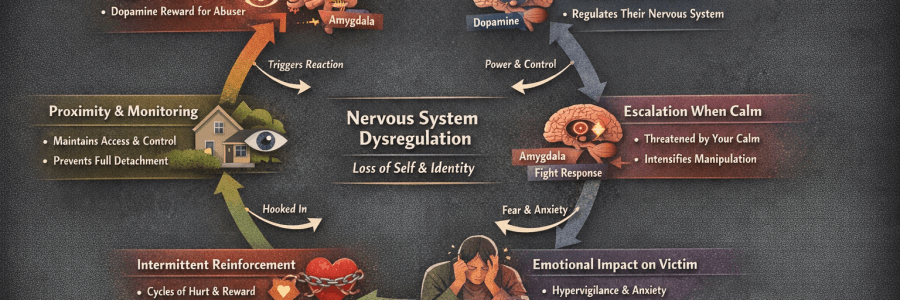
Core Principle Intimidation is a threat-based regulation strategy.When it fails, the threat-brain does not self-correct — it escalates. 🔁 Escalation Stages (Threat Brain Under Pressure) Stage What Stops Working Escalated Behavior Neuroscience Driver 1. Dismissal You don’t react emotionally Mockery, belittling, emojis, sarcasm Mild amygdala activation 2. Pressure You don’t comply Repeated messages, urgency, “last chance” Rising cortisol 3. Reputation… Read More 🧠⚠️ How Intimidation Escalates When It Stops Working

🧠 How Long-Term Exposure to Threat & Harassment Damages Trust and Self-Regulation

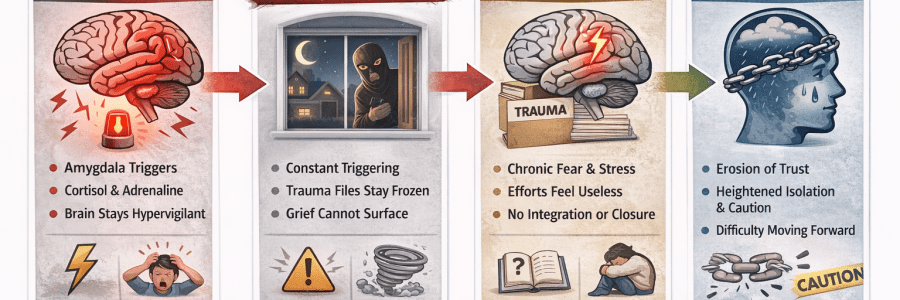
Stage-by-Stage Neuropsychological Impact Area Affected What Repeated Threat Exposure Does Long-Term Consequence Amygdala (Threat Detector) Becomes hypersensitive Constant alertness, anxiety, startle response Prefrontal Cortex (Self-regulation) Overridden repeatedly Difficulty concentrating, decision fatigue Hippocampus (Memory & Context) Stores events as danger memories Triggers activated by reminders, emails, names Vagus Nerve (Calming Pathway) Under-stimulated Trouble calming after stress… Read More 🧠 How Long-Term Exposure to Threat & Harassment Damages Trust and Self-Regulation

🧠⚖️ Threat vs Reflection Mapped to Legal Intimidation & Pre-Court Harassment

Aspect THREAT MODE (Intimidation Strategy) REFLECTIVE MODE (Lawful & Healthy Process) Dominant Brain State Amygdala-driven survival Prefrontal cortex-led reasoning Primary Goal Force compliance through fear Reach fair, lawful resolution Timing Before court / during negotiation Within legal channels Communication Style Derogatory emails, emojis, insults Formal, factual, lawyer-to-lawyer Use of Threats Implied consequences, reputation attacks None… Read More 🧠⚖️ Threat vs Reflection Mapped to Legal Intimidation & Pre-Court Harassment

🧠 Brain States in Conflict: Threat vs Reflection

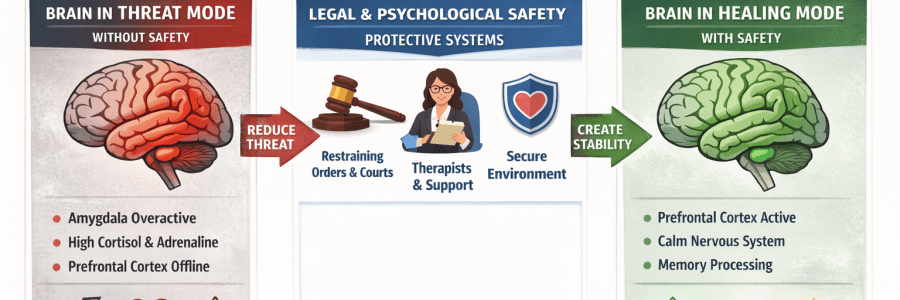
Aspect THREAT MODE (Survival Brain) REFLECTIVE MODE (Thinking Brain) Primary Brain Area Amygdala dominant Prefrontal cortex dominant Nervous System State Sympathetic (fight / flight / freeze) Parasympathetic + balanced regulation Stress Hormones High cortisol, adrenaline Low cortisol, stable neurochemistry Perception of Disagreement Seen as attack or danger Seen as information or difference Perspective-Taking Absent or… Read More 🧠 Brain States in Conflict: Threat vs Reflection

Why some people literally cannot grasp another perspective

1. Prefrontal cortex maturity (or lack of it) Perspective-taking, empathy, and reflective thinking live mainly in the prefrontal cortex (PFC) — especially: medial PFC (self vs other) dorsolateral PFC (reasoning, inhibition) anterior cingulate cortex (conflict monitoring) If someone is emotionally immature, stressed, personality-disordered, or chronically defensive, these areas are functionally offline in conflict. ➡️ They are not choosing not to understand you… Read More Why some people literally cannot grasp another perspective

Stress and Threat Response

1. Legal Actions You Can Take When an ex’s family member sends derogatory, threatening, or manipulative messages aimed at influencing a financial settlement or your reputation, the law provides several protections: a. Document Everything Save every email, text, or social media message. Include timestamps, sender info, and screenshots. Do not delete anything, even if upsetting — this is evidence.… Read More Stress and Threat Response