Stalking or watching young children — what is it?

It depends on intent, behaviour, and pattern, but persistent watching of children is a major red flag and can fall under criminal behaviour, even before physical contact. When “watching” becomes a concern It is not normal for an adult to: Repeatedly watch specific children Follow children or linger where they play without a clear, legitimate reason Observe children in secretive ways Focus attention… Read More Stalking or watching young children — what is it?

Grooming of minors

What it is:A deliberate process where an adult (or older youth) builds trust with a child to prepare them for sexual exploitation. How it happens: Giving attention, gifts, compliments, or “special” status Pretending to be a friend, mentor, or romantic interest Slowly crossing boundaries (sexual talk, secrecy, “don’t tell”) Normalising sexual content or behaviour Isolating the child from… Read More Grooming of minors

What is Normal?

Normal” is a myth invented by people with too much free time. My version: surviving life, laughing at everything that should probably make me cry, and occasionally pretending I have my stuff together. Spoiler: it works better than pretending to be normal ever did.

Regulate, Repair, and stay Resilient.

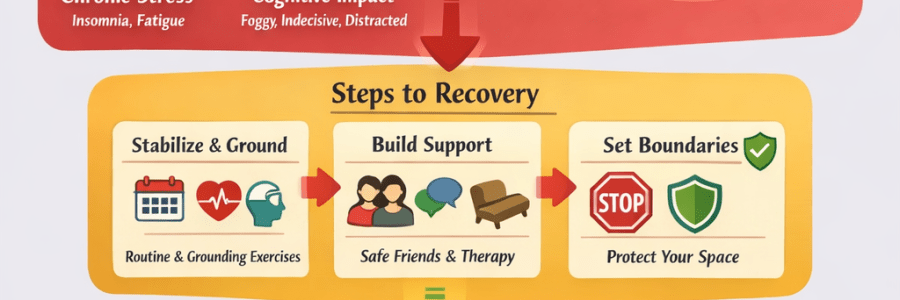
Staying physically and mentally healthy is a cornerstone of trauma recovery. Recovery isn’t just emotional; the body and mind need support to regulate, repair, and stay resilient. Here’s a structured approach for maintaining wellness during recovery: 1. Medical Health Regular check-ups keep you grounded and prevent neglect of your body: Hospital / GP visits: Annual or as advised… Read More Regulate, Repair, and stay Resilient.

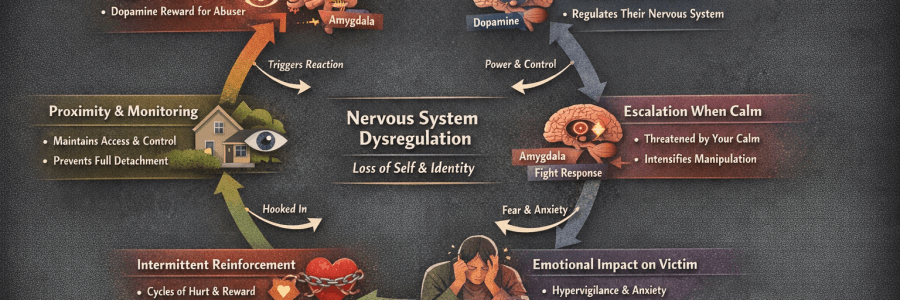
Relentless Abuser Pattern Map

1. Core Pattern (The Loop) You assert a need or boundary Abuser perceives threat to control Criticism, manipulation, withdrawal, or threats Often sudden, feels “out of nowhere” They may soften, apologize, or show brief attention Your nervous system feels relief (dopamine) They revert to control-focused patterns Cycle repeats, often stronger each time Visual cue: Circular arrows… Read More Relentless Abuser Pattern Map

Memory & Trauma Processing

Alcohol can have a profound and often counterproductive impact on trauma recovery, both neurologically and psychologically. Here’s a detailed breakdown: 1. Nervous System Impact Trauma leaves the nervous system hypervigilant. Alcohol: Initially may feel calming or numbing. This is why many people self-medicate with alcohol. GABA modulation reduces inhibition → risky behaviors, impulsivity. Withdrawal and hangovers activate stress… Read More Memory & Trauma Processing

What “messing up” in trauma really is

When you’re traumatised, your nervous system is not choosing behaviour — it’s protecting you. So what looks like “wrecking the relationship” is often: reacting instead of responding pulling away suddenly or clinging too tightly misreading neutral signals as rejection needing reassurance but not knowing how to ask safely shutting down or becoming overwhelmed testing closeness to… Read More What “messing up” in trauma really is

Trauma Bonding vs Healthy Attraction

(How it feels in the body, mind, and nervous system) 🧠 Nervous System Trauma Bonding Feels intense, urgent, consuming Nervous system is activated (anxious, hyperfocused) Calm only comes from them Absence feels like withdrawal Healthy Attraction Feels steady, warm, curious Nervous system stays regulated Calm exists with or without them Absence is tolerable Key question:Do they regulate me —… Read More Trauma Bonding vs Healthy Attraction