Having a rewire today.

Current status: Default setting: trauma + overthinking New setting: calm, slightly badass, surprisingly resilient Side effects may include: Making better choices Laughing at old nonsense Realizing coffee is still life’s greatest ally ETA: full upgrade takes a few weeks, but the glitchy charm version is still active.#BrainRewire #HealingJourney #SelfUpgrade #FunnyButTrue

Trauma, Healing, and the Brain: Why Your Choices Change

When you experience trauma, your brain doesn’t just “feel bad.” Neuroscience shows that trauma can disrupt the prefrontal cortex — the part of your brain responsible for rational thinking, decision-making, and impulse control — and heighten the amygdala, the fear and threat center. This combination makes you more likely to react on instinct, fear, or old patterns, rather… Read More Trauma, Healing, and the Brain: Why Your Choices Change

Focus on Healing

If you receive information or concerns that are distressing or unsettling, it is appropriate to pause and prioritise your own wellbeing. Discuss the situation with your psychologist or mental health professional, particularly if it triggers fear, stress, or past trauma. Their role is to support emotional regulation, clarity, and recovery — not to investigate or… Read More Focus on Healing

You are usually not in danger for reporting — especially if you do it correctly

When you report concerns, not accusations, and you do it through the proper channels, you are generally protected. Why reporting is safer than staying silent Authorities expect third-party reports — they rely on them. You are not responsible for proving anything. You are not accusing — you are passing on information so trained professionals can assess risk. Silence protects abusers; reporting transfers… Read More You are usually not in danger for reporting — especially if you do it correctly

Safe Reporting Plan: Adult Behaviour

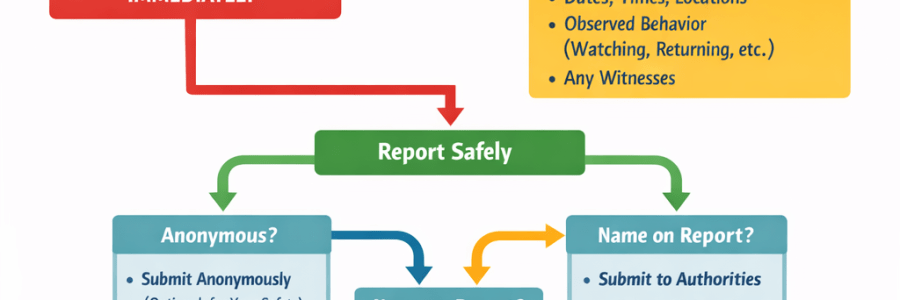
Step 1: Receive the report Accept the letter or notice from a third party calmly. Do not confront the person or any other witnesses. Keep the original letter secure. Step 2: Assess immediate danger Yes: Contact police or child protection immediately. No: Proceed to documentation. Step 3: Document facts Who reported it Dates, times, locations Specific behaviours observed… Read More Safe Reporting Plan: Adult Behaviour

Decision Flow: Responding to Reports About Suspicious Behaviour Around Minors

From a third party, first wife, or someone your ex knows Could be formal (letter/email) or informal (verbal) Yes: Contact police / child protection immediately No: Proceed to documentation Record: who reported, when, where, what was observed Include pattern or repetition if mentioned Do not add assumptions, opinions, or interpretations Do not confront your ex Do not try to intervene directly… Read More Decision Flow: Responding to Reports About Suspicious Behaviour Around Minors

Receiver and recorder, not investigator

If someone who knows your ex well sends you a letter describing concerns about your ex’s behaviour, here’s how to handle it safely and appropriately: 1. Treat it as information, not evidence The letter is a report of concern, not proof of wrongdoing. Avoid acting on assumptions or confronting your ex. Keep your response neutral and professional. 2. Read… Read More Receiver and recorder, not investigator