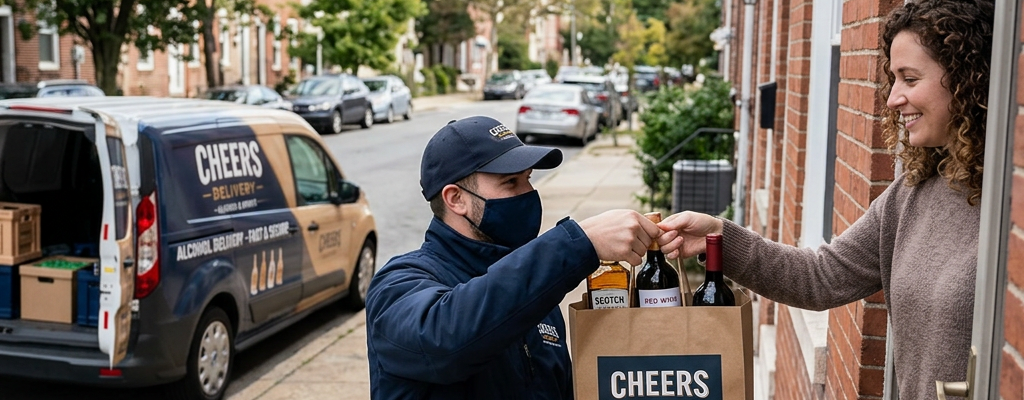
The risks we don’t always think about
Today, getting almost anything delivered to your door can take just a few taps on a phone.
Food. Alcohol. Painkillers. Cold and flu remedies. Sleep aids. Allergy medication.
Convenience can be wonderful — particularly when you’re unwell, exhausted or unable to get to a pharmacy or shop.
But there is a side of this convenience that deserves much more attention:
Alcohol and medication can interact in ways that are unpredictable, sometimes seriously.
And when alcohol and medicines are both readily available through delivery services, it becomes easier to make a decision in the moment without speaking to a pharmacist or considering the possible interaction.
“It’s only an over-the-counter medicine”
One of the most common misconceptions is that if a medicine doesn’t require a prescription, it must be harmless.
That isn’t true.
Over-the-counter medicines can interact with alcohol. This includes some painkillers, cough and cold remedies, antihistamines and other commonly purchased medicines. Some herbal remedies can also interact with alcohol.
For example, alcohol can increase stomach irritation associated with NSAIDs such as ibuprofen and can increase the risk of side effects when large amounts of alcohol are consumed.
Some medicines can also make you drowsy or dizzy. Alcohol can intensify these effects, increasing the risk of falls, accidents and impaired judgement.
The danger isn’t always obvious
The problem is that you may not immediately realise something is wrong.
Combining alcohol with certain medicines can cause:
- Extreme drowsiness
- Dizziness or loss of coordination
- Nausea and vomiting
- Fainting
- Confusion
- Breathing difficulties
- Increased risk of falls and accidents
- Internal bleeding with some medicines
- Potentially dangerous effects on the heart or nervous system
Some combinations can be particularly dangerous because both alcohol and the medication depress the central nervous system. This includes certain sedatives, opioids and other medicines that can impair breathing and consciousness.
Painkillers deserve particular attention
Pain is one of the reasons people commonly reach for medication without consulting a healthcare professional.
But alcohol and pain medication are not necessarily a safe combination.
For example, NSAIDs such as ibuprofen can irritate the stomach, and heavy alcohol consumption can increase the risk of side effects.
Paracetamol also deserves care. Both excessive alcohol consumption and excessive paracetamol can affect the liver, so anyone with liver problems or concerns about their alcohol consumption should seek professional advice.
Antibiotics aren’t all the same
Another common myth is:
“You can never drink alcohol while taking antibiotics.”
The reality is more complicated.
Alcohol does not cause a serious interaction with every antibiotic. However, some antibiotics should absolutely not be combined with alcohol.
For example, the NHS advises avoiding alcohol while taking metronidazole or tinidazole and for a period after finishing them because the combination can cause unpleasant reactions including vomiting, abdominal pain, flushing, dizziness and a fast or irregular heartbeat.
The safest approach is simple:
If you’re taking medication, ask your pharmacist whether alcohol is safe.
And then there is the delivery culture
Services such as Deliveroo have made food and alcohol remarkably accessible.
That doesn’t mean the service itself is responsible for someone’s drinking.
But convenience can change behaviour.
A person who might previously have decided, “I’ll leave it tonight because I don’t want to go to the shop,” can now order alcohol from home within minutes.
Research into on-demand food and alcohol delivery has raised concerns about increased access to alcohol and its potential contribution to alcohol-related harm.
Deliveroo itself has safeguards around alcohol delivery. Its policies state that customers must meet age-verification requirements and that alcohol can be refused if the person appears to be intoxicated.
But safeguards at the point of delivery cannot prevent someone from later consuming alcohol together with medication already in their home.
When you’re vulnerable, convenience can become a problem
There is another dimension that we don’t talk about enough.
People don’t always drink because they are celebrating.
Sometimes they drink because they are:
- Lonely
- Anxious
- Overwhelmed
- Unable to sleep
- Experiencing emotional pain
- Trying to switch off intrusive thoughts
- Coping with relationship problems
- Trying to escape difficult feelings
Alcohol can temporarily numb emotional distress.
But it doesn’t resolve the underlying problem.
And when alcohol is combined with medication that affects the brain or nervous system, the risks can become much greater.
A pause before you press “Order”
Before ordering alcohol — particularly when you are already taking medication — stop and ask yourself:
What am I taking?
Could alcohol interact with it?
Am I already feeling dizzy, sleepy or unwell?
Am I drinking because I want to, or because I am trying to escape how I feel?
Would I make the same decision tomorrow morning?
And if you aren’t sure whether alcohol is compatible with your medication:
Ask a pharmacist before drinking.
Don’t rely on assumptions because a medicine was bought without a prescription.
Your medicine cabinet deserves the same attention as your drinks cabinet
Read the information leaflet.
Check the active ingredients.
Don’t assume that two different products are safe simply because they were bought from a pharmacy or supermarket.
And remember that some cough, cold and other preparations can contain ingredients that may interact with alcohol.
If you take several medicines, supplements or herbal products, ask a pharmacist to check the combination.
Most importantly…
There is no shame in asking for help.
If alcohol has gradually become your way of managing anxiety, trauma, loneliness, sleep or emotional pain, that may be a sign that something deeper needs attention.
You don’t have to numb yourself to get through difficult feelings.
Understanding what your nervous system is experiencing — and learning safer ways to regulate it — can be the beginning of something very different.
Your body is not the enemy.
Your emotions are not the enemy.
And asking for support is not weakness.
This article is for general education and is not a substitute for medical advice. Never stop or change prescribed medication without speaking to your doctor or pharmacist. If you believe you or someone else may have taken a dangerous combination of alcohol and medication, seek urgent medical help.

