Harassment or bullying by an abuser’s family when there is a restraining order in place is taken very seriously.

Here’s the clear, grounded breakdown — legally and practically. 1. Core rule (this matters most) A restraining order cannot be bypassed through family, friends, or third parties. If the family: Contacts you Pressures you Harasses you Passes messages Intimidates or humiliates you Acts “on behalf of” the restrained person 👉 This may constitute a breach of… Read More Harassment or bullying by an abuser’s family when there is a restraining order in place is taken very seriously.

The golden rule

Name-calling, vile emails/texts, accusations, blackmail, humiliation from the abuser’s family — is active mental cruelty, not “family conflict”. The hardest (and smartest) question is exactly the one you asked: When do I name it — and when do I disengage? Below is a clear decision framework used in trauma-informed legal and clinical work. The golden rule (read this first)… Read More The golden rule

Mental cruelty from the family of an abuser — what it is

Mental cruelty by an abuser’s family occurs when relatives knowingly or recklessly engage in behaviours that reinforce, enable, excuse, or extend the abuser’s control, causing psychological harm and undermining the victim’s autonomy, safety, or credibility. This is sometimes called: Secondary abuse Proxy abuse Abuse by alliance Relational coercion They may not hit you.They may never… Read More Mental cruelty from the family of an abuser — what it is

Language-proof boundary scripts

Below are language-proof boundary scripts designed to be calm, precise, and very hard to distort. They’re written to remove emotional hooks, limit projection, and keep you in a regulated, authoritative position. I’ll explain the principles briefly, then give you copy-ready scripts you can actually use. The principles (why these work) Language-proof boundaries share four traits: Neutral tone (no apology, no heat)… Read More Language-proof boundary scripts

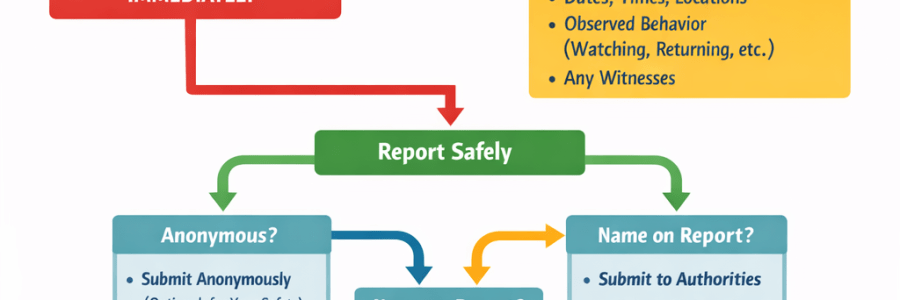
You are usually not in danger for reporting — especially if you do it correctly

When you report concerns, not accusations, and you do it through the proper channels, you are generally protected. Why reporting is safer than staying silent Authorities expect third-party reports — they rely on them. You are not responsible for proving anything. You are not accusing — you are passing on information so trained professionals can assess risk. Silence protects abusers; reporting transfers… Read More You are usually not in danger for reporting — especially if you do it correctly

Grooming of minors

What it is:A deliberate process where an adult (or older youth) builds trust with a child to prepare them for sexual exploitation. How it happens: Giving attention, gifts, compliments, or “special” status Pretending to be a friend, mentor, or romantic interest Slowly crossing boundaries (sexual talk, secrecy, “don’t tell”) Normalising sexual content or behaviour Isolating the child from… Read More Grooming of minors

Strong, intelligent women are not targeted despite their strength.They are often targeted because of it.

Here’s why, clearly and without myth. 1. Strength Looks Like a Resource to a Predator Abusive personalities don’t look for “weakness” in the way people imagine. They scan for: Competence Emotional depth Stability Social credibility Problem-solving ability Capacity to carry responsibility To them, this signals: “This person can absorb pressure, adapt, and keep functioning.” That’s… Read More Strong, intelligent women are not targeted despite their strength.They are often targeted because of it.

Self-Assessment: When You’re Not Sure If It’s Them — or You

This questionnaire is for moments of doubt.Answer each question with Yes / Sometimes / No.Notice patterns, not perfection. How You Feel Inside Do I often feel confused after conversations, unsure what just happened? Do I replay interactions in my head trying to work out what I did wrong? Do I feel anxious, tense, or on edge… Read More Self-Assessment: When You’re Not Sure If It’s Them — or You

“What the hell did you ever see in him?”

It’s been another full, nourishing week with my bestie and family — the kind filled with long, unhurried conversations that stretch late into the evening. We talked about school, teenagers, work, growing up, and the strange passage of time. About responsibilities that multiply, roles that shift, and the quiet weight of experience. And yet, threaded… Read More “What the hell did you ever see in him?”

Protection

Why Police Protection is Paramount As we’ve mapped, when an abuser loses control over their “reward loop” (via boundaries or silence), their nervous system can trigger intense, impulsive, and unpredictable behavior. Police protection ensures that this peak danger does not translate into physical or legal harm. Impulse control decreases during the extinction burst. threats property damage harassment… Read More Protection