🧠 TRAUMA BONDING vs 🧠 TRUE INTIMACY
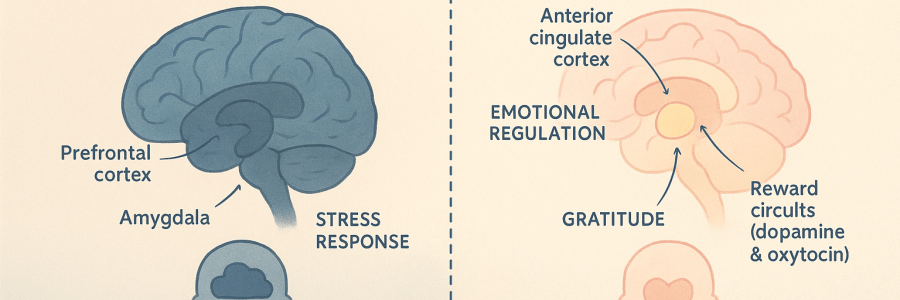
(Why fast feels deep — but isn’t) 1️⃣ THE NEUROCHEMISTRY TRICK 🧠 Trauma bonding brain Adrenaline + cortisol (threat + arousal) Dopamine spikes (relief after distress) Oxytocin released under stress (bonding to danger) This cocktail creates: Urgency + intensity + emotional fusion Your brain mistakes relief for connection. 🧠 True intimacy brain Steady oxytocin Low cortisol Moderate dopamine Prefrontal cortex online… Read More 🧠 TRAUMA BONDING vs 🧠 TRUE INTIMACY
HOW TO SPOT RECIPROCITY CAPACITY EARLY

Below is a clear framework for spotting reciprocity capacity early, before you give time, care, labour, money, or emotional energy. 🔍 HOW TO SPOT RECIPROCITY CAPACITY EARLY (Brain → behaviour → signal) 1️⃣ MICRO-RECIPROCITY TESTS (SAFE & LOW COST) These are tiny, neutral tests that reveal nervous-system wiring without confrontation. Example tests: Let a message sit for a bit Say… Read More HOW TO SPOT RECIPROCITY CAPACITY EARLY

Rejected Appeals

1. Why Courts Deny Appeals to Drop Restraining Orders Courts rarely remove restraining orders lightly because the safety of the protected person is paramount. Before considering removal, they typically review: History of abuse or harassment: Prior incidents, documented threats, or violence. Police reports: Evidence of criminal activity or domestic incidents. Psychologist or psychiatrist reports: Evaluations of risk, mental health concerns,… Read More Rejected Appeals

Neuroscience Map: Abuse vs. Real Love

Domain Real Love Abuse / Financial, Physical, Emotional + Sadistic Attachment System Secure attachment, oxytocin bonding, trust circuits active Trauma bonding, attachment hijacked by fear and reward; oxytocin spikes tied to intermittent reinforcement Nervous System Parasympathetic activation: calm, safe, regulated Sympathetic / HPA axis overactivation: chronic fight/flight/freeze, hypervigilance, stress hormone surge Prefrontal Cortex Clear thinking,… Read More Neuroscience Map: Abuse vs. Real Love

Why Now You Know It Was Never Love

1. Love vs Abuse: Neurobiology Real love activates: Oxytocin & dopamine in balanced patterns (bonding + reward) Ventral striatum & prefrontal cortex for trust and long-term planning Safety circuits: parasympathetic system can rest, nervous system regulated Abuse activates: Amygdala hyperactivation → chronic fear, hypervigilance HPA axis → chronic stress hormone release Limbic hijacking → threat circuitry overrides rational thought Reward… Read More Why Now You Know It Was Never Love

Why Separation Triggers Escalation

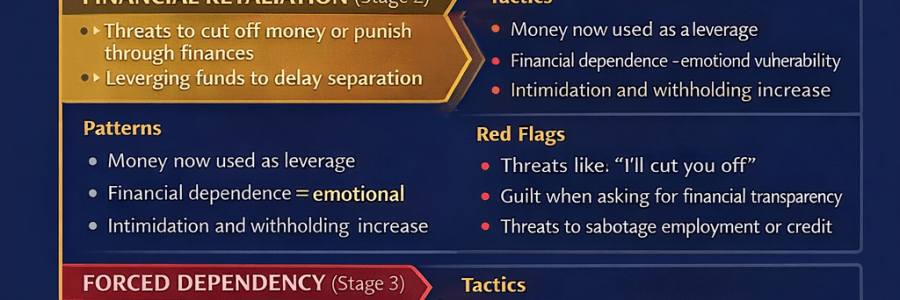
Below is a clear, step-by-step escalation model used in trauma psychology and coercive-control research to explain how financial parasitism intensifies once separation begins.This is predictable, patterned, and not accidental. Why Separation Triggers Escalation Financial parasitism is not just about money.It is about regulation, control, and entitlement. When separation starts: Access to resources is threatened Control over the partner’s nervous system… Read More Why Separation Triggers Escalation

Healthy vs Unhealthy Separation

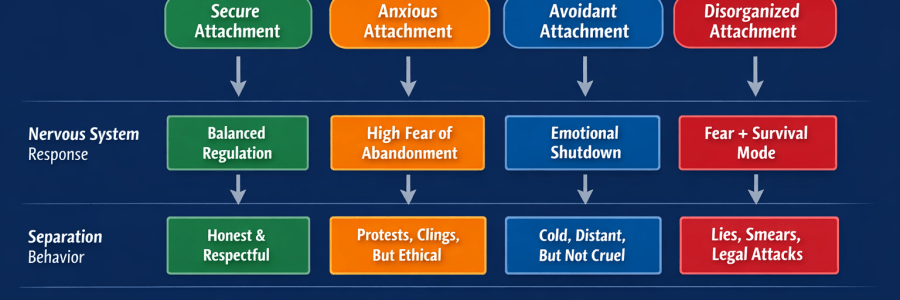
Below is a clear, side-by-side comparison followed by a direct mapping to attachment styles.This is the framework clinicians, trauma specialists, and increasingly courts use to distinguish healthy separation from abusive or unsafe dynamics. Healthy vs Unhealthy Separation (Side-by-Side Comparison Chart) Domain Healthy Separation Unhealthy / Abusive Separation Core mindset “This relationship is ending; we are still human.” “I must win, control,… Read More Healthy vs Unhealthy Separation

How Healthy Partners Behave — Even During Separation

This is a crucial distinction, especially during separation or divorce when stress is high.Healthy partners may be hurt, angry, or grieving — but they do not cross core moral lines, even when the relationship ends. Below is how this looks psychologically, neurologically, and behaviorally. How Healthy Partners Behave — Even During Separation (Neuroscience & Psychology) 1. They Do… Read More How Healthy Partners Behave — Even During Separation

“Once someone is willing to lie under oath, the relationship is already dead.”

“Once someone is willing to lie under oath, the relationship is already dead.” Here’s why — grounded in neuroscience, psychology, and ethics: Why Lying Under Oath Kills a Relationship Permanently 1. It Destroys the Brain’s Safety Model The human attachment system relies on one core question: “Is this person fundamentally safe and truthful?” Lying under oath… Read More “Once someone is willing to lie under oath, the relationship is already dead.”

Cycle of Long Term Abuse

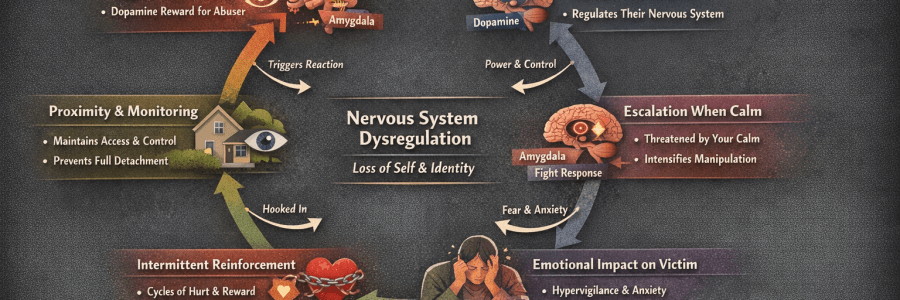
button-pushing, escalation when calm, reliance on your reactions for regulation, and staying close to you physically or symbolically — is actually a hallmark of long-term emotional abuse. Let’s unpack why this is, from both a psychological and neurological perspective. 1. Emotional Abuse Is About Control, Not Connection Long-term emotional abuse isn’t about conflict or even “anger.” It’s… Read More Cycle of Long Term Abuse