“I know this is bad for me — why can’t I let go?”

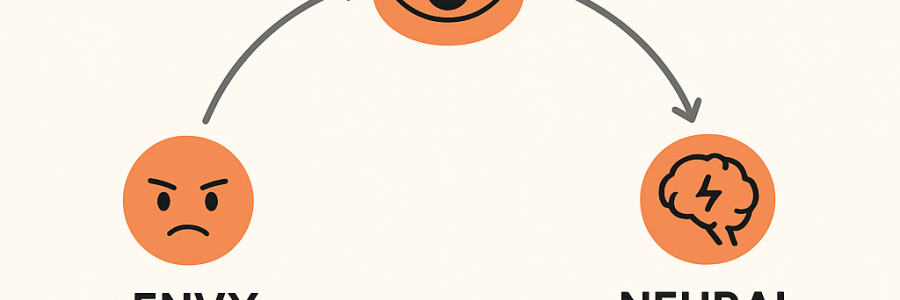
This is where endings become especially difficult — because trauma bonds and long-term relationships don’t just live in memory or emotion. They live in deep survival circuitry. Let’s connect the neuroscience clearly. Trauma Bonds: When the Brain Links Love to Survival A trauma bond forms when attachment is mixed with: Intermittent reward (affection → withdrawal → repair) Fear, unpredictability, or… Read More “I know this is bad for me — why can’t I let go?”

Calm truth creates cognitive dissonance they cannot tolerate

Cognitive dissonance occurs when reality clashes with a person’s self-image. Most abusers hold an internal narrative such as: I’m the victim I’m justified I’m misunderstood I had no choice Your calm, factual truth introduces a competing reality without emotion. That’s the key. Anger can be dismissed.Calm facts cannot. Neuroscience shows that when dissonance cannot be resolved… Read More Calm truth creates cognitive dissonance they cannot tolerate

Calm truth

There was never anyone else.I returned from holiday with my family — my children and grandchildren. Nothing more, nothing hidden. The idea of a “mystery man” was a story used to discredit me. In reality, he had another partner while using my hard-earned money and restricting my access to my own finances. For decades, I… Read More Calm truth

Why you should NOT pass details to their family

1. Families are not neutral containers Psychology shows that families are emotionally invested systems, not objective recipients of information. Common outcomes: Denial Minimisation Defensive loyalty Blame-shifting Retaliation (direct or indirect) Neuroscience: Family identity activates threat and loyalty circuits in the brain. The prefrontal cortex (reasoning) is often overridden by ingroup protection. This means facts are rarely processed rationally. 2. You become… Read More Why you should NOT pass details to their family

Why Attention Drops When Survivors Begin to Heal

Trauma Recovery, Post-Abuse Dynamics & the Nervous System For people who have lived through long-term abuse, the shift you’re noticing is not just social — it’s neurobiological and relational. When you were in survival mode, your nervous system, identity, and relationships were organized around threat, appeasement, and endurance. As you heal, that entire structure changes. And not everyone… Read More Why Attention Drops When Survivors Begin to Heal

The Hidden Dangers of Dating Apps: Con Men, Pretenders, and Emotional Fraud

Dating apps aren’t inherently bad — but they are highly efficient environments for deception. They allow people to present a carefully curated version of themselves with very little accountability, history, or social consequence. And that creates opportunity — not just for romance, but for manipulation. Who Thrives on Dating Apps (and Why) Dating apps are especially attractive… Read More The Hidden Dangers of Dating Apps: Con Men, Pretenders, and Emotional Fraud

Repetition Compulsion in Psychodynamic Therapy

Definition:Repetition compulsion is a concept introduced by Sigmund Freud in psychoanalytic theory. It refers to the tendency of individuals to repeat behaviors, situations, or relationships that mirror unresolved conflicts or traumatic experiences from the past, often unconsciously. How It Manifests Returning to relationships or scenarios that feel familiar, even if they are harmful. Recreating patterns of abuse, neglect, or emotional… Read More Repetition Compulsion in Psychodynamic Therapy

In Simple Terms: What’s Actually Going On

This isn’t new behaviour.It’s the same pattern that’s been happening for decades — just playing out in a different way. When someone ignores divorce proceedings, doesn’t respond to solicitors, blocks the sale of a house, removes signs, and then later blames or sues you for delays — that isn’t confusion or bad communication. It’s control.… Read More In Simple Terms: What’s Actually Going On

The Core Move: Pre‑emptive Inversion

When someone says: “You have no filter”“You’re too harsh”“You’re aggressive” while they use foul language, character attacks, and accusations in private, they are doing something called: Defensive Attribution + Projection Neurologically, this is about threat detection, not communication. 1. Exposure Triggers the Threat Response When an abuser senses that: Their private behaviour may be named Patterns may be… Read More The Core Move: Pre‑emptive Inversion

Exposing the Abuser (No Sugar-Coating)

Let’s start with the truth most survivors are pressured not to say: Abusers rely on silence, minimisation, and “being the bigger person.”Protection of abusers is one of the most socially normalised forms of harm. 1. Abuse Is Not “Loss of Control” — It Is Selective Control Abusers: Control their language at work Control themselves with authority figures Control… Read More Exposing the Abuser (No Sugar-Coating)