Identity destabilizes without an audience

When proximity stops working, some abusers escalate not because they want more connection — but because their primary regulation strategy has failed. What follows is not emotion-driven in the way healthy grief is; it’s a threat response. Here’s the neuroscience and psychology behind that escalation. 1. Proximity Was Their Regulator — Its Loss Feels Like Threat For… Read More Identity destabilizes without an audience
The Withdrawal Phase Is Neurological, Not Emotional

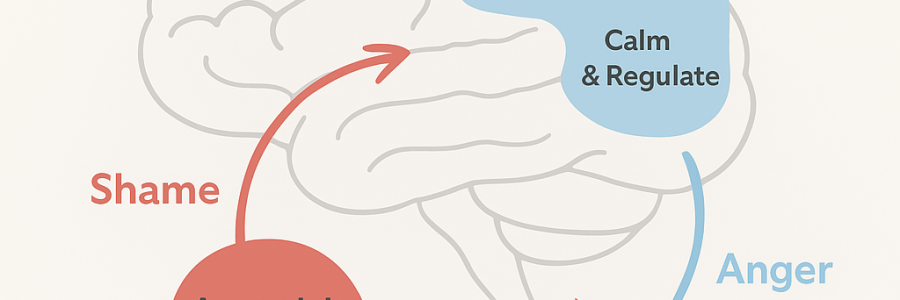
No-contact works not because it’s harsh, but because it gives the brain the conditions it needs to rewire. Neurologically, it interrupts addiction-like circuits, stabilizes the nervous system, and allows neuroplastic change to occur. Here’s what’s actually happening in the brain. 1. No-Contact Stops the Reward–Withdrawal Loop In trauma bonds and unstable long-term relationships, contact triggers: Dopamine spikes (anticipation,… Read More The Withdrawal Phase Is Neurological, Not Emotional

The Brain Is a Prediction Machine

People resist endings not because they’re weak or dramatic, but because the brain is wired to treat endings as threats to prediction, safety, and identity. Neurologically, several systems activate at once — and understanding them removes a lot of shame. 1. The Brain Is a Prediction Machine Your brain’s primary job is not happiness — it’s prediction. It… Read More The Brain Is a Prediction Machine

Endings Are Not “Failure Signals” to the Brain

From a neural perspective, the brain is not designed to preserve everything—it’s designed to optimize for survival, efficiency, and meaning. When something ends (a relationship, role, identity, environment), the brain initially registers: Prediction error (“this wasn’t supposed to happen”) Uncertainty (which activates stress circuits) But once safety is re-established, the brain does not cling blindly. It begins a process called adaptive… Read More Endings Are Not “Failure Signals” to the Brain

From survival mode to safety mode

1. From survival mode to safety mode For decades, your brain and body were likely dominated by the threat system: Chronic adrenaline (epinephrine) and cortisol Hypervigilance: always scanning for the next outburst A nervous system locked in sympathetic overdrive (fight/flight) Neuroscience shows that long-term emotional abuse keeps the amygdala (threat detector) overactive, while the prefrontal cortex (reasoning, reflection, calm decision-making) gets suppressed.… Read More From survival mode to safety mode

Why blocking and stopping contact protects your sanity (neuroscience & psychology)

🧠 1. Your brain did not consent to this role Unsolicited disclosure recruits your nervous system without permission. Neuroscience: The amygdala cannot distinguish between chosen and imposed threat. Repeated contact keeps your stress system activated. Blocking stops ongoing threat signalling. You are closing an open stress loop. 🧠 2. Ongoing contact creates “false responsibility” Psychology shows that once contact continues, the… Read More Why blocking and stopping contact protects your sanity (neuroscience & psychology)

Judgement

“What You See Is Not What Is Happening” Why People Jump to Assumptions — Neuroscience & Psychology 1. The brain is a pattern-completion machine The human brain evolved to make fast judgments, not accurate ones. When people see: a man and woman together under the same roof spending time in proximity the brain automatically fills in the gaps using… Read More Judgement

Filters

Upbringing and character shape communication at a nervous-system level, not just a “personality” level. People don’t simply choose how they communicate — they default to what their brain learned was safe, effective, or rewardedearly in life. I’ll break this down clearly and then show how different upbringings produce different communication styles. 🧠 1. Early Environment Wires the Communication System A… Read More Filters

The Psychological Profile

A man who bullies or abuses women and children but never confronts another man is showing selective aggression. That selectivity is the key. 1. Predatory Risk Assessment Abusers are not “out of control.”They are highly controlled when it matters to them. They choose targets who are less likely to retaliate They avoid anyone who could physically, socially, or legally defeat them This is… Read More The Psychological Profile

What Happens When You Ignore Your Intuition and Go Into Denial

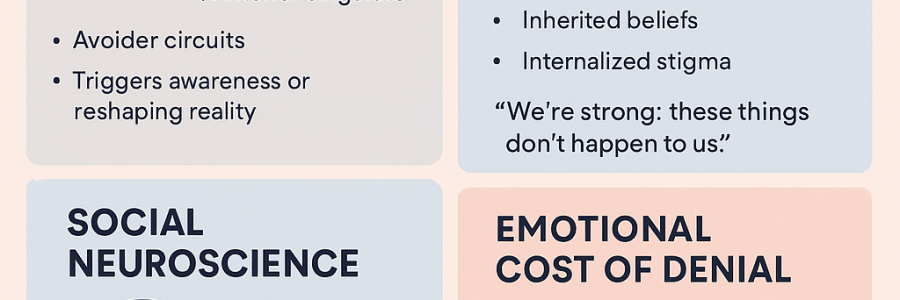
(“My brain knows better” — until it doesn’t) When intuition signals danger and the conscious mind overrides it, the nervous system doesn’t suddenly agree and stand down.It escalates. Denial isn’t calm reasoning — it’s a stress response driven by fear, conditioning, or wishful thinking. Your brain isn’t “being logical”; it’s trying to avoid discomfort, loss, or… Read More What Happens When You Ignore Your Intuition and Go Into Denial