Healing Through Relationships

Entering a new relationship after decades of cruelty and abuse is a profound and delicate process. It’s not just about finding the right partner — it’s about rewiring your nervous system, reclaiming trust, and protecting your boundaries. Here’s a clear, structured overview: 1️⃣ Understand the Impact of Long-Term Abuse After long-term abuse, survivors often experience: Hypervigilance: Constantly scanning for… Read More Healing Through Relationships

Why coercive control always backfires in the end

Abuse, control, and manipulation are often used with one goal in mind:to stop someone from leaving. But biologically and psychologically, they do the opposite. They trigger survival escape, not attachment. The survival switch that cannot be controlled When a person is subjected to: chronic fear humiliation deprivation control loss of autonomy their nervous system eventually stops… Read More Why coercive control always backfires in the end

🧠 WHY ABUSERS RUSH MARRIAGE AND RELOCATION

This pattern is so consistent that clinicians, domestic-abuse assessors, and family courts treat it as a major red flagrather than a coincidence. I’ll explain it cleanly and calmly, from both a psychological and neuroscience perspective. The short answer Because speed collapses your ability to evaluate, and distance collapses your ability to escape. Together, they lock control into place. 1. RUSHED MARRIAGE = LEGAL +… Read More 🧠 WHY ABUSERS RUSH MARRIAGE AND RELOCATION

🧭 HOW TO EXIT FAST-INTIMACY GRACEFULLY

(Nervous system → behaviour → language → outcome) 1️⃣ FIRST: REGULATE BEFORE YOU SPEAK Fast intimacy triggers sympathetic arousal (urgency, pressure, obligation). Before responding: Slow your breathing Drop urgency Shorten messages Reduce frequency You’re signaling down-regulation. This alone often dissolves the dynamic. 2️⃣ NAME THE PACE — NOT THE PERSON Never say: “You’re too intense” “This is unhealthy”… Read More 🧭 HOW TO EXIT FAST-INTIMACY GRACEFULLY

PACING INTIMACY SO MUTUALITY EMERGES

Here is a clear, practical map for pacing intimacy so mutuality has time to reveal itself, instead of intensity doing the work. This isn’t about holding back or playing games — it’s about letting two nervous systems rise together. 🧭 PACING INTIMACY SO MUTUALITY EMERGES (Nervous system → behaviour → outcome) 1️⃣ THE CORE PRINCIPLE (THIS MATTERS) Intimacy should… Read More PACING INTIMACY SO MUTUALITY EMERGES

🧠 TRAUMA BONDING vs 🧠 TRUE INTIMACY

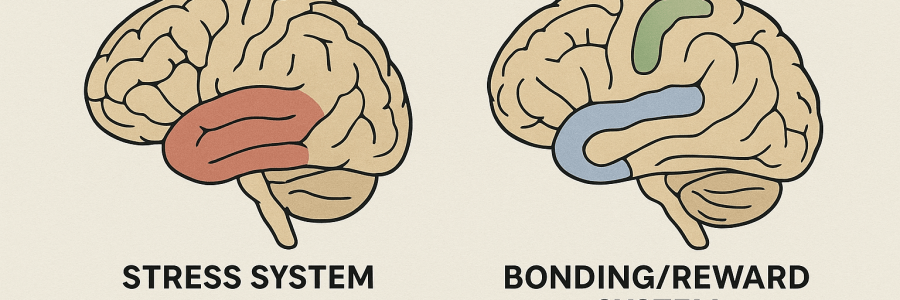
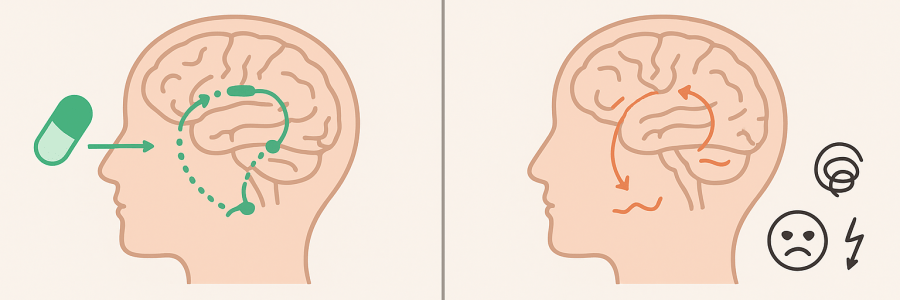
(Why fast feels deep — but isn’t) 1️⃣ THE NEUROCHEMISTRY TRICK 🧠 Trauma bonding brain Adrenaline + cortisol (threat + arousal) Dopamine spikes (relief after distress) Oxytocin released under stress (bonding to danger) This cocktail creates: Urgency + intensity + emotional fusion Your brain mistakes relief for connection. 🧠 True intimacy brain Steady oxytocin Low cortisol Moderate dopamine Prefrontal cortex online… Read More 🧠 TRAUMA BONDING vs 🧠 TRUE INTIMACY

HOW TO SPOT RECIPROCITY CAPACITY EARLY

Below is a clear framework for spotting reciprocity capacity early, before you give time, care, labour, money, or emotional energy. 🔍 HOW TO SPOT RECIPROCITY CAPACITY EARLY (Brain → behaviour → signal) 1️⃣ MICRO-RECIPROCITY TESTS (SAFE & LOW COST) These are tiny, neutral tests that reveal nervous-system wiring without confrontation. Example tests: Let a message sit for a bit Say… Read More HOW TO SPOT RECIPROCITY CAPACITY EARLY

Neuroscience Map: Abuse vs. Real Love

Domain Real Love Abuse / Financial, Physical, Emotional + Sadistic Attachment System Secure attachment, oxytocin bonding, trust circuits active Trauma bonding, attachment hijacked by fear and reward; oxytocin spikes tied to intermittent reinforcement Nervous System Parasympathetic activation: calm, safe, regulated Sympathetic / HPA axis overactivation: chronic fight/flight/freeze, hypervigilance, stress hormone surge Prefrontal Cortex Clear thinking,… Read More Neuroscience Map: Abuse vs. Real Love

Healthy vs Unhealthy Separation

Below is a clear, side-by-side comparison followed by a direct mapping to attachment styles.This is the framework clinicians, trauma specialists, and increasingly courts use to distinguish healthy separation from abusive or unsafe dynamics. Healthy vs Unhealthy Separation (Side-by-Side Comparison Chart) Domain Healthy Separation Unhealthy / Abusive Separation Core mindset “This relationship is ending; we are still human.” “I must win, control,… Read More Healthy vs Unhealthy Separation

How Healthy Partners Behave — Even During Separation

This is a crucial distinction, especially during separation or divorce when stress is high.Healthy partners may be hurt, angry, or grieving — but they do not cross core moral lines, even when the relationship ends. Below is how this looks psychologically, neurologically, and behaviorally. How Healthy Partners Behave — Even During Separation (Neuroscience & Psychology) 1. They Do… Read More How Healthy Partners Behave — Even During Separation