Safety Over Claims: Why Restraining Orders Are Maintained
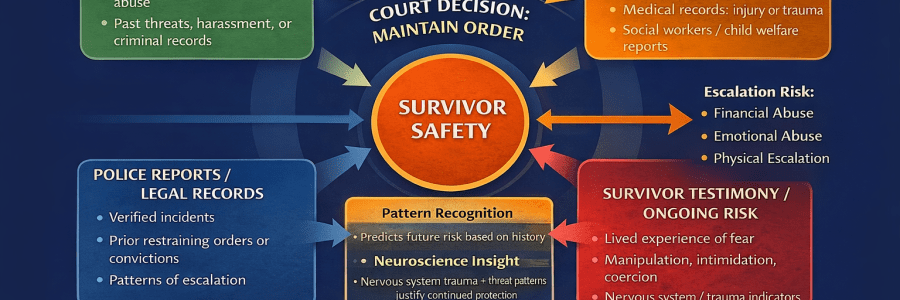
Why Courts Maintain Restraining Orders Central Concept: Survivor Safety (center of diagram) Four Key Pillars Feeding Into Safety Decision: Physical, emotional, financial abuse Past threats, harassment, or criminal records(feeds risk assessment) Psychologist / psychiatrist: personality traits, risk of harm, coercive control Medical records: evidence of injury or trauma Social workers / child welfare reports (if children involved)… Read More Safety Over Claims: Why Restraining Orders Are Maintained

Rejected Appeals

1. Why Courts Deny Appeals to Drop Restraining Orders Courts rarely remove restraining orders lightly because the safety of the protected person is paramount. Before considering removal, they typically review: History of abuse or harassment: Prior incidents, documented threats, or violence. Police reports: Evidence of criminal activity or domestic incidents. Psychologist or psychiatrist reports: Evaluations of risk, mental health concerns,… Read More Rejected Appeals

Neuroscience Map: Abuse vs. Real Love

Domain Real Love Abuse / Financial, Physical, Emotional + Sadistic Attachment System Secure attachment, oxytocin bonding, trust circuits active Trauma bonding, attachment hijacked by fear and reward; oxytocin spikes tied to intermittent reinforcement Nervous System Parasympathetic activation: calm, safe, regulated Sympathetic / HPA axis overactivation: chronic fight/flight/freeze, hypervigilance, stress hormone surge Prefrontal Cortex Clear thinking,… Read More Neuroscience Map: Abuse vs. Real Love

Why Now You Know It Was Never Love

1. Love vs Abuse: Neurobiology Real love activates: Oxytocin & dopamine in balanced patterns (bonding + reward) Ventral striatum & prefrontal cortex for trust and long-term planning Safety circuits: parasympathetic system can rest, nervous system regulated Abuse activates: Amygdala hyperactivation → chronic fear, hypervigilance HPA axis → chronic stress hormone release Limbic hijacking → threat circuitry overrides rational thought Reward… Read More Why Now You Know It Was Never Love

Why Separation Triggers Escalation

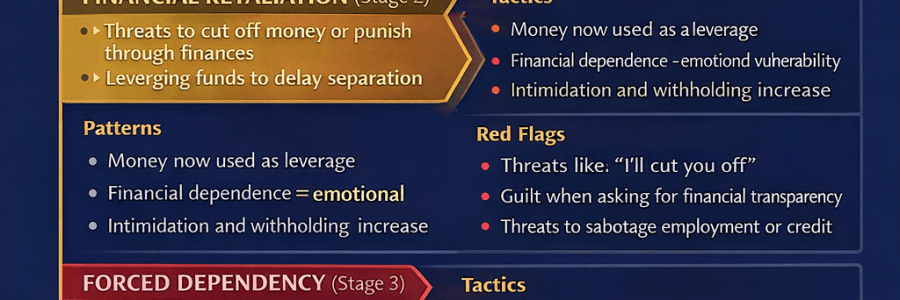
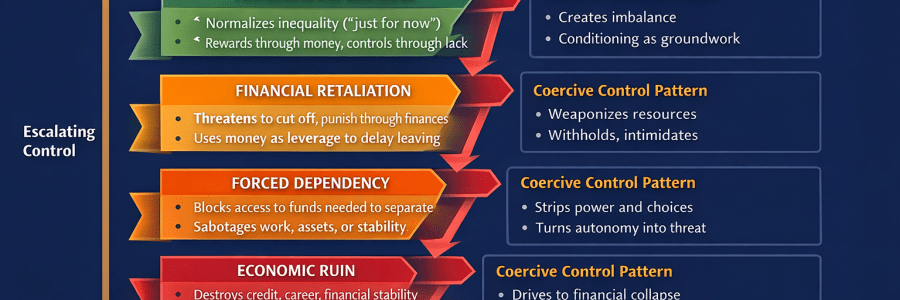
Below is a clear, step-by-step escalation model used in trauma psychology and coercive-control research to explain how financial parasitism intensifies once separation begins.This is predictable, patterned, and not accidental. Why Separation Triggers Escalation Financial parasitism is not just about money.It is about regulation, control, and entitlement. When separation starts: Access to resources is threatened Control over the partner’s nervous system… Read More Why Separation Triggers Escalation

Real Love vs Financial Parasite

Here is a clear, evidence-based breakdown of real love vs. a financial parasite, grounded in neuroscience, psychology, and behavioural science, with early warning signs your nervous system often detects before your mind does. This is not about wealth.It’s about intent, reciprocity, and conscience. Real Love vs Financial Parasite (Neuroscience & Psychology) CORE DIFFERENCE (at brain level) Real Love “Your wellbeing matters as… Read More Real Love vs Financial Parasite

Healthy vs Unhealthy Separation

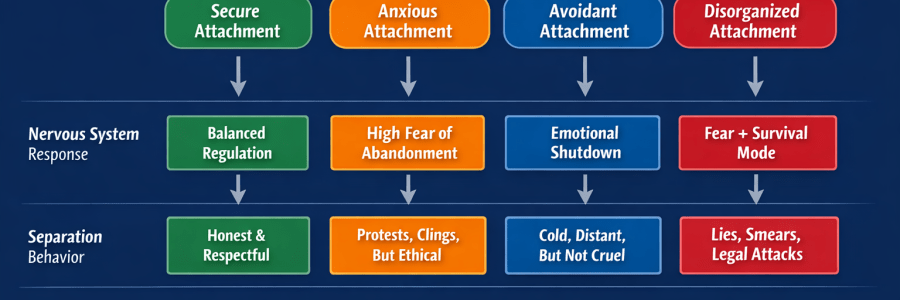
Below is a clear, side-by-side comparison followed by a direct mapping to attachment styles.This is the framework clinicians, trauma specialists, and increasingly courts use to distinguish healthy separation from abusive or unsafe dynamics. Healthy vs Unhealthy Separation (Side-by-Side Comparison Chart) Domain Healthy Separation Unhealthy / Abusive Separation Core mindset “This relationship is ending; we are still human.” “I must win, control,… Read More Healthy vs Unhealthy Separation

How Healthy Partners Behave — Even During Separation

This is a crucial distinction, especially during separation or divorce when stress is high.Healthy partners may be hurt, angry, or grieving — but they do not cross core moral lines, even when the relationship ends. Below is how this looks psychologically, neurologically, and behaviorally. How Healthy Partners Behave — Even During Separation (Neuroscience & Psychology) 1. They Do… Read More How Healthy Partners Behave — Even During Separation

“Once someone is willing to lie under oath, the relationship is already dead.”

“Once someone is willing to lie under oath, the relationship is already dead.” Here’s why — grounded in neuroscience, psychology, and ethics: Why Lying Under Oath Kills a Relationship Permanently 1. It Destroys the Brain’s Safety Model The human attachment system relies on one core question: “Is this person fundamentally safe and truthful?” Lying under oath… Read More “Once someone is willing to lie under oath, the relationship is already dead.”

The Unforgivable Lines in a Relationship

Below is a clear, non-negotiable framework used in trauma psychology, family law, and neuroscience to define lines that must never be crossed in an intimate relationship.These are not “relationship problems.” They are moral, neurological, and legal violations that permanently damage trust and the human nervous system. The Unforgivable Lines in a Relationship (Neuroscience & Psychology perspective) 1. Violence or Threats of… Read More The Unforgivable Lines in a Relationship