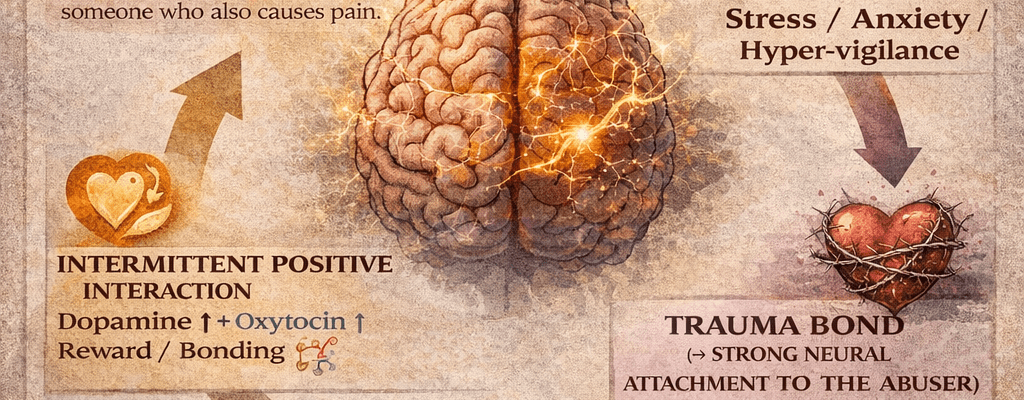
“The pain you give someone else—the lies, betrayal, manipulation and disrespect—never truly disappears. Whether you call it karma or consequences, our actions have a remarkable way of finding their way back to us.”
For thousands of years, cultures around the world have embraced the concept of karma: the belief that the energy we put into the world eventually returns to us. While science cannot prove the existence of karma as a universal force, psychology and neuroscience offer compelling evidence that our behaviour shapes both our brains and our lives.
Every decision we make strengthens the neural pathways associated with that behaviour. Repeated acts of honesty reinforce empathy, trust and healthy relationships. Repeated acts of manipulation, deception and emotional abuse reinforce very different patterns—ones that often damage relationships, increase conflict and leave people isolated.
The brain is remarkably adaptable. This ability, known as neuroplasticity, means that repeated thoughts and behaviours become increasingly automatic. Someone who repeatedly chooses deceit may become more comfortable lying. Someone who repeatedly controls or humiliates others may gradually lose sensitivity to the emotional impact of their actions.
While not everyone experiences guilt in the same way, research suggests that chronic aggression, manipulation and antisocial behaviour are often associated with poorer relationship outcomes, greater social conflict and lower levels of trust from others. Over time, these patterns can create lives filled with instability rather than genuine connection.
Many people who abuse others believe they have won because they escaped immediate consequences. They may appear successful, charming or even admired. But appearances rarely tell the whole story. Relationships built on fear, control or deception often lack the emotional safety, authenticity and mutual respect that create lasting happiness.
For survivors, this can be one of the hardest truths to accept. We often want justice to arrive quickly. We want those who caused immense pain to experience the hurt they inflicted.
Yet healing begins when we stop measuring our lives against theirs.
The greatest consequence for an abuser may not be a dramatic downfall. It may be becoming the kind of person who struggles to experience genuine intimacy, trust and emotional security. Their own behaviour shapes the world they live in.
The greatest reward for a survivor is equally profound.
Every act of courage strengthens new neural pathways.
Every healthy boundary teaches the brain that safety is possible.
Every supportive friendship helps regulate the nervous system.
Every peaceful night’s sleep reminds the body that the danger has passed.
Recovery is not simply emotional—it is biological. The brain can heal. The nervous system can recover. Confidence can return. Joy can be rediscovered.
Whether you believe in karma, divine justice or simply the consequences of human behaviour, one principle remains remarkably consistent:
The choices we make today shape the person we become tomorrow.
Choose honesty over deception.
Choose compassion over cruelty.
Choose integrity over manipulation.
Because long after the moment has passed, our actions continue to shape our brains, our relationships and the legacy we leave behind.
Perhaps that is the truest form of karma of all.

